Ensure proper ventilation aboard your boat and be aware of the
possibility of carbon monoxide poisoning (Figure 2.5). Keep your
boat in safe operating condition. Periodically inspect the hull,
engine, and all other equipment.
Navigational Aids Chart
The Navigation Aids Chart (located at the end of this section) con-
tains information about various signals, buoys, and warnings.
Robalo recommends you participate in a safe boating course to
learn more about navigating your boat safely.
Fuel System
Everyone who owns or operates a boat must practice fire safety.
Each year, boat fires and explosions injure hundreds of individuals
and cause millions of dollars in property damage. Many of these
accidents can be prevented.
Be alert for damage to your boat’s fuel system. Over time, fuel fit-
tings and fuel hoses wear out. Inspect these fittings and hoses
regularly, especially near the engine where engine heat and vibra-
tion can accelerate deterioration.
What to do
1. Schedule regular engine and exhaust system maintenance
inspections by experienced and trained technicians.
2-10
Figure 2.5 Desired Ventilation Through the Boat
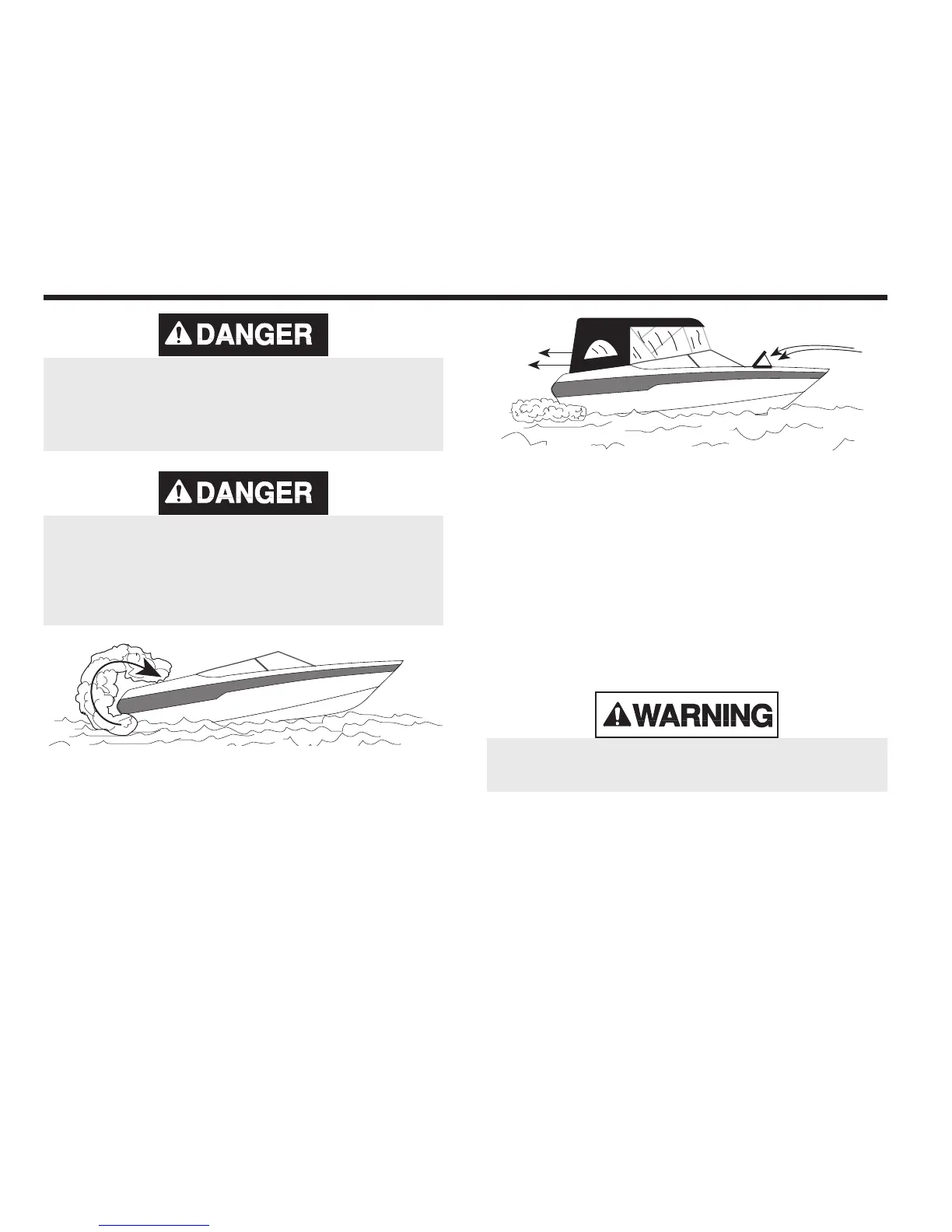
Figure 2.4 Exhaust Accumulation due to
High Bow Angle or Slow Speed
DANGER: Engine exhaust from your boat while underway can
cause excessive accumulation of carbon monoxide within cabin
and cockpit areas or when operating boat with a high bow
angle. Provide adequate ventilation, redistribute the load, or
bring boat out of high bow angle. (Figure 2.4)
DANGER: Engine exhaust from your boat while underway can
cause excessive accumulation of carbon monoxide within the
cabin and cockpit areas when operating at slow speed or
stopped in the water. Tail wind can increase accumulation (force
of wind entering from aft section of boat). Provide adequate ven-
tilation or slightly increase speed if possible. (Figure 2.4)
WARNING: Avoid damage to your fuel system. Do not use fuel
or additives containing more than 10% alcohol by volume
(methanol or ethanol). Damage and loss of warranty may result.



 To Next Page