ENGLISH
Pag. 20
1. Introduction
These security instructions refer to the installation, use and maintenance of SMART3G-C3
and SMART3G-D3 gas detectors series , for applications in areas with presence of potentially
explosive atmospheres classied as Zone 2 or 22. These products integrate a sensor heand
and an enclosure. The stainless steel sensor head holds the sensing element and it is certi-
ed as a ameproof component. The aluminium enclosure holds the base board for signal
elaboration and eld wiring connections. Enclosure and electronics comply with EN 60079-7
and guarantee an Ex ec protection mode, an increased safety against high temperature and
the occurence of sparks.
1.1 General description
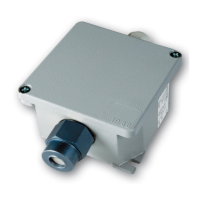
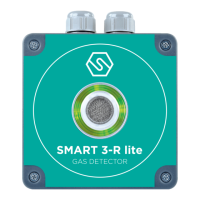
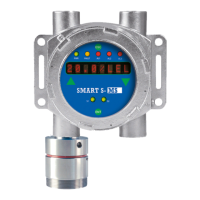
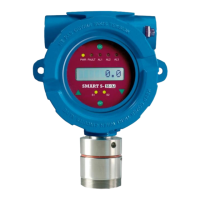
Gas detectors series SMART3G are devices complete with sensor, housing and interface
circuit, that can be connected to both analog and addressable control panels. The model
SMART3G-D3 is equpped with a display board which allows the gas reading visualization
and an non-intrusive calibration.
SMART3G gas detectors are used to detect the presence combustible gases (%LFL) in envi-
ronments where the principal constituent is air.
The sensing element inside the detector can be either a catalytic sensor, an infrared sensor
or an electrochemical cell.
The industrial grade catalytic sensor (pellistor) employed for the detection of ammable
compounds oers a great precision and selectivity with most of the explosive gases, thus
avoiding false alarms.
Infrared sensors are immune to poisoning produced by certain substances that inhibit and
damage catalytic sensors. This allows you to add reliability and durability, allowing the use of
detectors even in places where the pellistors cannot guarantee optimal functionality.
The electrochemical cell is extremely reliable and it has the best performances in detection
of gases at low concentration. For this reason it is usually used in detection of toxic gas.
SMART3G gas detectors can be equipped with optional boards, as a 1 or 3 relay board or a
RS485 communication board. The display version is equipped with a display board which
integrates 3 relays; in this case it won’t be possible to connect the 3 relay board because the
connector is the same.
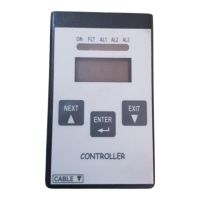
To check the detector’s calibration use the display board with hall eect sensors or the cali-
bration keypad STS/CKD+, available from november 2020.
To protect and increase the stability and accuracy of the gas detector, the microprocessor is
programmed with some software algorithms.



 To Next Page