Shure Incorporated
3/76
A computer connected to the network controls the microphone through a webbased control application . Cover
age, muting, LED behavior, gain, and network settings are controlled remotely.
Audio:
Dante™ audio is routed through Dante™ controller software. Dante™ Virtual Soundcard enables audio monitoring
and recording directly on the computer.
System Planning and Gear Requirements
Setting up the Audio Network
Shure networked conferencing systems are comprised of Microflex Advance microphones and network interfaces,
which operate entirely on a Dante network. Additional hardware, including network switches, computers, loud
speakers, and audio processors are described in the hardware component index.
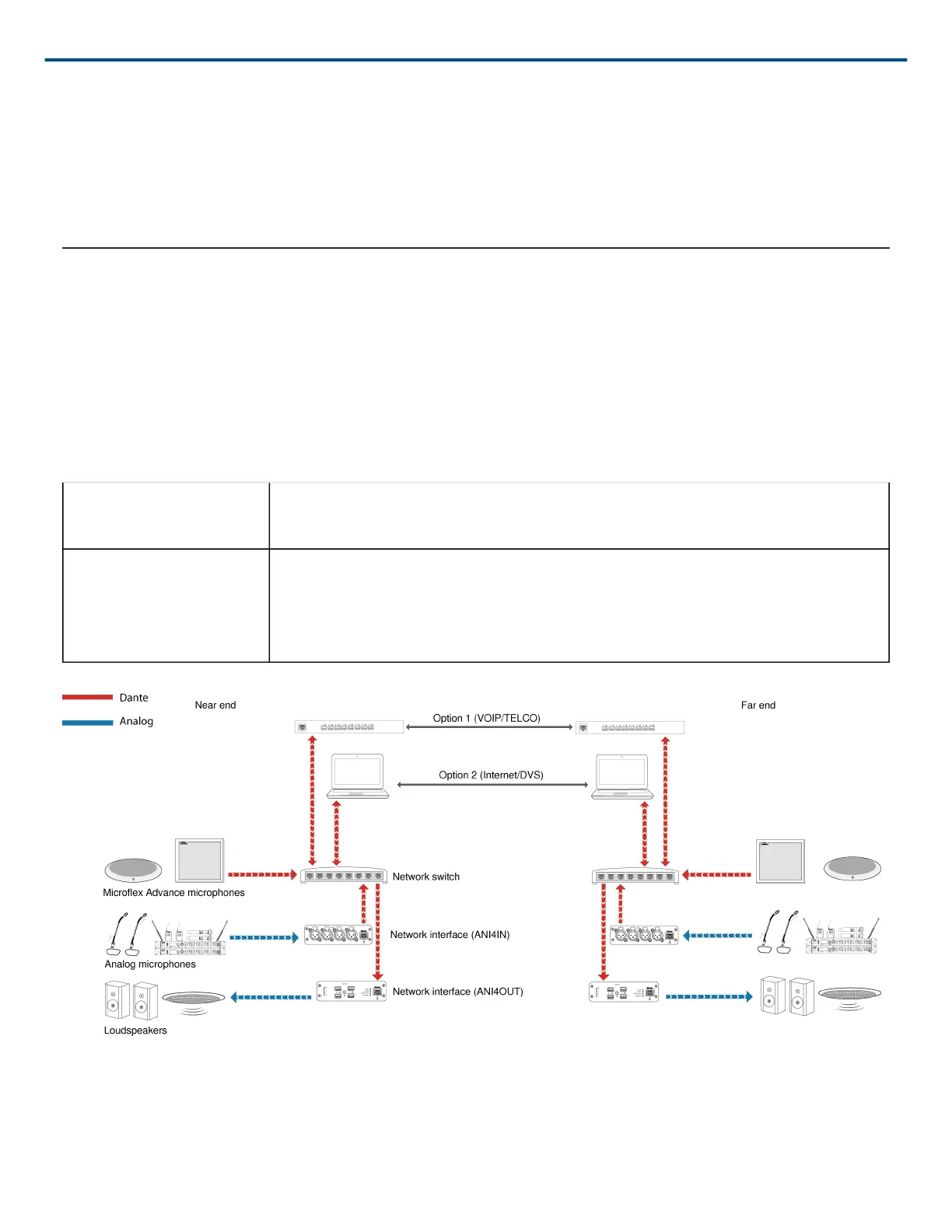
Shure components shown in this diagram:
Microflex Advance Micro
phones
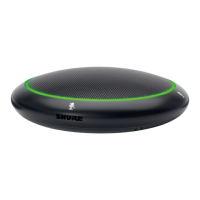
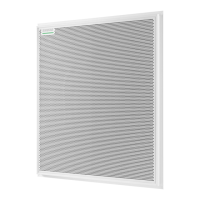
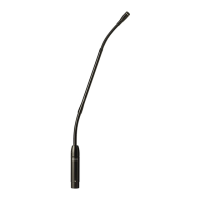
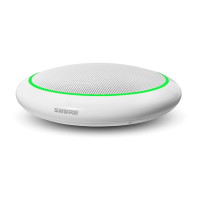
The MXA910 and MXA310 are equipped with Dante outputs, and connect directly
to a network switch.
Audio Network Interfaces The interfaces are used to connect analog devices such as loudspeakers and ana
log microphones to the network.ANI4IN: Converts 4 analog signals (separate XLR
and block connector models available) into Dante digital audio signals.ANI4OUT:
Converts 4 channels of Dante audio from the network into analog signals.
This diagram shows the entire signal path through a networked conference system. Signals from the near end and
far end are exchanged through an audio processor connected to a phone system, or through a computer connect
ed to the internet. Analog microphones connect to the network through the Shure ANI4IN, while loudspeakers con
nect through the Shure ANI4OUT.



 To Next Page