Angle of reflection
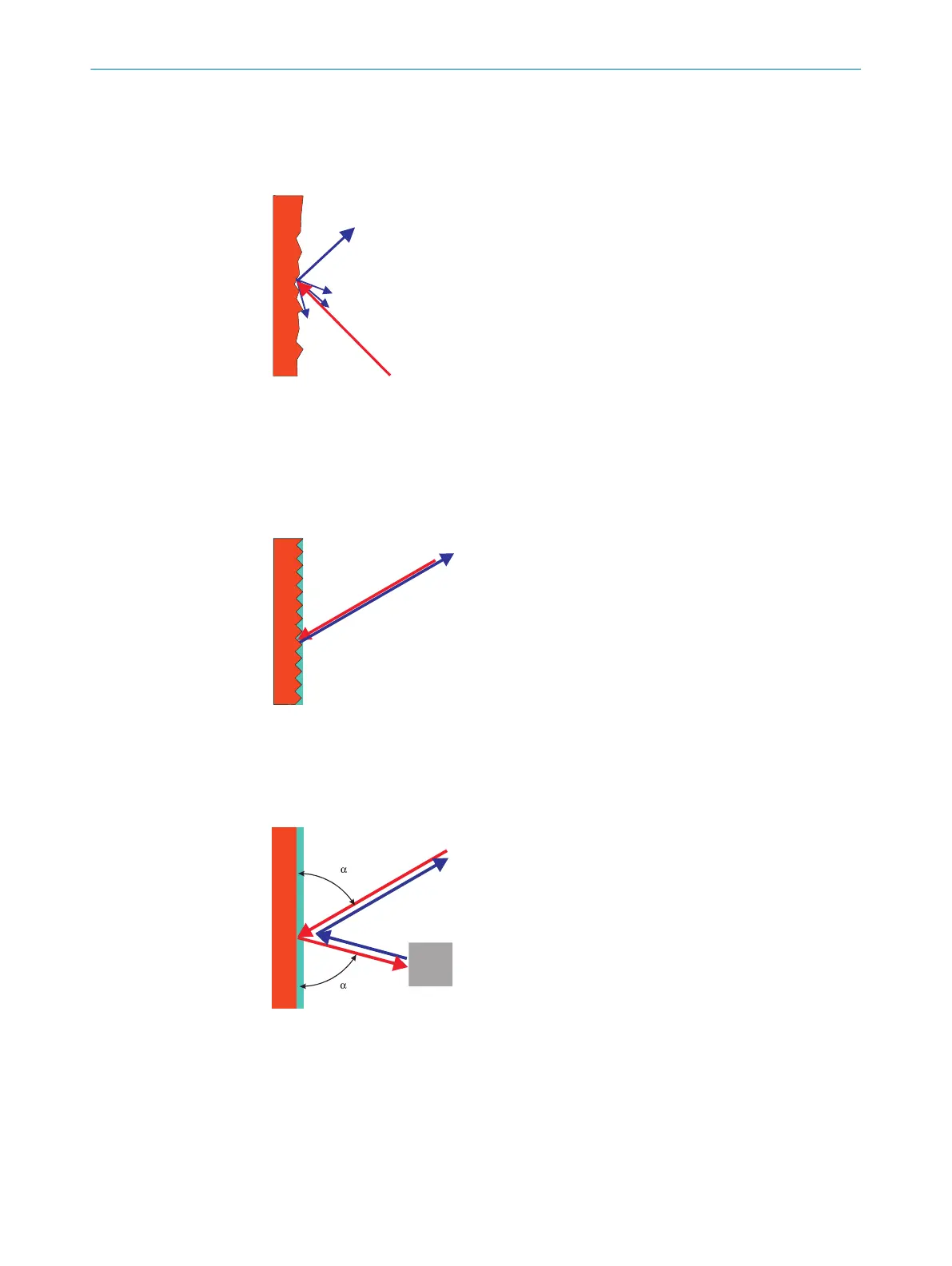
The angle of reflection corresponds to the angle of incidence. If the laser beam hits
a surface at right angles, the energy is optimally reflected. If the laser beam hits a
surface at an oblique angle, energy and range are lost accordingly.
Figure 26: Angle of reflection
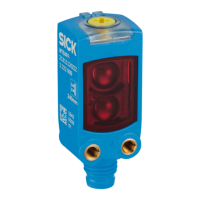
Retroreflection
If the reflective energy is greater than 100%, the beam is not reflected diffusely in all
directions; instead it is reflected in a targeted way (retroreflection). Thus a large part of
the emitted energy can be received by the laser distance measurer. Plastic reflectors
(cat’s eyes), reflective tape, and triple prisms have these properties.
Figure 27: Retroreflection
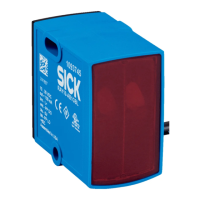
Reflective surfaces
The laser beam is almost completely deflected on reflective surfaces. This means that
an object hit by the deflected beam may be detected instead of the reflective surface.
Figure 28: Specular surfaces
Small objects
Objects that are smaller than the diameter of the laser beam cannot reflect the laser
light’s full energy. The portion of the light beam that does not reach the object is lost. If
all of the light reflected to the sensor is insufficient, the object may not be detected.
PRODUCT DESCRIPTION 3
8027119/0000/2022-11 | SICK O P E R A T I N G I N S T R U C T I O N S | multiScan136
31
Subject to change without notice


 To Next Page