EasyManua.ls Logo

Smootharc 180 Multiprocess - User Manual

Smootharc 180 Multiprocess
56 pages
Print Icon
To Next Page IconTo Next Page
Loading...
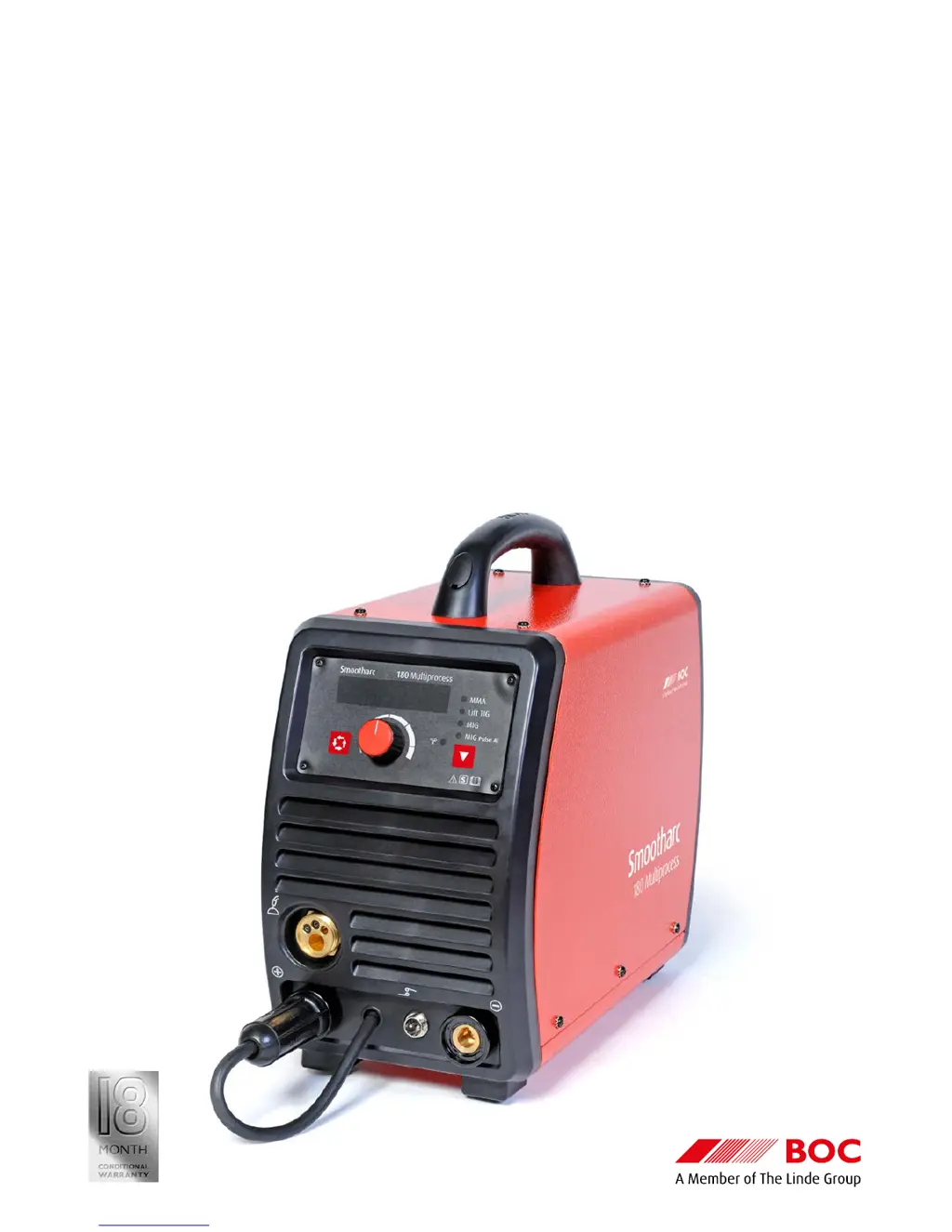
180 Multiprocess
Operating manual
6PRRWKDUF
$GYDQFH$GYDQFH
,,

Table of Contents

Questions and Answers

  • J
    Jessica GilesAug 2, 2025
    Why is there excessive electrode consumption in my Smootharc Welding System?
    • J
      Jamie RileyAug 2, 2025
      Excessive electrode consumption in your Smootharc Welding System can stem from several factors. Check for inadequate gas flow and increase it as needed. Ensure your post gas flow is sufficient, aiming for 1 second per 10 amps. If the electrode size is too small for the current, switch to a larger one or adjust polarity. Remove any contamination from the electrode. If the torch is overheating, replace the collet, potentially trying a wedge or reverse collet. To prevent electrode oxidation during cooling, increase the post flow time before shutting off the valve. Finally, verify you're using the correct shield gas, avoiding any with oxygen or CO2.
  • J
    Julie GarciaAug 7, 2025
    What causes porosity in the weld deposit of a Smootharc Welding System?
    • N
      Nathan YoungAug 7, 2025
      Porosity in the weld deposit of your Smootharc Welding System can occur due to entrapped impurities like hydrogen, air, nitrogen, or water vapor. Avoid welding on wet material and ensure adequate gas pre-flow time to remove condensation. Inspect gas hoses and connections for any leaks. If using aluminum filler material, dry it in an oven before welding. Replace oily or dusty filler material. If the base metal contains alloy impurities such as sulfur, phosphorus, lead, or zinc, consider switching to a different, more weldable alloy composition. Reduce travel speed to prevent rapid freezing of the weld, which can trap gases.
  • U
    ukimAug 12, 2025
    How to prevent cracking in welds with a Smootharc 180 Multiprocess Welding System?
    • R
      ricardochavezAug 12, 2025
      Cracking in welds on your Smootharc Welding System can be addressed by focusing on several factors. For hot cracking in heavy sections or metals prone to it, increase the weld bead cross-section size and adjust the weld bead contour. Check the fit-up gap and reduce welding speed. To prevent post-weld cold cracking, preheat the material before welding, use pure or non-contaminated gas, increase the bead size, prevent craters or notches, and consider changing the weld joint design. For center line cracks in single pass welds, increase bead size, decrease root opening, use preheat, and prevent craters. To avoid under bead cracking from brittle microstructure, eliminate sources of hydrogen and joint restraint, and use preheat.
  • A
    atkinsonedwardAug 17, 2025
    What to do if a Smootharc Welding System has an erratic arc?
    • T
      tina31Aug 17, 2025
      An erratic arc in your Smootharc Welding System can result from several issues. Maintaining a short arc length helps correct incorrect voltage from an arc that is too long. If the current is too low for the electrode size, switch to a smaller electrode or increase the current. Remove any contamination from the electrode. If the joint is too narrow, open the joint groove. Ensure your shield gas isn't contaminated, looking for dark stains on the electrode or weld bead as indicators. If the base metal is oxidized, dirty, or oily, clean it with appropriate chemical cleaners, a wire brush, or abrasives before welding.
  • K
    Kayla DiazAug 27, 2025
    What causes inadequate shielding in a Smootharc 180 Multiprocess?
    • M
      Michael PonceAug 27, 2025
      Inadequate shielding in your Smootharc Welding System can be caused by several factors. Check for gas flow blockages or leaks in the hoses or torch, and eliminate any obstructions or leaks found. If the travel speed is too high, exposing the molten weld to atmospheric contamination, use a slower travel speed or carefully increase the flow rate. Set up screens around the weld area to protect from wind or drafts. Reduce excessive electrode stickout and consider using a larger size cup.
  • S
    Stephanie MorrisNov 21, 2025
    Why does my Smootharc 180 Multiprocess Welding System have tungsten inclusions in the weld?
    • Z
      Zachary ValentineNov 21, 2025
      Tungsten or oxide inclusions in the weld of your Smootharc Welding System can occur due to several reasons. Ensure you're using the proper lift arc starting technique. Many codes do not allow scratch starts, so use a copper strike plate or a high-frequency arc starter. If the current is too high for the tungsten size, reduce the current or use a larger electrode. Avoid accidental contact of the electrode with the puddle or filler rod by maintaining proper arc length and distance. Reduce excessive electrode extension to recommended limits. Ensure adequate shielding by increasing gas flow, shielding the arc from wind, or using a gas lens. Use the correct gas, avoiding ArO or ArCO GMAW (MIG) gases for TIG welding. Wire brush and clean the weld joint prior to welding to remove heavy surface ox...

Summary

Recommended Safety Guidelines and Precautions

Health Hazard Information

Information on health hazards associated with welding, including eyes, skin, and inhalation risks.

Personal Protection

Details on essential personal protective equipment (PPE) for welding, covering respiratory, eye, and body protection.

Electrical shock

Guidelines and precautions to prevent electrical shock hazards during welding operations.

User Responsibility

Defines the user's obligations regarding safe operation, maintenance, and warranty adherence.

MIG;MAG Operating Manual

Introduction to Metal Inert Gas (MIG) & Metal Active Gas (MAG)

Explains the MIG/MAG welding process using a continuous electrode and shielding gas.

Introduction to Flux Cored Arc Welding (FCAW)

Details the Flux Cored Arc Welding (FCAW) process, a variant of MIG/MAG welding.

Introduction to Metal Cored Arc Welding (MCAW)

Describes the Metal Cored Arc Welding (MCAW) process, another variant of MIG/MAG welding.

Modes of metal transfer

Details the different modes of metal transfer in MIG/MAG, FCAW, and MCAW welding processes.

Fundamentals of MIG;MAG, FCAW and MCAW

Covers essential factors for successful welding, including consumables, power source, polarity, gas, and preparation.

4 T;2 T Trigger Latch Selection

Explains the 2T/4T trigger latch function for improved operator comfort and weld shielding.

Gas tungsten arc welding (GTAW;TIG)

Introduction

Introduces the Gas Tungsten Arc Welding (TIG) process for fusing metal using a non-consumable tungsten electrode.

Process

Details the TIG welding process, including power sources, shielding gas, and arc initiation methods.

Process variables

Explains key process variables in TIG welding, covering polarity and its effects.

Shielding gas selection

Provides guidance on selecting appropriate shielding gases for various base metals in TIG welding.

Welding wire selection

Lists recommended welding consumables (filler rods) for common base materials used in TIG welding.

Tungsten electrode selection

Details the selection of tungsten electrodes based on base metal type, thickness, desired results, and current.

Welding techniques

Demonstrates TIG welding techniques for bead on plate and butt welds, including torch and rod angles.

Torch movement during welding

Illustrates torch movement techniques for TIG welding with and without filler rod.

Positioning torch tungsten for various weld joints

Shows correct torch tungsten positioning for various weld joints like butt, 'T', and corner joints.

Joint preparation

Details various joint preparations required for different welding applications, with measurements in mm.

Manual Metal Arc Welding Process (MMAW)

Process

Explains the Manual Metal Arc (MMAW) process of joining metals using an electric arc and flux-coated electrode.

Welding Machine

Discusses factors for choosing a suitable welding machine for MMAW, including voltage, amperage, and duty cycle.

Welding Technique

Covers key factors for successful MMAW welding, including electrode, current, arc length, angle, and preparation.

Electrode Selection

Guides on selecting appropriate MMAW electrodes based on parent metal and application requirements.

Types of Joints

Explains different types of joints used in MMAW welding, focusing on butt welds and their preparation.

Fillet Welds

Details fillet weld types, including 'T' joints, lap joints, corner joints, and definitions like leg length and throat thickness.

Typical Defects Due to Faulty Technique

Identifies common MMAW welding defects caused by faulty technique, such as slag inclusions and undercut.

General Welding Information

Recommended Welding Parameters for MIG;MAG

Provides recommended welding parameters for MIG/MAG processes using Argoshield Light and Stainshield gases.

Correct Application Techniques

Torch position for butt welds

Illustrates the correct torch position for butt welds in MIG/MAG welding, including angles.

Electrical stickout

Explains electrical stickout and its influence on the weld bead profile and reinforcement height.

Torch position for fillet welds

Details the correct torch position for fillet welds in MIG/MAG welding, including angles.

Package Contents

Installation

Installation for MIG;MAG process

Step-by-step guide for installing the machine for MIG/MAG welding, including gas and wire setup.

Installation for MIG;MAG set up with OPTIONAL spool gun

Instructions for installing the machine for MIG/MAG welding with an optional spool gun accessory.

Installation for TIG setup

Guide for installing the machine for Gas Tungsten Arc Welding (TIG) setup, including gas and torch connections.

Installation for MMA process

Instructions for installing the machine for Manual Metal Arc (MMA) welding, connecting electrode holder and work return.

Control panels

Polarity selection

Explains how to select polarity in MIG/MAG mode, important for certain wire types like self-shielded flux cored wires.

Operation

Starting up

Instructions for powering on the machine and understanding the initial display.

Operation instruction under MIG mode

Detailed steps for operating the machine in MIG mode, including setting mode, 2T/4T, and adjusting parameters.

Operation instruction under LIFT TIG mode

Steps for operating the machine in Lift TIG mode, including adjusting current and understanding the display.

Operation instruction under MMA mode

Instructions for operating the machine in MMA mode, including VRD function and adjusting current.

Error display

Explains various error displays for wire feeder, over-current, and overheating protection.

Troubleshooting and Fault Finding

TIG;MMA functions

Troubleshooting common issues related to TIG and MMA functions, including electrode consumption and erratic arc.

MIG;MAG functions

Troubleshooting common issues for MIG/MAG functions, covering power source, wire feeder, torch, and wire problems.

Periodic Maintenance

Power Source

Details periodic maintenance procedures for the power source, including checking connections and cleaning inner parts.

Technical Specifications

Warranty Information

Terms of Warranty

Outlines the limited warranty that covers manufacturing and material defects for the Smootharc machine.

Limitations on Warranty

Details the conditions not covered by the warranty, such as wear and tear, misuse, and natural causes.

Warranty Period

Specifies the duration of the warranty, valid for 18 months from the date of purchase.

Warranty Repairs

Explains the procedure for warranty repairs, requiring notification to BOC and proof of purchase.

Smootharc 180 Multiprocess Specifications

General IconGeneral
BrandSmootharc
Model180 Multiprocess
CategoryWelding System
LanguageEnglish