EasyManua.ls Logo

Sumitomo SM-HYPONIC Hypoid - User Manual

Sumitomo SM-HYPONIC Hypoid
20 pages
Print Icon
To Next Page IconTo Next Page
Loading...
SM-HYPONIC DRIVE
SM-HYPONIC
®
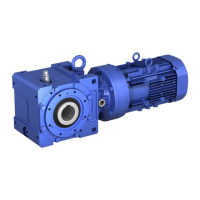
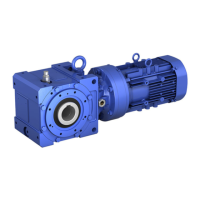
Hypoid Right Angle Gearmotor
Operating and Maintenance Manual
THE
AVAILABLE
SOLUTION,
WORLDWIDE.
Manual
07.020.60.001

Questions and Answers

  • R
    rthomasAug 18, 2025
    Why does my Sumitomo SM-HYPONIC Hypoid run hot?
    • R
      Regina RobinsonAug 18, 2025
      Your Sumitomo Engine may be running hot due to several reasons. It could be overloaded, exceeding its rated capacity. Improper lubrication, either too little or too much, can also cause overheating. Finally, using the wrong lubricant can lead to this issue. Check the lubricant level and type, and ensure the load is within the engine's capacity. If it is overloaded, reduce the load.
  • P
    Peter MooreAug 20, 2025
    What to do if my Sumitomo SM-HYPONIC Hypoid Engine has vibration or noise?
    • J
      Jennifer ArmstrongAug 20, 2025
      If your Sumitomo Engine is experiencing vibration or noise, several factors could be responsible. Check for loose foundation bolts and tighten them or reinforce the mounting structure. Also, inspect for any loose bolts and tighten them. Bearing failure, overload, or insufficient lubricant can also cause these issues. Replace any failed bearings, clean and flush the engine, and refill with the recommended lubricant. Ensure the lubricant level is at the factory-recommended level and that the load doesn't exceed the engine's rated capacity.
  • K
    Kyle CollinsAug 23, 2025
    What to do if my Sumitomo Engine output shaft does not turn?
    • E
      Elizabeth SanchezAug 23, 2025
      If the output shaft of your Sumitomo Engine isn't turning, the motor shaft may be broken, in which case it should be replaced. Also, a key on the input shaft might be missing or sheared off, requiring replacement. Check the rated capacity of the engine.
  • A
    Alice TranAug 26, 2025
    What to do if my Sumitomo Engine load is disconnected but motor doesn’t rotate?
    • B
      Brenda SheltonAug 26, 2025
      If the load is disconnected from your Sumitomo Engine, but the motor still doesn’t rotate, there might be a faulty switch contact, which needs adjustment. Alternatively, a blown fuse, an open phase wire in the power supply, or an open stator coil could be the issue. Replace the fuse or phase wire, or repair the stator assembly by rewinding or replacing it. Also, the stator and rotor may be touching due to bearing housing wear; in this case, replace the bearing and bracket.
  • E
    Eric ObrienAug 27, 2025
    Why does my Sumitomo SM-HYPONIC Hypoid Engine rotate in the wrong direction?
    • J
      James MckinneyAug 27, 2025
      If your Sumitomo Engine is rotating in the wrong direction, it is likely due to a connection error. To correct this, change any two of the three-phase source wires.
  • S
    scott31Aug 29, 2025
    What to do if the Sumitomo Engine fuse blows?
    • M
      Michael SimpsonAug 30, 2025
      If the fuse in your Sumitomo Engine blows, it could be due to a shorted lead wire. Replace the wire.
  • E
    Elizabeth ConwaySep 1, 2025
    Why doesn't my Sumitomo SM-HYPONIC Hypoid Engine speed increase?
    • J
      Jillian BishopSep 1, 2025
      If your Sumitomo Engine speed doesn't increase, the starter contact may be faulty. Try adjusting it.
  • D
    dsmithSep 3, 2025
    What to do if Sumitomo SM-HYPONIC Hypoid brake fails to operate?
    • R
      robertoprattSep 3, 2025
      If the brake on your Sumitomo Engine fails to operate, it might be due to improper adjustment after reassembly. Readjust the brake.
  • A
    Aaron MorrisSep 5, 2025
    What causes abnormal noise in Sumitomo brakemotor?
    • I
      ituckerSep 6, 2025
      Abnormal noise in your Sumitomo brakemotor can be caused by foreign material inside it. Examine the inside of the brakemotor and remove any foreign material.
  • A
    Annette ColemanSep 8, 2025
    What to do if Sumitomo Engine experiences trouble under loaded condition?
    • E
      Elizabeth GonzalesSep 8, 2025
      If your Sumitomo Engine experiences trouble under a loaded condition, it may be due to a voltage drop or an overload. Raise the voltage to the rated level or reduce the load. You can also consider using a larger brakemotor.

Summary

MOUNTING

Solid Shaft Type

Mounting conditions, location, and procedures for solid shaft type gearmotors.

Hollow Shaft Type

Mounting conditions, location, and procedures for hollow shaft type gearmotors.

Mounting Options

Details on using spacer, plate, and end plate mounting options.

Torque Arm and Shaft Removal

Procedures for installing torque arm and removing the gearmotor shaft.

Flange and Foot Mounting

Ensures proper alignment for flange and foot mounting to avoid excessive force.

CONNECTING TO THE DRIVEN MACHINE

Solid Shaft Type Connection

Procedures for connecting the gearmotor to the driven machine via solid shaft.

WIRING

Standard Dual Voltage Wiring

Shows standard wiring diagrams for dual voltage connections.

Inverter Dual Voltage Wiring

Illustrates wiring diagrams for inverter connections with dual voltage.

Output Shaft Rotation

Indicates output shaft rotation directions based on wiring configurations.

Motor Operation Precautions

Essential precautions for motor operation, including grounding and insulation.

LUBRICATION

OPERATION

Trial Run Precautions

Precautions to observe during the initial test run of the gearmotor.

DAILY INSPECTION AND MAINTENANCE

Daily Inspection Items

Lists specific items to inspect daily for gearmotor health and performance.

FB BRAKE ASSEMBLY - INSPECTION, ADJUSTMENT & MAINTENANCE

FB-01 A, FB-02 A, FB-05 A Specifications

Lists standard specifications for FB-01A, FB-02A, and FB-05A brake models.

FB-01 A, FB-02 A, FB-05 A Construction & Operation

Details the construction and operating principles of FB-01A, FB-02A, FB-05A brake assemblies.

FB-01 A, FB-02 A, FB-05 A Inspection & Adjustment

Covers inspection, gap adjustment, and brake lining replacement for FB-01A, FB-02A, FB-05A.

FB-1 B, FB-2 B, FB-3 B Specifications

Lists standard specifications for FB-1B, FB-2B, and FB-3B brake models.

FB-1 B, FB-2 B, FB-3 B Construction & Operation

Details the construction and operating principles of FB-1B, FB-2B, FB-3B brake assemblies.

FB-1 B, FB-2 B, FB-3 B Inspection & Gap Adjustment

Covers inspection, manual release, and gap adjustment for FB-1B, FB-2B, FB-3B.

FB-1 B, FB-2 B, FB-3 B Lining Replacement

Procedure for replacing worn brake lining on FB-1B, FB-2B, FB-3B models.

FB-5 B, FB-8 B Specifications

Lists standard specifications for FB-5B and FB-8B brake models.

FB-5 B, FB-8 B Construction & Operation

Details the construction and operating principles of FB-5B, FB-8B brake assemblies.

FB-5 B, FB-8 B Inspection & Gap Adjustment

Covers inspection, manual release, and gap adjustment for FB-5B, FB-8B.

FB-5 B, FB-8 B Lining Replacement

Procedure for replacing worn brake lining on FB-5B, FB-8B models.

TROUBLESHOOTING

General Troubleshooting Guide

A guide to diagnose and fix common SM-Hyponic operational problems.

CONSTRUCTION

RNFM and RNYM Series Construction

Illustrates the internal construction of RNFM and RNYM series gearmotors.

Sumitomo SM-HYPONIC Hypoid Specifications

General IconGeneral
BrandSumitomo
ModelSM-HYPONIC Hypoid
CategoryEngine
LanguageEnglish

Related product manuals