5
After blast chilling/shock freezing the product, it can be stored in a preservation cabinet after having
been duly protected .A tag should be applied describing the contents of the product, blast chilling/shock
freezing date and expiry date. When the product has been blast chilled it must be preserved at a constant
temperature of
+2
,while if it has been shock frozen it must be preserved at a constant temperature of
-20
。
The chiller should be used for storage for short periods only.
To prevent bacterial contamination or contamination of any other biological nature,
the needle probe must be disinfected after use.
To extract the product that has undergone blast chilling or shock freezing ,always wear gloves to
protect the hands ,as “burns” may occur form the cold.
Blast chilling Cycle
With this operating modality the chiller keeps the temperature of the refrigerating compartment close to
zero during the entire chilling process in
order to ensure a gradual drop in the temperature of the product to +3℃。In this way ,ice crystals do not
form on the surface of the product .This blast chilling method should be used preferably for products that
are not packed and whose physical/organoleptic characteristics could be damaged by the formation of
superficial ice (e.g. fish)
Shock freezing Cycle
With this blast chilling modality the blast chiller maintains the temperature at a negative value below
-18℃,which is the end temperature of shock freezing .For shock freezing to be successful and fast, food
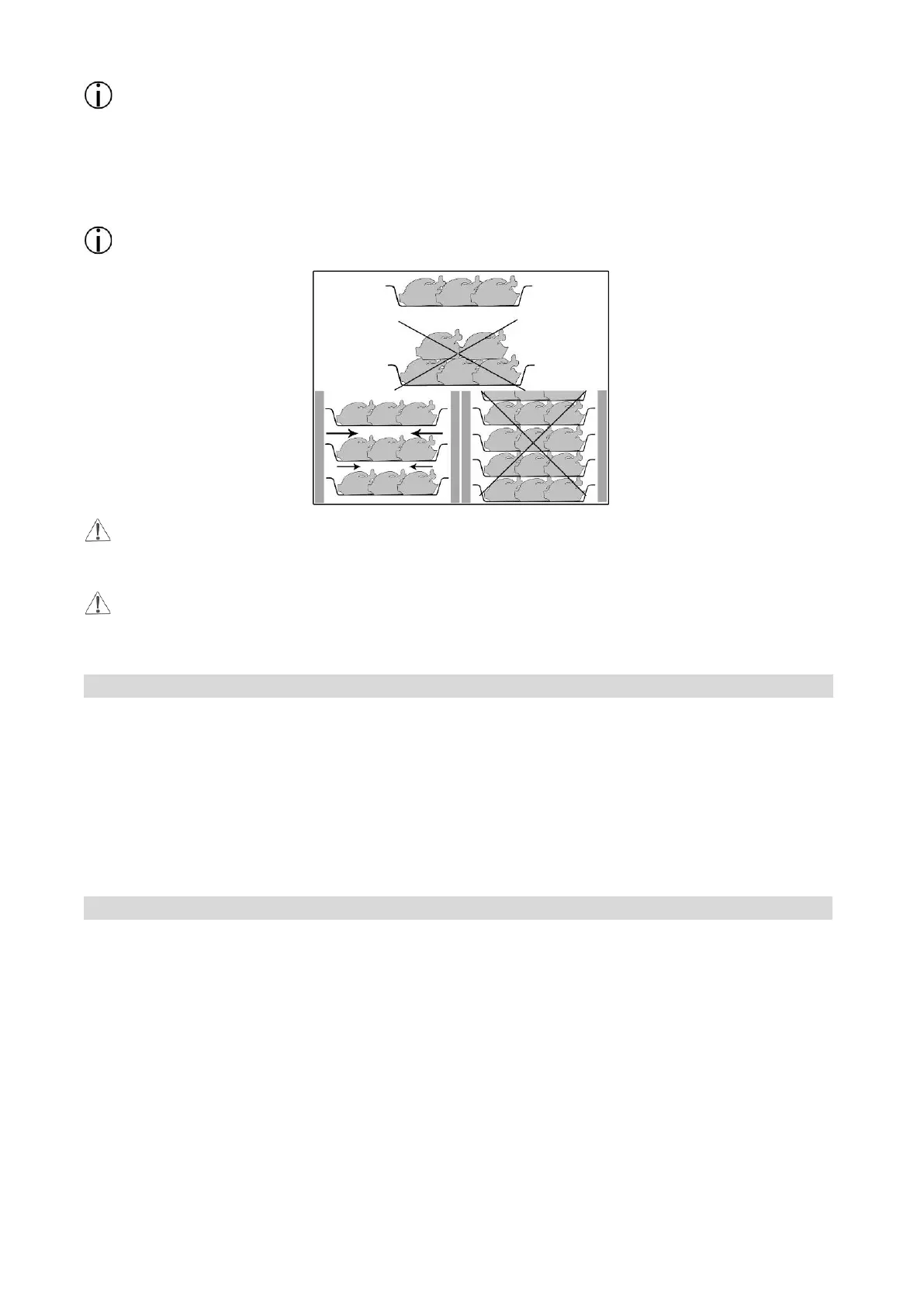
should be in small pieces, especially if it has a high fat content. The largest pieces should be placed in
central trays .If it takes longer than standard time to shock freeze and the sizes cannot be reduced,
decrease the quantity and precool the chiller compartment by starting an empty shock freezing cycle
before shock freezing the product.


 To Next Page