27
SPECIFICATIONS
OPTICAL RADIATION HAZARD
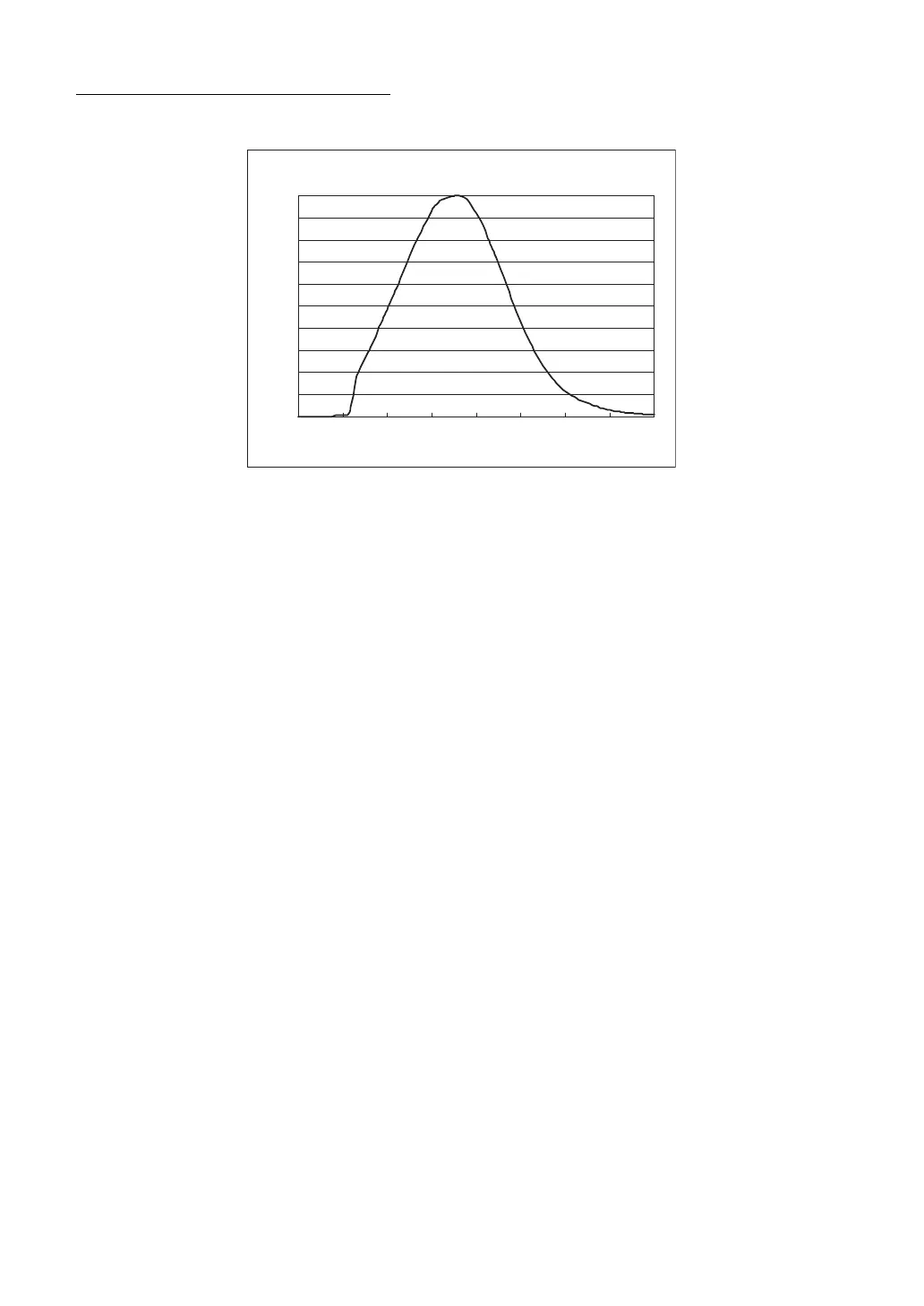
THE RELATIVE SPECTRAL OUTPUT
PHOTOCHEMICAL LIGHT SOURCE RADIANCES OF THIS INSTRUMENT
L
A (without crystalline lens) : 352 mW/ (cm
2
·sr)
L
B (with crystalline lens) : 338 mW/ (cm
2
·sr)
MEANING OF L
B AND LA
Spectrally-weighted photochemical radiance LB and LA give a measure of the potential hazard that
exists for a beam of light to cause photochemical damage to the retina. L
B gives the measure for
eyes in which the crystalline lens is in place. L
A gives this measure for aphakes in which the lens
has not been replaced by a UV blocking intraocular lens or for the eyes of very young children.
The value stated for an SL-1E gives a measure of hazard potential when the instrument is oper-
ated at maximum intensity and maximum aperture. Values of L
B or LA over 80 mW/(cm
2
·sr) are
considered high for beams which wholly fill a dilated pupil.
The retinal exposure dose for a photochemical hazard is a product of the radiance and the expo-
sure time. For instance, at a radiance level of 80 mW/ (cm
2
·sr), 3 min irradiation of the dilated (8
mm diameter) pupil would cause the retinal exposure dose level to attain the recommended expo-
sure limit. If the value of radiance were reduced to 40 mW/ (cm
2
·sr), twice that time (i.e. 6 min)
would be needed to reach the recommended limit. The recommended exposure is based on cal-
culations arising from the American Conference of Governmental Industrial Hygienists (ACGIH)
Threshold Limit Values for Chemical Substances and Physical Agents (1995-1996 edition).
Because prolonged intense light exposure can damage the retina, the use of the device for ocular
examination should not be unnecessarily prolonged, and the brightness setting should not exceed
what is needed to provide clear visualization of the target structures.
While no acute optical radiation hazards have been identified for SL- 1E it is recommended that
the intensity of light directed into the patient's eye be limited to the minimum level which is neces-
sary for diagnosis. Infants, aphakes and persons with diseased eyes will be at a greater risk. The
risk may also be increased if the person being examined has had an exposure with the same
instrument or any other ophthalmic instrument using a visible light source during the previous 24
h. this will apply particularly if the eye has been exposed to retinal photography.
SL-1E:Illumination spectral distribution
0
0.1
0.2
0.3
0.4
0.5
0.6
0.7
0.8
0.9
1
300 400 500 600 700 800 900 1000 1100
Wavelength (nm)
Rerative intensity



 To Next Page