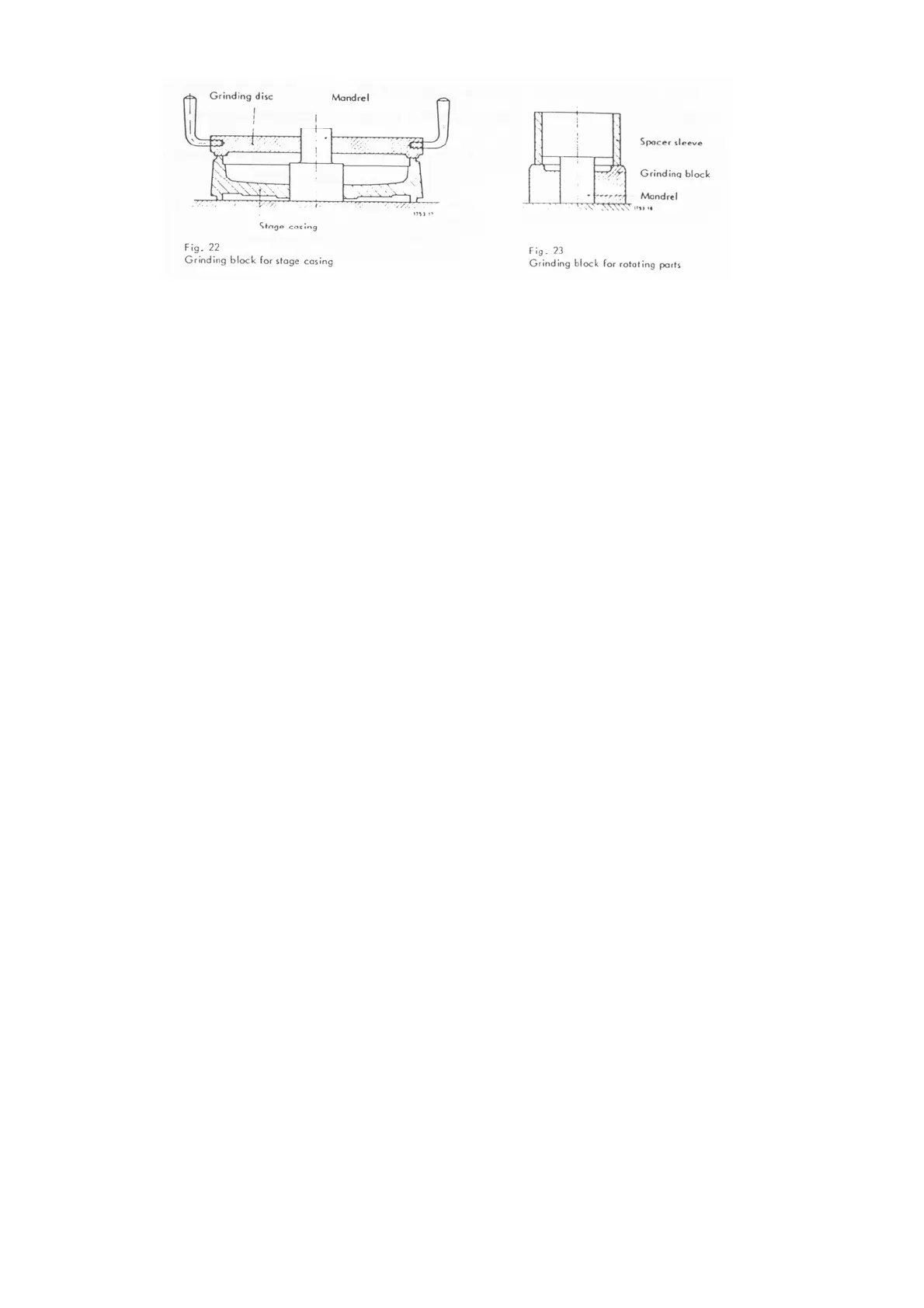
Fig. 22 illustrates a grinding disc for stage casing, and fig. 23 the grinding tool used for regrinding the rotating parts; the latter is
designed as a bushing ( socket ), since only thus can it be ensured that the ground surfaces are fully perpendicular to the axis of the
shaft. The abrasive material ( grinding paste ) used must be of a high grade fine grained quality.
5. 2. 3. Assembling the bearings.
The most scrupulous cleanliness should be observed the fitting the bearings. Dirt, dust and moisture will damage anti-friction
bearings. Petrol or benzol may be used for cleaning bearings, and these should be well oiled immediatelly after cleaning, and rotated
repeatedly, to allow all the tracks and balls and rollers to be completely cated with oil.
A part from special types, MML pump sizes 40-125 are fitted with taper lock sleeve roller bearings these combine the two
features of a tight fit on the shaft required by the design, and an assembly which can be readily dismantled, so that there practically no
risk of the bearing being damaged by having to use force to remove it from the shaft.
When mounting the bearing, make sure that the inner and outer races are in line, i. e. not off set to each other, before
tightening the taperlock sleeve should only be tightened sufficiently far to allow the outer race to rotate freely, without any perceptible
resistance. This requires a certain amount of care and attention. The nut on the sleeve is secured by a locking plate which must no be
overlooked during erection.
If a trial run produces a squealing noise from the bearing, this usually indicated inadequate lubrication. A louder and intermittent
noise may be caused by dirt in the bearing.
When dismantling the bearing, the nut on the taperlock sleeve should first be removed. Then the inner race of the bearing is
freed from the taper sleeve by light hammer blows on one end of a suitable length of mild steel or brass piping, the other end of which
is applied against the thin end of the taper sleeve.
5. 3. Protection of pump during prolonged shut downs and transport.
If a pump is shut down for a prolonged period, it must be carefully protected. It should be completely dismantled and all
components thoroughly cleaned and dried. Then it is reassembled ( see page 24 ), and the suction and discharge nozzles should be
blanked off by wooden covers, to prevent foreign bodies entering the pump. All open connection for cooling water and oil should like
wise be carefully plugged.
Any machined parts on the assembled pump which are exposed to atmosphere should be coated with a rust preventive
varnish, or throughly oiled or greased.
If the pump is sent back to or Works for repairs, it should be drained first, and all the pipe connections and flanges carefully
plugged or blanked off, as mentioned above. The pump should always be despatched in the fully assembled state, as the sealing faces
of the individual components might otherwise be damaged in transit.
- 24 -


 To Next Page