EasyManua.ls Logo

Trojan TR 100 - User Manual

Trojan TR 100
32 pages
Print Icon
To Next Page IconTo Next Page
Loading...
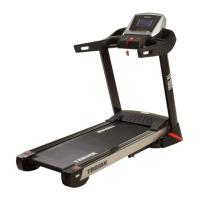
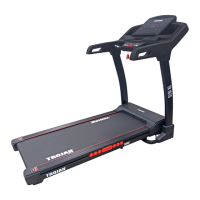
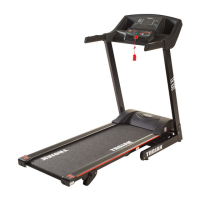
TR 100
TREADMILL
3 LEVEL
INCLINE
CARDIO
USER MANUAL
Visit facebook.com/trojanhealth
www.trojanhealth.co.za
CAUTION
READ ALL PRECAUTIONS AND
INSTRUCTIONS IN THIS MANUAL
BEFORE USING THIS EQUIPMENT.
KEEP THIS MANUAL FOR
FUTURE REFERENCE.

Questions and Answers

Trojan TR 100 Specifications

General IconGeneral
BrandTrojan
ModelTR 100
CategoryTreadmill
LanguageEnglish

Summary

Important Safety Instructions

Health Warning

Consult physician before exercise; stop if feeling unwell. Warm-up and cool-down are essential.

Installation Guidelines

Secure on level surface, adequate space (1m recommended), ventilation, and away from moisture.

Proper Usage Precautions

Use as intended, avoid improper/excessive exercise, one person at a time, maintain balance.

Important Safety Instructions

Access Control and Supervision

Supervised area recommended; keep children away from equipment. Provide close supervision.

Equipment Inspection and Maintenance

Check for damage, use genuine parts, maintain labels, perform regular maintenance.

Operating Warnings

Instruct users on procedures, keep children away from moving parts, avoid loose clothing.

User Weight Limitations

Treadmill TR 100 max user weight is 100 kg. Do not exceed.

Grounding Instructions

Electrical Safety

Product must be grounded to reduce electric shock risk. Use correct outlet.

Plug and Outlet Compatibility

Use on 220-240 Volt circuit with matching grounding plug. Do not use adaptors.

Pre Assembly Check List

Parts Identification

Review the drawing and familiarize yourself with all labelled parts before assembly.

Treadmill Specifications

Running Deck: 1200x400mm, Set-up Size: 1487x670x1179mm, Max User Weight: 100kg.

Hardware & Tools List

Assembly Preparation

Check hardware packaging to ensure all parts are included. Basic tools are provided.

Included Tools

5# Allen Wrench (5mm) and Wrench screwdriver (sizes 13, 14, 15) are supplied.

Parts List

Exploded Drawing

Assembly Steps

Step 1: Preparation

Open carton, remove all parts, and place the Main Frame on level ground.

Step 2: Computer Frame Attachment

Lift Computer Frame, secure to Uprights using bolts (55) and washers (67).

Assembly Steps

Step 3: Securing Uprights

Pull up Uprights and Computer. Support with one hand to prevent falling.

Step 4: Base Frame Connection

Secure Right/Left Uprights to Base Frame using specified bolts (70, 55) and washers (67).

Assembly Steps

Step 5: Insert Safety Key

Insert the Safety Key (38) into the slot on the console.

Final Assembly Check

Ensure all bolts are securely tightened before operating the treadmill.

Computer Functions

Function Buttons Overview

SPEED, TIME, DIST, CAL, PUL buttons display respective metrics on the console.

Control Operations

PROGRAM, MODE, START, STOP, SPEED buttons control treadmill functions and speed.

Main Function Activation

Switch on power supply; treadmill starts and enters standby mode.

Operation Instructions

Quick Start-Up (Manual Mode)

Place safety key, press START, adjust speed using SPEED buttons.

Countdown Modes

Select TIME, DISTANCE, or CALORIE countdown; set speed and press START.

Installed Programs (P1-P12)

Select programs, adjust time; speed levels adjust automatically based on program segments.

Heart Rate Test Procedure

Hold hand pulse for 5+ seconds for reading. Not for medical purposes.

Body Fat Test

Select FAT mode via PROGRAM; enter SEX/AGE/HEIGHT/WEIGHT parameters.

Operation Instructions

Data Display and Setting Ranges

Details for SEX, AGE, HEIGHT, WEIGHT parameters and their valid input ranges.

BMI Reference Chart

Classification of BMI values: Underweight (<19), Average (19-26), Overweight (26-30), Obese (>30).

Energy-Saving Mode

System enters standby after 10 minutes of inactivity; press any key to restart.

Safety Lock Function

Remove safety key to stop treadmill instantly; insert to revert to idle mode.

Running Data and Settings

Ranges for Speed (0.8-14 km/h), Time, Distance, and Calories.

Operation Instructions

Program Speed Table

Table detailing speed settings for each stage of programs P1 through P11.

Trouble Shooting

Error Code Solutions

Lists common error codes (E01-E06), their main reasons, and suggested solutions.

Technical Parameter

Treadmill Specifications

Details built-up size, foldable size, running surface, weight, power, speed range, and user weight.

Folding Instructions

Folding the Machine

Pull up Base Frame until Cylinder Air Pressure Bar clicks into position.

Unfolding the Machine

Tap Cylinder, pull deck down; deck lowers automatically. Ensure clear space.

Exercise Instructions

Warm Up Phase

5-10 mins stretching/light exercise to increase circulation and reduce injury risk.

Exercise Phase

Work at steady tempo, raise heart rate into target zone for stronger muscles.

Heart Rate Zone Graph

Graph showing target heart rate zones based on age for effective exercise.

Exercise Instructions

Cool Down Phase

Repeat warm-up exercises to wind down muscles and cardiovascular system.

Muscle Toning Guidance

Achieve by setting resistance high; adjust program for fitness and toning.

Weight Loss Strategy

Increase effort duration and intensity to burn more calories.

Using the Treadmill

Tension control knob alters resistance; set tension while in use for best results.

Initial Warm-Up Stage

Consult doctor; learn controls; stand on pads, hold bar, start slow (1.6-3.2 km/h).

Exercise Instructions

Exercise Stage Progression

Adjust speed/incline; walk 1km at stable velocity, then increase speed/incline.

Exercise Intensity Management

Warm up slowly, gradually increase speed; slow down for cool down.

Exercise Frequency Recommendations

3-5 workouts/week with rest days; aim for regularity and enjoyment. Start with incline off.

Beginner Speed Guidelines

Speed ranges for Beginner (0.8-3.0), Slow Walking (3.0-4.5), Normal Walking (4.5-6.0), etc.

Maintenance

Lubrication Warning

Lubricate friction points to prolong life; failure may void warranty. Unplug before maintenance.

General Cleaning Procedures

Wipe belt edges monthly, clean belt surface, vacuum underneath annually.

General Care and Checks

Check parts for wear, replace worn parts, contact help line if unsure.

Maintenance

Belt and Deck Lubrication

Periodic lubrication is required; frequency depends on user level (annually to quarterly).

Lubrication Frequency Guide

Light user: annually; Medium user: every six months; Frequent user: every three months.

Professional Repairs

Any repair must be performed by a professional technician.

Centre the Running Belt

Belt Drift Adjustment (Right)

Turn right adjusting bolt clockwise to center belt; gap <= 5mm.

Belt Drift Adjustment (Left)

Turn left adjusting bolt clockwise to center belt; gap <= 5mm.

Belt Tightness Adjustment

Periodically adjust tightness with left/right bolts; gap between belt and edging should be <= 5mm.

Fitness Tips & Techniques

Aerobic Exercise Benefits

Sustained activity for lungs/heart; improves fitness and oxygen delivery.

Weight Training for Toning

Essential for toning, building, and strengthening muscle; consult physician.

Lower Body Muscle Development

Highlights lower body muscles developed by treadmill and circulatory conditioning.

Conditioning Guidelines

Starting an Exercise Program

Start slowly if inactive/overweight; gradually increase time and intensity. Work at your own pace.

Target Heart Rate Zone

Maintain 65-85% of max heart rate for effective aerobic exercise; adjust based on age.

Measuring Heart Rate

Measure pulse by taking a 6-second count and multiplying by 10.

Warm Up & Cool Down

Workout Structure

Each workout includes Warm-up (5-10 min), Training Zone Exercise (20-30 min), and Cool-down (5-10 min).

Exercise Frequency

3-5 workouts/week with rest days; aim for regularity and enjoyment.

Suggested Stretches

Includes Toe Touch, Hamstring, Calf/Achilles, Quadriceps, and Inner Thigh stretches.

2 Year Limited Warranty

Warranty Exclusions

Excludes disaster, misuse, commercial use, unauthorized modification, wear and tear.

Proof of Purchase Requirement

Claims require proof of purchase or warranty number; contact Trojan Call Centre.

Repairs Procedure

Under Warranty Repair Process

Free repairs for defects under warranty terms; quote for non-covered items.

Out of Warranty Repairs

Consumer responsible for all costs; quote provided before repairs.

Contact for Support

Call Trojan for product queries, after-sales support, repairs, or installations.

Notes

Related product manuals