A - 1
Enclosure A - Electrode Humidier
Liebert PCW - UM - 273895 - 04.10.2018
A.1 - Electrode humidier
The operation of immersed electrode humidiers is based on a very simple physical principle. As common drinking water contains a cer-
tain quantity of dissolved mineral salts, and is consequently slightly conductive, applying a voltage to metal electrodes immersed in the
water creates an electric current that heats the water until producing steam (Joule eect). The quantity of steam produced is proportional
to the electric current, which is in turn proportional to the level of water.
In order to obtain optimum performance from the humidier it is advisable to read this manual carefully.
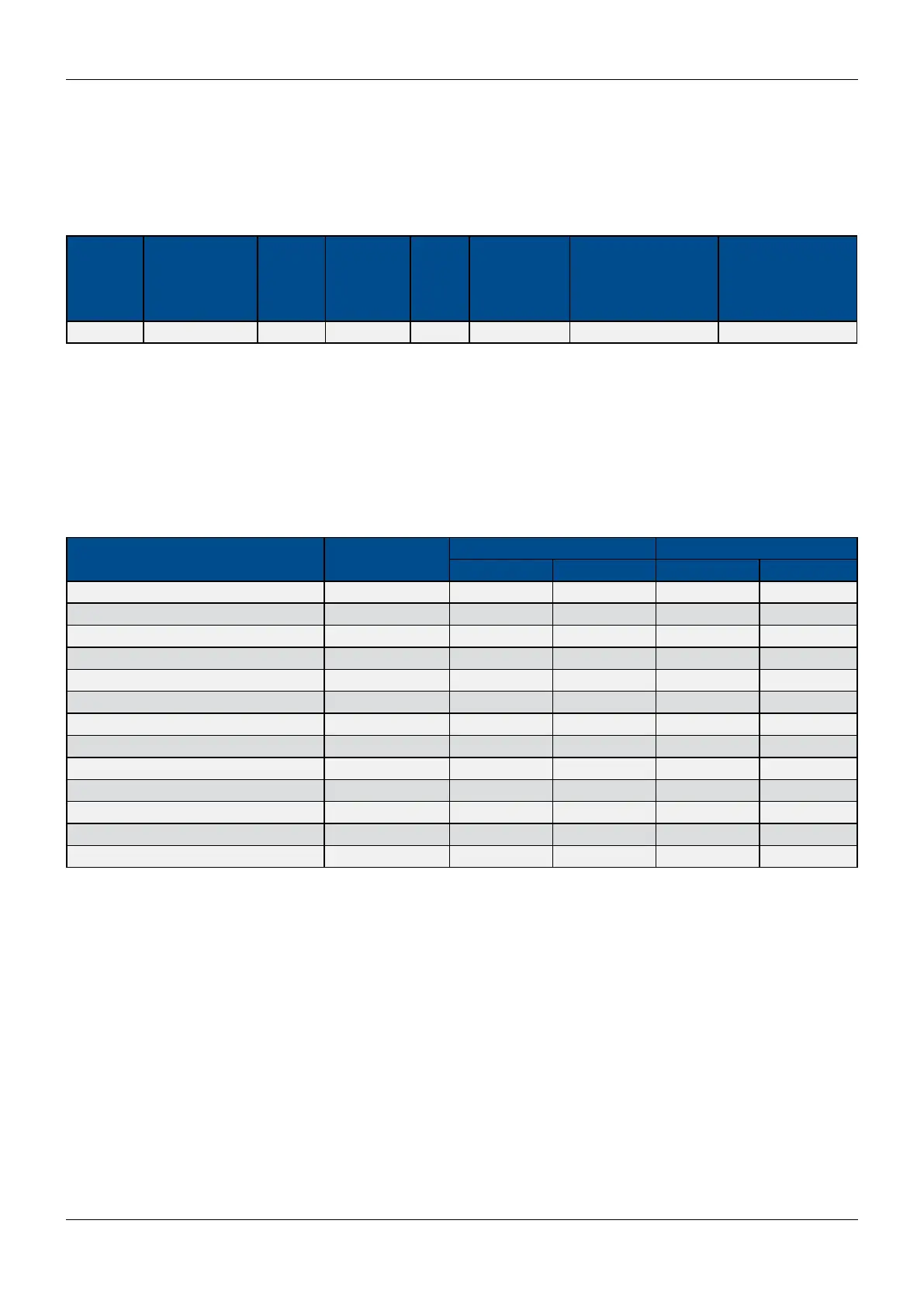
Tab. 1 - Humidair specications
For humidier current (FLA) and rated power, refer to electrical features in the Enclosure B.
(*) Unit is factory- set to produce about 70% of the maximum value (see iCOM manual).
A.2 - Installation
The humidier is supplied already mounted within the air conditioner. The only necessary operations are the connections for the supply
water and drain water.
Supply Water.
Only use mains drinking water with:
• Pressure between 0.1 and 0.8MPa (1 and 8 bars), temperature between 1 and 40° C and an instant ow rate no higher than the rated
ow of the ll solenoid valve, the connection is R ¾ (ISO 7/1);
• Hardness no greater than 400 ppm of CaCO
3
(40 ° fH), conductivity range: 75- 1250 μS/cm;
(1)= values depend on the specic conductivity; in general: CR ≈0.65 * σR, 20 ° C; R180 ≈0,93 * σR, 20 ° C
(2) = not less than 200% of the chloride content in mg/l CL-
(3) = not less than 300% of the chloride content in mg/l CL-
There is not reliable relationship between hardness and conductivity of the water
Important:
• Do not treat the water with softeners, this may cause the entrainment of foam, aecting the operation of the unit;
• Do not add disinfectants or anticorrosive compounds to the water, as these are potential irritants;
• The use of well water, industrial water or water from cooling circuits and, in general,any potentially chemically or bacteriologically
contaminated water is not recommended.
Connection:
For the supply water connection see the details in Fig1. (point11- 14)
Drain Water.
• This contains the same substances dissolved in the supply water, however in larger quantities;
• It may reach a temperature of 100 ° C;
• It is not toxic and can be drained into the sewerage system, category 3, EN 1717.
HUMIDAIR
MODEL
MAIN POWER
SUPPLIES
(V ± 10%)
SETTING
[kg/h] *
ABSORBED
CURRENT
[A]
POWER
[kW]
MAX.
CYLINDER
WATER
VOLUME
[l]
MAX. SUPPLY WATER
QUANTITY
[l/min.]
MAX. DRAIN WATER
QUANTITY
[l/min.]
KUEC2E 400V / 3ph / 50Hz 3.9...13.0 13.0 9.0 5.5 0.6 10.0
no organic compounds. supply water
characteristics
unit of measure
normal water water with low salt content
min. max min. max.
Hydrogen ions (pH) 7 8.5 7 8.5
Specic conductivity at 20° C(σR, 20 ° C) ) (σR, 20 ° C)) S/cm 350 1250 75 350
Total dissolved solids(cR) mg/l (1) (1) (1) (1)
Dry residue at 180° C(TH) mg/l (1) (1) (1) (1)
Total hardness mg/l CaCO
3
100 (2) 400 50 (2) 160
Temporary hardness mg/l CaCO
3
60 (3) 300 30 (3) 100
Iron + Manganese mg/l Fe+Mn = 0.2 = 0.2
Chlorides ppm Cl- = 30 = 20
Silica mg/l SiO
2
= 20 = 20
Residual chlorine mg/l Cl
2
= 0.2 = 0.2
Calcium sulphate mg/l CaSO
4
= 100 = 60
Metallic Impurities mg/l 0 0 0 0
Solvents, thinners, detergents, lubricants mg/l 0 0 0 0



 To Next Page