IMPORTANT!
All
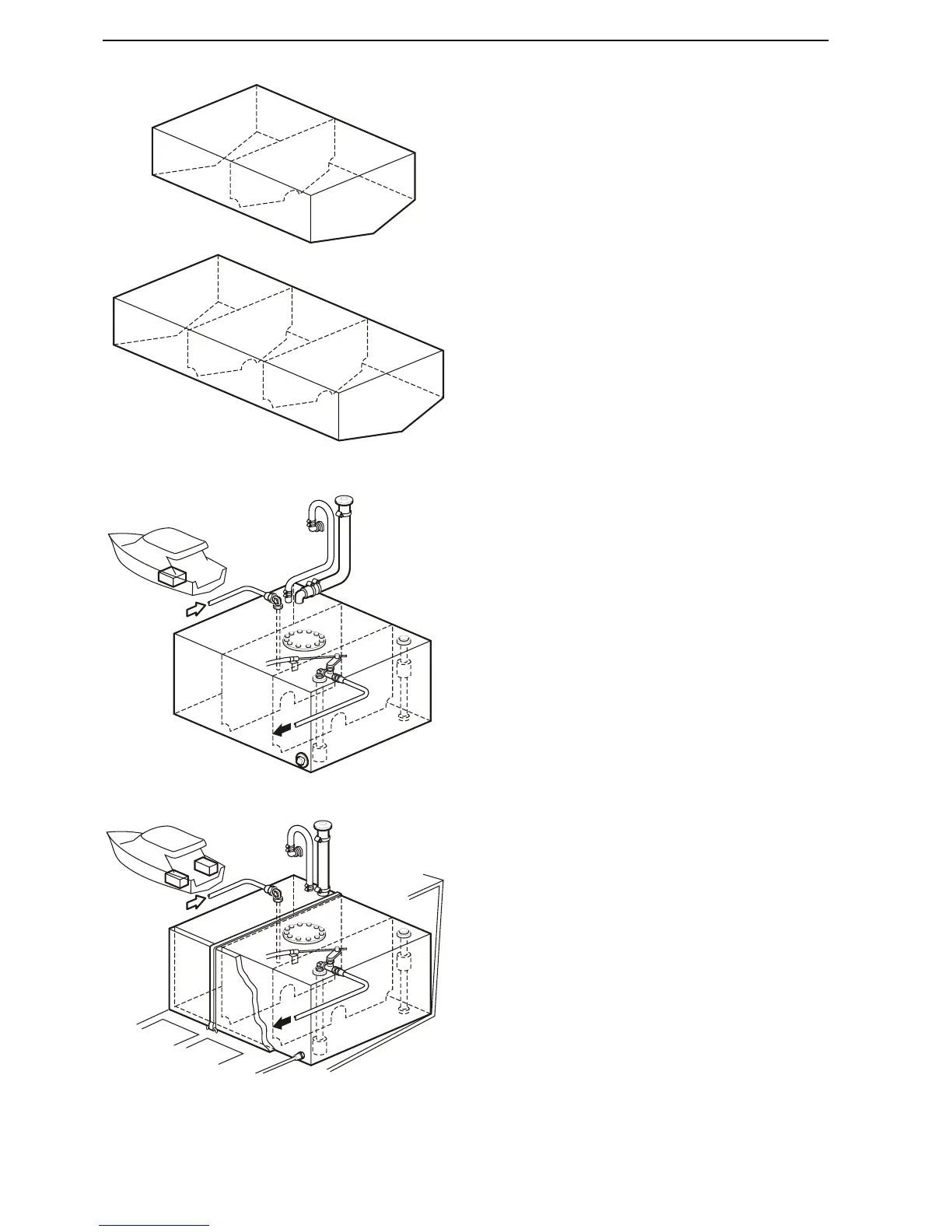
tanks must be equipped with at least one slosh baf-
fle per 150 l (37 US gal) volume. Check to see if there
are special restrictions regarding volumes and slosh
baffles.
Filling and ventilation connections may not be located
on the sides of the tank.
The fuel tanks have filling, ventilation, suction line,
return line, and fuel level sensor connections, and an
inspection opening with cover. The suction and return
lines must always be kept apart as illustrated.
A shut-off valve must be fitted to the suction line as
close to the tank as possible. The shut-off valve may
be remotely controlled by cable or similar. Some mar-
kets require electrically controlled shut-off valves.
Diesel engine return lines must be run back to the bot-
tom of the tank in order to prevent air entering when
the engine is stopped.
Mount the tank on a soft base. Do not mount the tank
on wooden blocks or other type of uneven base. as this
may cause uneven loading with an attendant risk of
fatigue cracks in the tank.
Install the tank in the boat. Secure the tank with clamps
to prevent it from moving in heavy seas. The fuel tank
must be located by itself in a cool space in order to
avoid fuel being heated or spread to other parts of the
boat in the event of a leak.
In boats where space is limited, the tank may be
shaped in order to fit under the aft deck or similar
space.



 To Next Page