Corrosion protection
Drives are protected from corrosion by a number of
measures.
-
Alloys which are resistant to salt water.
- Avoidance of unsuitable combinations of metals.
Where appropriate, a favorable relationship
between anode and cathode is established.
- High quality surface treatment.
- Cathodic protection.
- Carefully designed electrical system.
- Recommendations to minimize external interfer-
ence.
Recommendations from Volvo Penta and anti fouling
manufacturers must be followed. In addition, the mate-
rial must be resistant to the alkali that is formed on
cathodically protected surfaces.
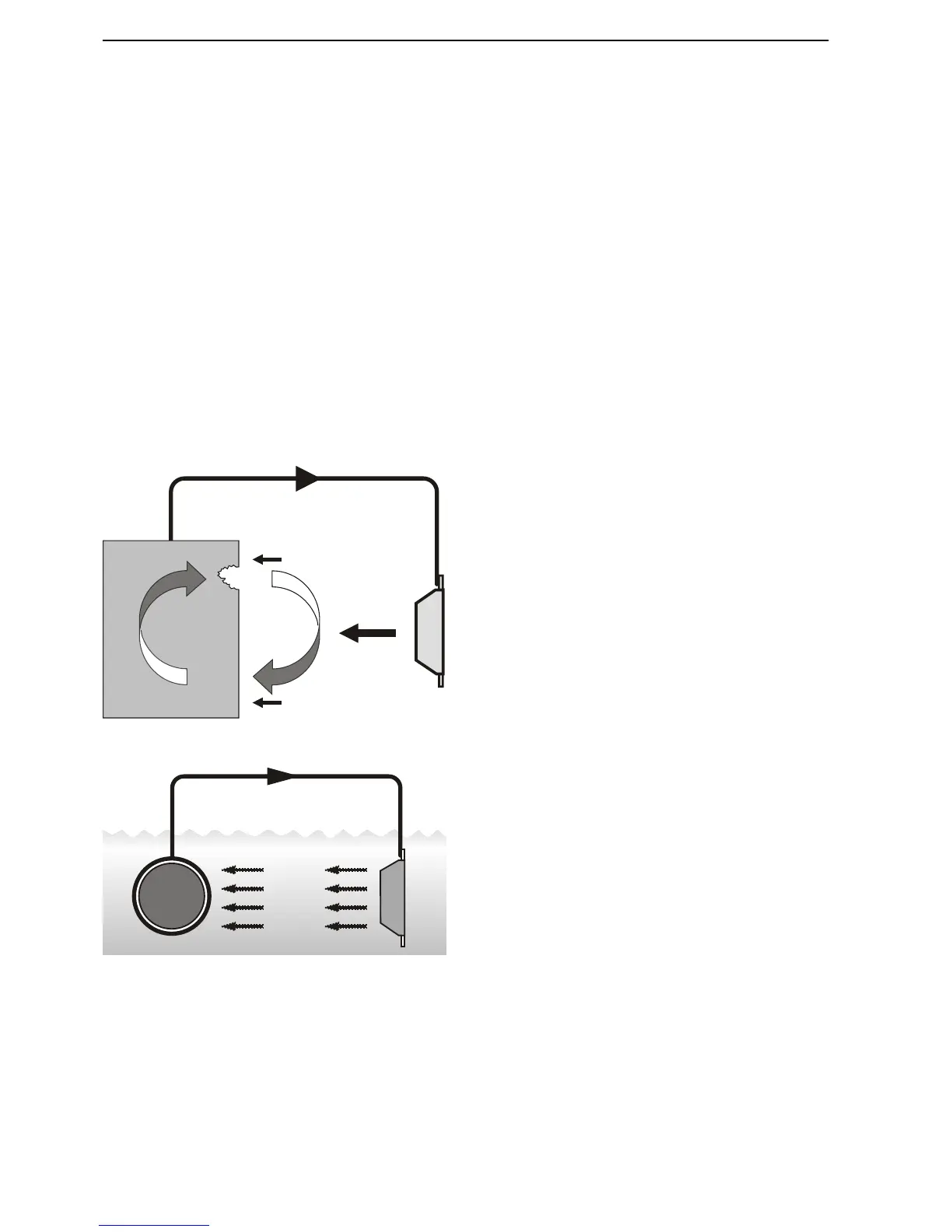
Cathodic protection is arranged by supplying a weak
DC current from an anode to the protected object. The
current which leaks in counteracts the corrosion cur-
rent. The higher the protection current, the lower is the
rate of corrosion.
The current required for protection can be generated
in two ways. These are either with sacrificial anodes or
by applying a current. If sacrificial anodes are used, the
current is generated by connecting the protected
object with a less noble metal (anode). The difference
in electric potential creates a protective galvanic cur-
rent. It can be said that corrosion is transferred to the
anode, which is why they are referred to as sacrificial
anodes.



 To Next Page