The VWR® PCR Thermal Cycler XT96 / XTender96 is a laboratory instrument designed for molecular biological and biochemical laboratories working in the field of basic research or routine diagnostics. It is primarily used for Polymerase Chain Reaction (PCR), a technique that amplifies specific DNA sequences. The device utilizes Peltier technology, allowing for rapid and precise temperature changes, with a maximum heating and cooling rate of 4 °C/sec (max). This ensures high reproducibility and accurate temperature control across the entire thermal plate, which is equipped with a heated lid to prevent condensation.
Function Description
The VWR thermal cyclers are ideal PCR devices for all molecular biological and biochemical laboratories working in the field of basic research or routine diagnostics. The XT96 and XTender96 models are designed for efficient and reliable PCR amplification. The XTender96 model offers additional functionality with a touch-sensitive, graphic-colored TFT display, providing a user-friendly interface for programming and monitoring PCR protocols. The device supports standard USB sticks for data transfer and can be connected to a printer for printing programs and GLP reports. An Ethernet port is also available for connecting to external servers for archiving programs and GLP reports, and for other thermal cyclers.
Important Technical Specifications
The VWR PCR Cycler XT™ series features 8 Peltier elements with Long-Life-technology and 8 control circuits with Pt 1000 temperature sensors.
- Maximal heating and cooling rate: 4 °C/s
- Block uniformity (at 72 °C): ± 0.35 °C
- Temperature range thermoblock: 4 to 105 °C
- Control accuracy thermoblock: ± 0.2 °C
- Variable ramping: 0.1 to 3.0 °C/s
- Increment/Decrement time: 0:00:01 to 0:59:59
- Increment/Decrement temperature: 0.1 to 3 °C
- Lid heating temperature range: 40 to 110 °C
- USB Interfaces: 2 x USB (1 x Ethernet interface, 1 x MS Windows® or Linux). Only supports standard USB sticks, cord mouse and keyboards.
- Dimensions (B x H x D): 22 x 30 x 33 cm (XTender: 22 x 20 x 33 cm)
- Weight incl. block: 8.9 kg (XTender: 8.3 kg)
- Position no.: 2
- Environmental temperature range: +10 °C to +35 °C
- Max. relative humidity: 70 %
- Maximum height above sea level: 2000 m
- Noise level: < 37 dB (A)
- Power supply: 100 - 240 V AC, 50/60 Hz, max. 860 VA
- Gradient feature (optional):
- Maximal gradient range over 8 columns, respectively: 30 °C (± 15 °C)
- Temperature range Gradient: 30 to 100 °C
- Gradient accuracy: ± 0.2 °C
- User interface/functions:
- Touch sensitive (capacitive) TFT-Display (800 x 480) (not included in the XTender)
- Direct help function
- Internal flash memory for 500.000 typical PCR programs in free configurable folders/subfolders. Unlimited number of programs via network PC or USB stick
- Free PC software for the generation of PCR programs on the computer
- Unlimited number of steps per program
- Password protected user accounts with variable access rights
- GLP reports for complete recording of all runs
- QuickStart function for the last used program
- Automatic restart after Power Failure, Power-Fail-Denaturation, Instant Incubation
- Remote control and monitoring of instruments via PC-software
- MP3 sounds free of choice
- Master-/Slave-control
- Block capacity: 96 well Universal block with lid heating and automatic height adaption for 96 x 0.2 ml tubes and 96 well PCR plates (non-skirted and half-skirted)
Usage Features
The VWR thermal cyclers are designed for ease of use and flexibility.
- Installation and Connections: The device requires a stable, level surface and positioned such that air can circulate freely around the casing. It should not be placed back-to-back or back to front with other thermal cyclers. It connects to the AC power supply via the provided power cord. USB interfaces are available for data transfer and connecting peripherals like a mouse or keyboard. An Ethernet interface allows for network integration and remote control.
- User Interface: The XTender96 model features a touch-sensitive TFT display for intuitive control. The main menu provides access to various functions including "Incubate," "Run," "Programs," "GLPs," "Explorer," "Diagnose," "System," and "Help."
- Programming PCR Protocols: Users can create, edit, and store PCR programs using the "Programs" dialogue. The software allows for defining various parameters such as heat lid temperature, denaturation temperature and time, annealing temperature and time, elongation temperature and time, and the number of cycles. Gradient steps can also be programmed for optimization.
- Run Dialogue: The "Run" dialogue offers two versions: "Simple Mode" and "Expert Mode." Simple Mode provides reduced information, while Expert Mode offers access to all main functions. Users can select programs, start, pause, or stop runs, and monitor the progress, time remaining, and block/lid temperatures.
- Incubation Mode: This mode allows setting the device into incubation mode, where the temperature for the thermal plate and lid can be set manually.
- GLP Reports: The device supports the generation and display of GLP (Good Laboratory Practice) reports, which provide a comprehensive record of all runs, including date/time, user, software version, and program parameters. These reports can be saved as PDF files and printed.
- Explorer Dialogue: The "Explorer" dialogue is used for data management, allowing users to browse, edit, delete, copy, and paste programs or folders.
- Diagnose Dialogue: This dialogue visualizes the temperature profile of the thermal plate, showing current values for lid temperature and cycler temperature. It also displays the thermal cycler's automatically recorded temperatures.
- System Dialogue: This section allows for general settings of the device and user management functions. Users can manage user accounts, set access rights, update software, configure USB sticks for network settings, and view license information.
- Remote Control: The thermal cycler can be connected to a network, enabling remote control and monitoring via PC software.
Maintenance Features
Proper maintenance is crucial for the longevity and reliable operation of the VWR thermal cycler.
- Cleaning: The device must be switched off and the mains plug pulled before cleaning. The thermal cycler can be wiped off with a damp cloth or ethanol. Do not use aggressive or scouring cleaners or organic solvents for cleaning.
- Decontamination: To prevent cross-contamination, the device should be decontaminated with a lint-free cloth soaked with 70% ethanol before each run. If liquid penetrates into the interior of the device, it should be immediately wiped clean with a mild disinfectant. The drill holes of the thermoblock should be cleaned with a 1.5 % hypochlorite solution using a cotton bud.
- Returns in Original Packaging: If the device needs to be returned for service or repair, it must be packaged in its original packaging to ensure safe return.
- Temperature Check-up: Maintenance of temperature accuracy at regular intervals is recommended. The thermometer for use should be equipped with wired sensing devices (e.g., Pt1000) and should have an accuracy of measurements of 1/10 class B (ΔT = ±0.03 °C) in the range of 0 to 100 °C.
- Calibration: If there is a reasonable suspicion that the device has deviated from the calibration range, a calibration check-up should be carried out by the manufacturer or a qualified specialist.
- Software Updates: The software of the Thermal Cycler can be updated via a USB stick. It is important to remove the USB memory stick immediately after a successful update.
- Factory Reset: All settings in the System dialogue can be reset to their default settings, and program and GLP files will be deleted.
- Technical Service: VWR provides comprehensive technical service, including access to online catalogue and information about accessories and related products, additional product information, and special offers. For further information or technical assistance, users can contact their local VWR representative.

 Need help?
 General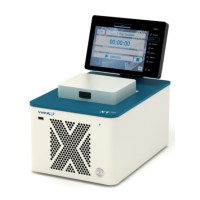

 To Next Page