4
TEBS E
Introduction
16
from the reservoir flows to the Pneumatic Extension Module (PEM, 5) via a check
valve integrated in the PREV.
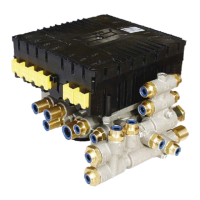
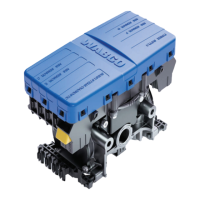
The PEM includes the following functions:
• a charging valve for securing pressure in the air braking system apart from the
air suspension,
• an overload protection valve to protect the wheel brakes from overloading –
when service and parking brake are actuated simultaneously,
• a pressure distribution for the supply ‘air suspension’ and supply ‘service brake’.
The TEBS E Modulator controls the service brake components (8) for the Tristop®
cylinders (9). At least two rotational-speed sensors (18) are connected for sensing
the wheel speeds. A pressure test connection is also provided on the PEM for
measuring the current braking pressure. The PEM charges the service brake sys-
tem reservoir (10) with the supply pressure from the PREV.
The same line is used to supply the TEBS E Modulator with supply pressure from
the reservoir. The reservoir for the air suspension system (11) is charged via the
charging valve integrated in the PEM. The charging valve has the task to ensure
that primary pressure is maintained in the ‘Brake’ reservoir and thus the ability of
the towing vehicle to brake, in the event of a pressure drop in the air suspension
system. In order to protect the wheel brakes from overloading from the additional
brake force (diaphragm part and spring chamber of the Tristop® cylinder actuated
simultaneously), an overload protection valve (7) is integrated in the PEM. The
pressure is distributed to the Tristop® cylinders (9) by the PEM.
The parking brake is actuated by pressing the red button on PREV (13). This ex-
hausts the parking brake component of the Tristop® cylinder so that the integrated
spring can actuate the wheel brake. If the service brake is also used while the
parking brake is actuated, the braking pressure flows into the parking brake com-
ponent of the Tristop® cylinders via the overload protection valve, thereby relieving
the force in the parking brake component in proportion to the braking force built up
in the service brake component and so ensuring that there is no addition of force.
Conventional air suspension system
The conventional air suspension system consists of a levelling valve (17) and a lift-
ing/lowering valve, e.g. TASC (12) see chapter 6.4 ‘Speed switch (ISS 1 and ISS 2)
and RTR’, page 75. Both valves are su
pplied with supply pressure from the PEM.
The levelling valve adjusts to the normal level (ride height) of the trailer vehicle by
adjusting the amount of air in the support bellows (15). The lifting/lowering valve
can be used to change the level of the trailer vehicle manually, e. g. for loading or
unloading. In addition, a lifting axle valve (16), which is modulated by the TEBS E
Modulator relative to load, may also be installed. The lifting axle valve is also sup-
plied with supply pressure from the PEM.



 To Next Page