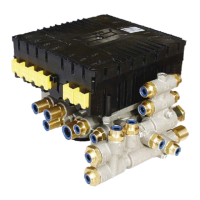
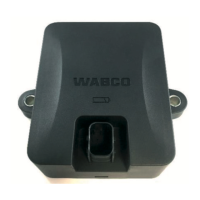
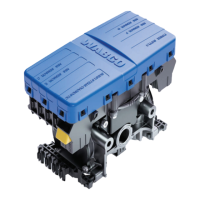
TEBS E
6
GIO functions
71
Driving normal level is described as the basic design parameter for the vehicle.
Normal level II
Normal level II is defined as the difference to driving level I (normal level). If normal
level II is lower than normal level I, this value must be entered as a negative in the
TEBS E Diagnostic Software.
Application
• If the semi trailer is operated behind different towing vehicles (with different plat-
form heights) the body can be set level.
Normal level III
Normal level III is a normal level like normal level II but it corresponds with the
maximum body height and is therefore the highest normal level.
Normal level III could only be selected by the speed previously. As of
version TEBS E2, the selection is now possible by the ECAS remote
control unit as well.
Application
• Used for adjusting the trailer to various platform heights.
• For fuel saving (e.g. at higher speed).
• For lowering the vehicle centre of gravity to achieve more lateral stability.
Lowering the superstructure depending on the vehicle's speed, is based on the as-
sumption that higher speeds are achieved on sound road surfaces which do not
require the whole of the bellows' spring stroke to be utilised.
Normal level IV
Whether the unloading level or an additional normal level IV function
should be used is selected by parameter settings.
Unloading level
The unloading level is only actuated when stationary or at low speed for easier
unloading of the vehicle. When the speed is achieved, the last saved level is read-
justed automatically.
Application
• Lower a tipper vehicle to prevent hard rebounds because of a sudden release
(dumping the load).
• Moving road tankers automatically into the best unloading position.
• Improving stability.
Unloading level switch
Example: The switch is attached on a tipping body, the vehicle will then lower
automatically to a defined level, as soon as the body is tipped. Ideally this value
corresponds to the buffer or lower calibration level. This avoids overloading the
axle combination during sudden unloading.
This function is automatically deactivated v > 10 km/h.
If the parameterised unloading level is outside the parameterised lower or upper
level, the stroke is restricted to this level.
An unloading level is only realised between the upper and lower calibration level -
even when the parameter settings specify a value outside this range.
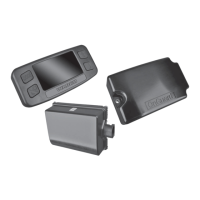
The unloading level can be switched off at times with the SmartBoard, e.g. for op-
erating before road finishers.



 To Next Page