5-8 BA E14 track en* 1.3 * E14t_13_500.fm
5 Operation
Stones and the humidity in the upper layer of the ground can affect vehicle
traction and stability.
The vehicle can slip sideways on gravel or loose, rocky soil. The stability
of the vehicle can be reduced on rough terrain.
On soft ground, the vehicle sinks into it or the tracks dig into it. This
increases the vehicle angle (maximum gradient angle and maximum
lateral angle of inclination), and the vehicle can tip over.
If the engine dies as you perform uphill or downhill vehicle travel,
immediately put the control levers to neutral position and restart the
engine.
Observe under all circumstances during uphill or downhill travel:
• Keep the drive levers near the neutral position.
• Perform slow and smooth travel movements.
• Avoid sudden travel movements.
• Reduce the engine speed.
The vehicle can slip even on gentle slopes if it travels across grass,
leaves, humid metal surfaces, frozen ground or ice.
Preparations for performing vehicle travel on slopes
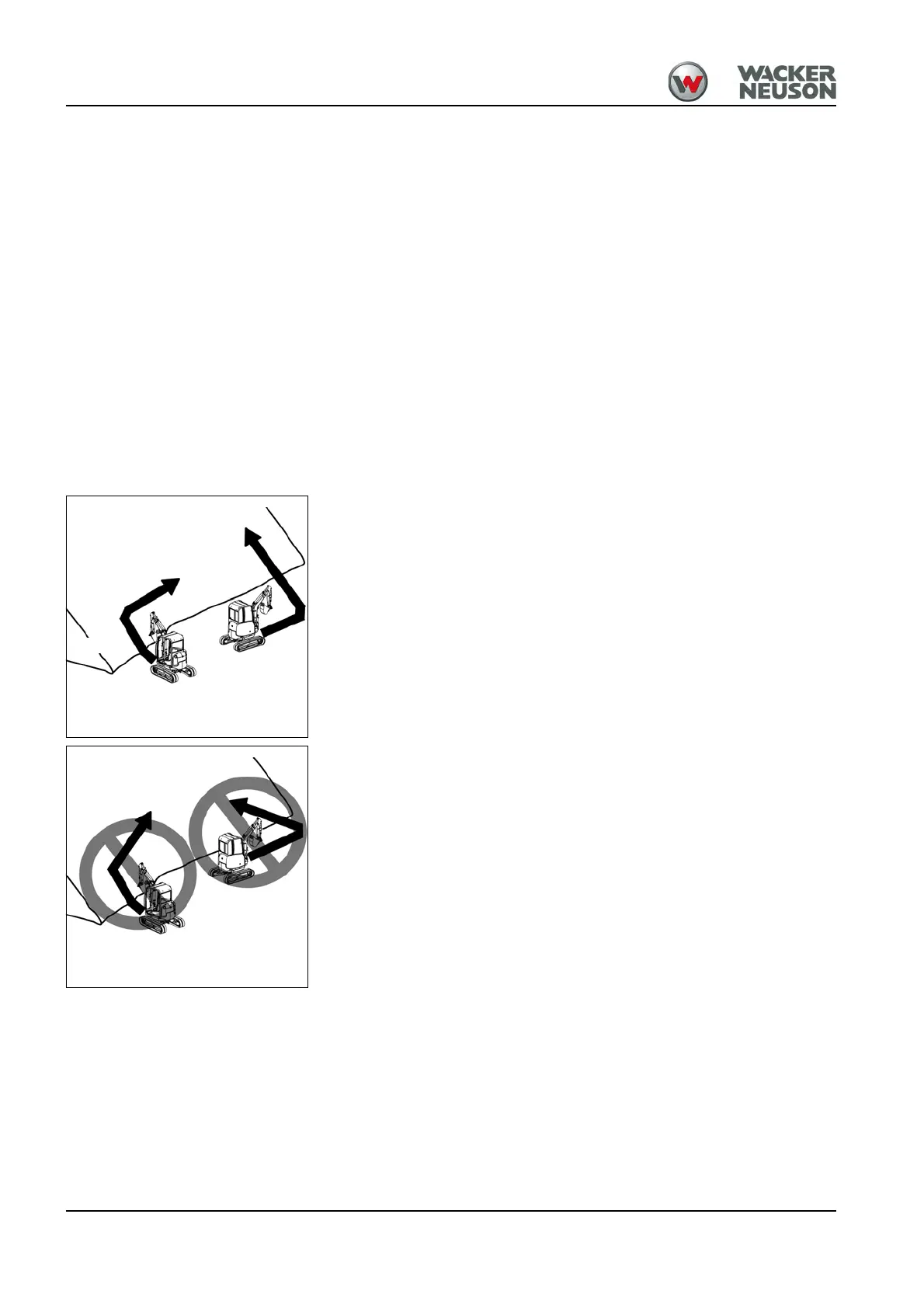
Always perform uphill or downhill vehicle travel in a straight line.
When changing position, do not exceed a maximum gradient angle of 15°
and a maximum lateral angle of inclination of 10°.
Change position on level ground and then perform straight-ahead vehicle
travel onto the slope.







 To Next Page