WL2FLT Manual Page 31 – Revision 10-26-2021
PRE-INSTALLATION PROCEDURES
DANGER! ELECTRICAL SHOCK HAZARD.
Only qualified personnel who have read and understand this entire manual should attempt to
install, or service this unit, failure to do so could result in death or serious injury. DO NOT plug
into an electrical supply until specifically instructed.
WARNING! ALWAYS SANITIZE BEFORE USE.
Sanitize before use to eliminate any potential microbiological contaminates.
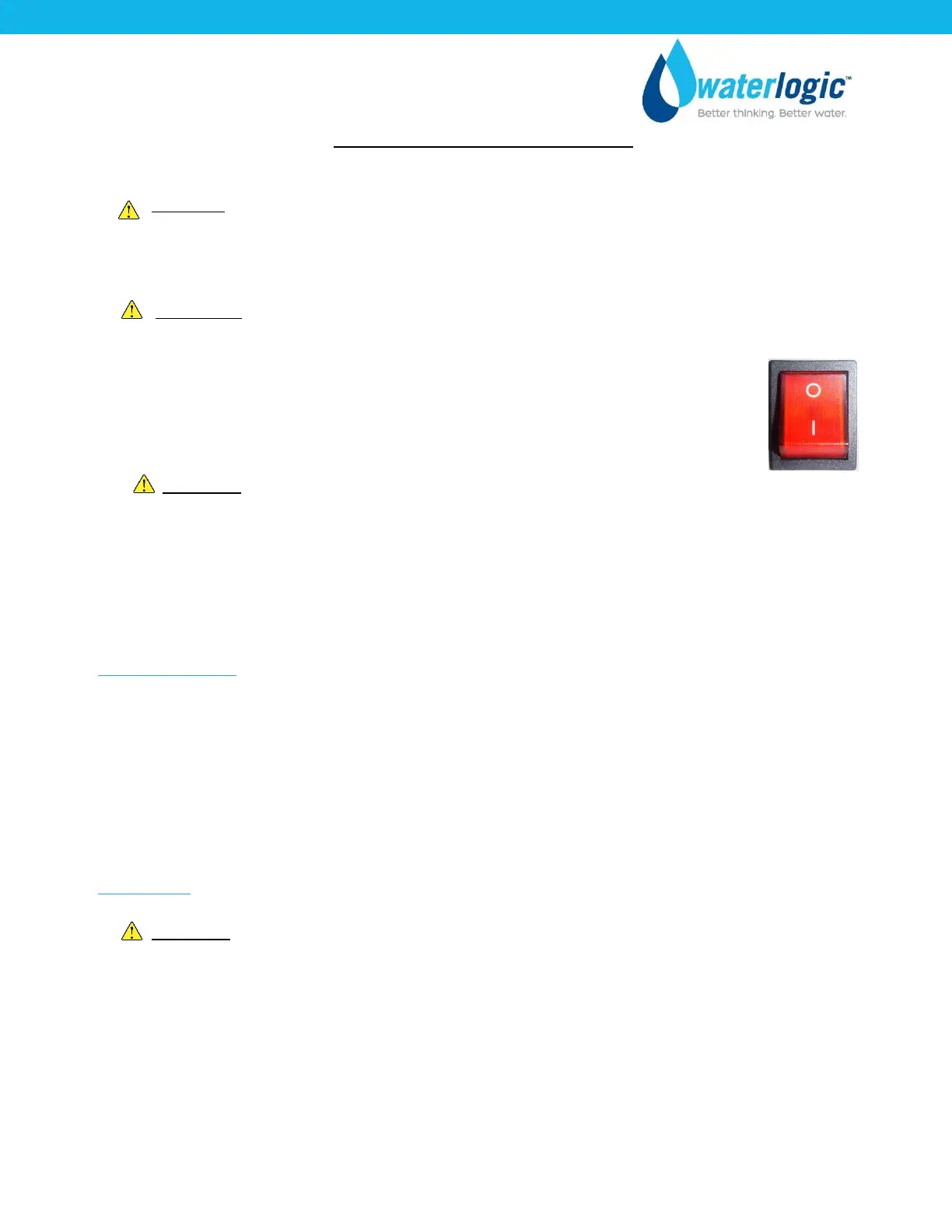
Red Compressor/Heater Switch must be in the O=OFF position while the Hot
Tank is empty. Damage could occur within one minute and the two Hot Tank
Overload Devices (High Safety Limit) require manual reset if heater is turned
on with an empty Hot Tank.
CAUTION! DRIP TRAY DRAIN.
If you intend to provide a drip tray drain for your customer, be aware that you
will be called multiple times per month to service and unclog the tubing
leading away from the drip tray to drain. Users will clog the drain with paper
clips, erasers, napkins, tea bags, gum, and various other intended items.
Waterlogic recommends you establish a minimum of weekly visits to the
machine for cleaning of the drip tray drain.
Materials Needed:
• Personal Protective Equipment. Rubber or Nitrile Safety Gloves and Protective Eyewear
• Phillips Screwdriver
• Temperature Gauge
• Water Pitcher or Container to collect water from the faucet
• 16 Liter (5 gallon) container or drain basin
• ¼” Plastic Tubing, at least 4 feet in length, and assorted ¼” quick connect fittings
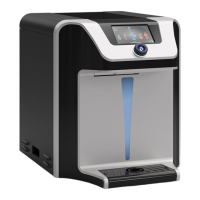
1. Unpack the Waterlogic WL2FLT Water Treatment Systems and check exterior for damage.
Flush Filters
CAUTION! FILTER FLUSH REQUIRED.
WL2FLT Water Treatment Systems are supplied with an RO system containing several filters.
In order for the RO system to perform as represented and to provide the best quality water
possible, it is essential that filters be replaced periodically. The frequency of filter changes
depends upon your water quality and your water usage. For example, if there is a lot of sediment
and/or particles in your water, then you will have to change your filters more frequently than a
location with little to no sediment. Be sure to replace your filters whenever you notice a decline in
the performance, whether it is a drop in flow rate and/or pressure or an unusual taste in the
water.



 To Next Page