Model
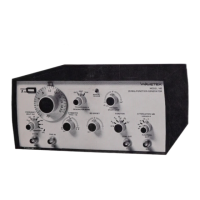
2001
MAINTENANCE
Set the oscilloscope vertical gain to 2V/cm and adjust the
MARKER SlZE control fully clockwise. The markers
should be approximately 12V peak-to-peak in amplitude.
Set the MARKER SlZE switch to mid-position and adjust
the oscilloscope vertical gain to
50mV/cm. The markers
should be approximately 50mV peak-to-peak in amplitude.
Adjust the MARKERS SlZE control fully counterclockwise
and set the oscilloscope vertical gain to
100uV/cm. The
markers should be less than
100uV peak-to-peak in ampli-
tude. Set the MARKER SlZE switch to the down position
and adjust the oscilloscope vertical gain to
50mV/cm. The
markers should be approximately
50mV peak-to-peak in
amplitude. Set the MARKER SlZE switch to the up posi-
tion. Positive rectified markers should be present for use
with X-Y recording instruments. The amplitude will be
dependent on the output impedance of the RF detector
being used. The amplitude should be adjustable from
approximately 6V maximum to
1mV minimum with a
detector impedance of 1 meg ohm, or from
0.5V to 1mV
with a detector impedance of 0 ohms. NOTE: The sweep
width must be decreased or the sweep time increased to ob-
serve the rectified marker.
MARKER
TlLT
Set the MARKER SlZE switch to the down position and
set the MARKER TILT switch to the up position.
While adjusting the MARKER SlZE control throughout its
range, note that the birdy marker is adjustable from a
12V
peak-to-peak vertical marker to a horizontal marker approxi
-
mately equal to 10% of the horizontal deflections (1 cm on a
10cm deflection).
MARKER WlDTH
Return the MARKER
TlLT switch to the down position.
Turn on the 1 MHz markers and adjust the MARKER SIZE
control for approximately a
4cm marker. Adjust the
CENTER FREQUENCY and SWEEP WlDTH controls to
calibrate the oscilloscope for a 1 MHz sweep width.
Adjust the CENTER FREQUENCY to center the birdy
zero beat on the oscilloscope center graticule line and note
that the marker width is approximately 400
KHz wide
(each cm equals 100 kHz). Decrease the MARKER
WlDTH switch one position and note that the marker is
approximately 200 kHz wide. Decrease the MARKER
WlDTH switch one position and note that the marker is
approximately 100 kHz wide. Decrease the MARKER
WIDTH
switch to the most narrow position.
The
marker
is
now
approximately 10 kHz wide.
MARKER ACCURACY
Marker accuracy may be verified by one of several methods.
The first method requires a signal generator and a frequency
counter covering the desired marker frequency. First ad-
just the sweep generator's center frequency to the markers
frequency and the sweep width to approximately 2 MHz.
Connect the output from the signal generator to the EX-
TERNAL MARKER IN jack, located on front panel, and
carefully adjust the signal generator for a zero beat with
the internally generated birdy marker. Next, connect the
signal generator's output to the counter and read the signal
generator frequency which is now identical to the internal
markers frequency.
Al!owable error
is
0.005% of the mark-
er frequency. The second method uses the counter only
but requires the removal of the instrument and marker
module covers. Probe the marker box with the input lead
from the counter until sufficient signal is picked up to pro-
vide a counter reading. The highest crystal frequency used
is 50 MHz. Markers above this frequency use harmonics of
the crystal frequency. Again the allowable error is 0.005%
of the crystal frequency.
Test equipment for the marker accuracy check
is
not listed
in the recommended test equipment chart since the require-
ments vary with the method and the specific markers in-
stalled in the unit. Also, the inheritent stability of the
quartz crystal makes a marker accuracy check unnecessary
in all but the most critical applications.
5.3.14 EXTERNAL PROGRAMMING
External programming inputs are not normally checked on
incoming inspection unless these special functions are to
be used in a particular application.
The program input sig-
nals, external controls necessary, and input pin connectors
are covered in Section 3 under Operating Instructions.
If
it
is necessary to check these functions at incoming inspec-
tion, reference can be made to that section of the manual
for complete set-up instructions.
5.4
MECHANICAL ADJUSTMENT OF FRE-
QUENCY INDICATOR TAPES
Rotate both START and STOP thumb wheels to their
lowest frequency position, turn to left. Both frequency
indicators must read
0 MHz
~k2
MHz when read on the
SWEEP WIDTH frequency scale; if not, proceed as follows:
With reference to Figure 5-7, disengage IDLER by forcing
IDLER SPRING to a disengaged position. While IDLER is
disengaged, rotate the TAPE DRIVE until the frequency
indicator indicates zero frequency, release the IDLER
SPRING and engage the IDLER. If the frequency error
is
Model 2001
Set
the
oscilloscope vertical gain
to
2V
/cm
and adjust the
MARKER
SIZE
control
fully
clockwise.
The
markers
should be
approximately
12V
peak-to-peak
in
amplitude.
Set the
MARKER
SIZE
switch
to
mid-position
and adjust
the
oscilloscope vertical gain
to
50mV
/cm.
The
markers
should be
approximately
50mV
peak-to-peak
in
amplitude.
Adjust
the
MARKERS
SIZE
control
fully
counterclockwise
and set
the
oscilloscope vertical gain
to
100uV/cm.
The
markers should be
less
than
100uV
peak-to·peak in ampli-
tude. Set
the
MARKER
SIZE
switch
to
the
down
position
and adjust the oscilloscope vertical gain
to
50m V fcm.
The
markers should be
approximately
50mV
peak-to-peak in
amplitude.
Set
the
MARKER
SIZE
switch
to
the
up
posi-
tion.
Positive
rectified
markers should be present
for
use
with
X-Y
recording instruments.
The
amplitude
will
be
dependent
on
the
output
impedance
of
the R F
detector
being used.
The
amplitude
should be adjustable
from
approximately
6V
maximum
to
lmV
minimum
with
a
detector
impedance
of
1 meg
ohm,
or
from
0.5V
to
lmV
with
a
detector
impedance
of
0 ohms.
NOTE:
The
sweep
width
must
be decreased
or
the
sweep
time
increased
to
ob-
serve the
rectified
marker.
MARKER
TILT
Set
the
MARKER
SIZE
switch
to
the
down
position
and
set
the
MARKER
TILT
switch
to
the
up
position.
While
adjusting
the
MARKER
SIZE
control
throughout
its
range,
note
that
the
birdy
marker
is
adjustable
from
a
12V
peak-to-peak vertical
marker
to
a
horizontal
marker
approxi-
matey
equal
to
10%
of
the
horizontal
deflections
( 1
cm
on
a
10cm
deflection).
MARKER
WIDTH
Return
the
MAR
KE R
TI
L T
switch
to
the
down
position.
Tu
rn on the 1
MHz
markers and adjust
the
MA
R KE R
SI
ZE
control
for
approximately
a 4cm marker.
Adjust
the
CENTER
FREQUENCY
and SWEEP
WIDTH
controls
to
calibrate the oscilloscope
for
a 1
MHz
sweep
width.
Adjust
the
CENTER
FREQUENCY
to
center the
birdy
zero
beat
on
the
oscilloscope center graticule line and note
that
the
marker
width
is
approximately
400
KHz
wide
(each cm equals
100
kHz).
Decrease
the
MARKER
WIDTH
switch one
position
and
note
that
the
marker
is
approximately
200
kHz
wide. Decrease the
MARKER
WI
DTH
switch one
position
and
note
that
the
marker
is
approximately
100
kHz
wide. Decrease the
MARKER
WIDTH
switch
to
the
most
narrow
position.
The
marker
is
now
approximately
10
kHz
wide.
MAINTENANCE
MARKER
ACCURACY
Marker
accuracy
may
be
verified
by
one
of
several methods.
The
first
method
requires a signal generator and a frequency
counter
covering
the
desired
marker
frequency.
First
ad-
just
the
sweep generator's center
frequency
to
the markers
frequency
and
the
sweep
width
to
approximately
2
MHz.
Connect the
output
from
the
signal generator
to
the
EX-
TERNAL
MARKER
IN
jack,
located
on
front
panel, and
carefully
adjust the signal generator
for
a zero beat
with
the
internally
generated
birdy
marker.
Next,
connect the
signal generator's
output
to
the
counter
and read the signal
generator frequency
which
is
now
identical
to
the
internal
markers frequency.
Allowable
error
is
0.005%
of
the mark-
er frequency.
The
second
method
uses
the
counter
only
but
requires
the
removal
of
the
instrument
and marker
module
covers. Probe
the
marker
box
with
the
input
lead
from
the
counter
until
sufficient
signal
is
picked
up
to
pro-
vide a
counter
reading.
The
highest crystal frequency
used
is
50
MHz. Markers above
this
frequency
use
harmonics
of
the
crystal frequency. Again the allowable
error
is
0.005%
of
the crystal frequency.
Test
equipment
for
the
marker
accuracy check
is
not
listed
in the recommended test
equipment
chart
since the require-
ments vary
with
the
method
and
the
specific markers in·
stalled
in
the
unit.
Also,
the
inheritent
stability
of
the
quartz crystal makes a
marker
accuracy check unnecessary
in all
but
the
most
critical
applications.
5.3.14
EXTERNAL
PROGRAMMING
External
programming
inputs
are
not
normally
checked on
incoming
inspection unless these special
functions
are
to
be used
in
a
particular
application.
The
program
input
sig-
nals, external
controls
necessary, and
input
pin
connectors
are covered in Section 3
under
Operating I nstructions.
If
it
is
necessary
to
check these
functions
at
incoming
inspec·
tion,
reference can be made
to
that
section
of
the manual
for
complete
set-up instructions.
5.4
MECHANICAL
ADJUSTMENT
OF
FRE-
QUENCY
INDICATOR
TAPES
Rotate
both
START
and STOP
thumb
wheels
to
their
lowest frequency
position,
turn
to
left.
Both
frequency
indicators
must
read 0
MHz
±2
MHz
when read on the
SWEEP
WI
DTH
frequency
scale;
if
not,
proceed
as
follows:
With
reference
to
Figure 5-7, disengage
IDLER
by
forcing
IDLER
SPRING
to
a disengaged
position.
While
IDLER
is
disengaged,
rotate
the
TAPE
DRIVE
until
the frequency
indicator indicates zero frequency,
release
the
IDLER
SPRING
and engage
the
IDLER.
If
the
frequency
error
is
5-7


 To Next Page
 Loading...