EasyManua.ls Logo

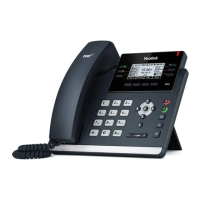
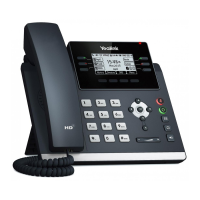
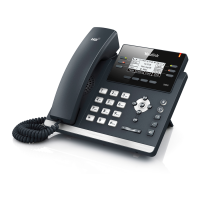
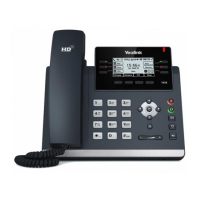
Yealink T42S - User Manual

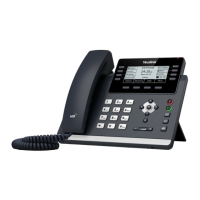
Yealink T42S
132 pages
Print Icon
To Next Page IconTo Next Page
Loading...

Table of Contents

Other manuals for Yealink T42S

Questions and Answers

  • D
    Deanna BarnesAug 18, 2025
    Why doesn't my Yealink Telephone get an IP address?
    • L
      Leslie BlackburnAug 18, 2025
      If your Yealink Telephone isn't getting an IP address, check the following: * Ensure the Ethernet cable is securely plugged into the internet port and is not loose. * Verify the Ethernet cable is not damaged. * Confirm that the IP address and related network parameters are set correctly. * Make sure your network switch or hub is working. * Ensure the Wi-Fi feature is disabled.
  • M
    Michele JohnsonAug 20, 2025
    Why does my Yealink Telephone display “No Service”?
    • T
      Tina YoungAug 20, 2025
      If your Yealink Telephone displays “No Service”, ensure that an account is actively registered on the IP phone at Menu->Status->More->Accounts.
  • J
    Joshua ThompsonAug 23, 2025
    Why does my Yealink Telephone have no power?
    • B
      Brittany ChavezAug 23, 2025
      If your Yealink Telephone has no power: * Reboot your IP phone. * Replace the power adapter.
  • J
    Jordan KennedyAug 26, 2025
    What to do if the LCD screen is blank on my Yealink Telephone?
    • A
      Anne BondAug 26, 2025
      If the LCD screen on your Yealink Telephone is blank, verify the following: * Ensure the phone is properly plugged into a functional AC outlet. * Confirm the phone is plugged into a socket controlled by a switch that is on. * If plugged into a power strip, try plugging it directly into a wall outlet. * If your phone is PoE powered, ensure you are using a PoE-compliant switch or hub.
  • A
    Amy SpencerAug 28, 2025
    How to solve IP conflict problem on Yealink Telephone?
    • L
      Lisa JohnsonAug 28, 2025
      To resolve an IP conflict on your Yealink Telephone, you can: * Reset another available IP address for the IP phone. * Check network configuration via the phone's user interface at Menu->Settings->Advanced Settings (default password: admin)->Network->WAN Port->IPv4 (or IPv6). If Static IP is selected, choose DHCP instead.
  • M
    Margaret FoxAug 30, 2025
    Why doesn’t my Yealink Telephone upgrade firmware successfully?
    • E
      elizabethreynoldsAug 30, 2025
      If your Yealink Telephone isn’t upgrading firmware successfully, check the following: * Ensure that the target firmware is not the same as the current firmware. * Ensure that the target firmware is applicable to the IP phone model. * Ensure that the current or the target firmware is not protected. * Ensure that the power is on and the network is available during the upgrade. * Ensure that the web browser is not closed or refreshed when upgrading firmware via the web user interface.
  • A
    Ashley StrongSep 2, 2025
    Why do I get poor sound quality during a call on my Yealink Telephone?
    • D
      Dawn RobersonSep 2, 2025
      Poor sound quality during a call on your Yealink Telephone can be due to several factors: * Users being too far from the microphone or too close to sensitive microphones. * Packet loss and jitter due to network congestion. * Noisy equipment causing interference. Turn off any noisy equipment. * Line issues. Try disconnecting the old line and redialing to see if another line provides a better connection.
  • S
    Steve RobinsonSep 4, 2025
    Why doesn’t my Yealink Telephone display time and date correctly?
    • M
      Matthew BlackSep 4, 2025
      If your Yealink Telephone doesn’t display the correct time and date: * Check if the IP phone is configured to obtain the time and date from the NTP server automatically. * If your phone is unable to access the NTP server, configure the time and date manually.
  • A
    Adam MaynardSep 6, 2025
    Why doesn’t my Yealink Telephone update the configuration?
    • S
      sharonkeithSep 6, 2025
      If your Yealink Telephone isn’t updating its configuration: * Ensure that the configuration is set correctly. * Reboot the phone, as some configurations require a reboot to take effect. * Ensure that the configuration is applicable to the IP phone model. * Be aware that the configuration may depend on support from a server.
  • E
    eric45Sep 9, 2025
    Why does the Bluetooth headset affect Yealink Telephone’s voice quality?
    • P
      Patrick HoltSep 9, 2025
      Your Yealink Telephone's voice quality may be affected if you use a Bluetooth headset while the 2.4 GHz band is enabled or in an environment with many other Bluetooth devices.

Summary

Before You Begin

Related Documentation

Provides information on other documents for phone functionality. Includes Release Notes and Quick Start Guides.

Getting Started

Hardware Overview

Details the distinct hardware types of Yealink T4 series phones, including screen and ports.

Screen and Icons

Explains how user screens and icon indicators help navigate phone status.

Icons in the Status Bar

Describes icons in the status bar for phone status, calls, and messages.

Line Key Icons

T48 S;T48 G Line Key Icons

Details icon indicators associated with line status and features for T48S/T48G models.

T46 S;T46 G Line Key Icons

Details icon indicators associated with line status and features for T46S/T46G models.

Entering Characters on T48 S;T48 G

Using the Onscreen Keyboard

Explains how to use the touch screen keyboard for data entry on T48S/T48G phones.

Using the Phone Keypad and Dial Pad

Describes using the phone's keypad and dial pad for data entry and special characters.

Call Features

Changing the Default Account

Guides on how to manually change the default account for placing calls.

Placing Calls

Instructions on various methods for placing calls using the phone.

Answering Calls

Details how to answer incoming calls manually or automatically.

Silencing or Rejecting Incoming Calls

Explains options to silence or reject calls instead of answering them.

Transferring Calls

Covers blind, semi-attended, and attended call transfers.

Conference Calls

Instructions for setting up and managing three-way local and multi-way network conferences.

Recording Using a USB Flash Drive

Guides on recording active calls onto a USB flash drive.

Multicast Paging

Sending Multicast Paging

Explains how to broadcast audio announcements to specific groups using line keys.

Receiving Multicast Paging

Describes how to automatically receive paging calls when the phone is idle.

Advanced Call Features

Using Call Completion

Allows monitoring busy parties and establishing calls when they become available.

Call Pickup

Enables answering incoming calls to other phones or groups.

Call Park and Call Retrieve

Explains parking calls and retrieving them from different locations.

Busy Lamp Field (BLF)

Monitors remote line status via BLF keys, showing idle, ringing, or busy states.

Shared Line

Supports sharing a line across multiple phones for simultaneous use.

Intercom

Facilitates quick connections with operators or secretaries via intercom calls.

Short Message Service (SMS)

Manages text messages, including reading, sending, replying, and deleting.

Voice Mail

Allows leaving and listening to voice mail messages.

Using the Hot Desking

Enables logging out of current accounts and logging into new ones to share phone resources.

Automatic Call Distribution (ACD)

Distributes large volumes of incoming calls in customer service environments.

Directory

Local Directory

Manages contacts and groups, allowing search, add, edit, and delete operations.

Favorites

Manages frequently called contacts, allowing adding, viewing, reordering, and deleting.

Blacklist

Blocks unwanted callers by rejecting incoming calls automatically.

Google Contacts

Accesses Google Contacts, listing contacts and groups within your Google account.

Remote Phone Book

Accesses corporate directories for contacts, allowing search and saving.

Call History

Call History Icons

Explains icons representing call history status like received, missed, placed, or forwarded calls.

Viewing History Records

Details how to view saved call information like caller name, number, and duration.

Saving a History Record to Local Directory

Allows saving call history records to the Local Directory for future identification.

Customizing Your Phone

Changing the Administrator Password

Guides on changing the default administrator password for security.

Wallpaper

Explains how to change the phone's background picture on idle or dsskey screens.

Screen Saver

Details setting waiting time, disabling icons, and adding custom screen savers.

Changing the Backlight and Time

Adjusts screen brightness levels during phone activity and inactivity.

Adjusting the Screen Contrast

Allows adjustment of screen contrast for better readability.

Changing the Language

Guides on selecting a preferred language for the phone interface.

Time & Date

Covers manual setting and formatting of the phone's time and date.

Customizing the Soft Keys

Explains how to customize soft key functions for quick access.

Phone Lock

Secures the phone by preventing unauthorized access to menus or functions.

Audio Settings

Adjusting the Volume

Guides on adjusting the volume for ringer, media, and calls.

Setting the Ring Tone

Allows setting distinctive ring tones for contacts, groups, or accounts.

Disabling the Key Tone

Turns off keypad sounds for a silent typing experience.

Optional Accessories with Your Phone

Headset

Details support for analog, USB, Bluetooth, and wireless headsets.

Bluetooth

Covers activating, pairing, connecting, and syncing Bluetooth devices like headsets and phones.

Wireless Network

Guides on connecting to Wi-Fi networks, managing saved networks, and troubleshooting.

Expansion Module and Your Phone

Explains connecting and configuring the EXP40 expansion module.

Maintaining Your Phone

Warnings

Lists common issues like default password, registration failure, or network unavailability.

Investigating Warnings

Shows how to view details about phone warnings on the Status screen.

Rebooting Your Phone

Provides instructions on how to restart the phone to resolve malfunctions.

Resetting to Factory Settings

Guides on resetting the phone to factory defaults to resolve persistent issues.

Updating the Phone Configuration

Explains how to update phone configuration without restarting.

Clearing Users Personalized Configuration Settings

Details how to manually clear personalized configuration settings on the phone.

Appendix - Menu Structure

For the T48 S;T48 G Phone

Provides a visual menu structure for the T48S/T48G phone model.

For the T46 S;T46 G Phone

Provides a visual menu structure for the T46S/T46G phone model.

For the T42 S;T42 G;T41 S;T41 P;T40 P;T40 G Phone

Provides a visual menu structure for T42S/T42G/T41S/T41P/T40P/T40G phone models.

Yealink T42S Specifications

General IconGeneral
ManualYes
Cables includedLAN (RJ-45)
Number of handles included1 pc(s)
Lines quantity12 lines
Phonebook capacity1000 entries
Number of VoIP accounts12
MountingDesk/Wall
Handset typeWired handset
Product typeIP Phone
Product colorBlack
Voice codecsCNG, G.711Mu, G.711a, G.723.1, G.726, G.729ab, VAD, iLBC
Operating temperature (T-T)-10 - 50 °C
Operating relative humidity (H-H)10 - 95 %
Display diagonal2.7 \
Display resolution192 x 64 pixels
AC adapter input voltage100 - 240 V
AC adapter output current1.2 A
AC adapter output voltage5 V
Dual-Tone Multi-Frequency (DTMF) modesIn-band, Out-of band, SIP info
Volume controlDigital
Number of programmable keys6
USB 2.0 ports quantity1
Ethernet LAN (RJ-45) ports2
Networking standardsIEEE 802.3af
Ethernet LAN data rates10, 100 Mbit/s
Ethernet LAN interface typeFast Ethernet
Supported network protocolsSIP v1, SIP v2, LLDP/CDP/DHCP, OpenVPN, IEEE802.1X, IPv6, FTP/TFTP/HTTP/HTTPS
Weight and Dimensions IconWeight and Dimensions
Depth189 mm
Width212 mm
Height175 mm
Package depth223 mm
Package width246 mm
Package height120 mm

Related product manuals