EasyManua.ls Logo

Zapi 4Q - User Manual

Zapi 4Q
29 pages
Print Icon
To Next Page IconTo Next Page
Loading...
Page 1
Index
1 Main features ................................................................................................. 3
1.1 Field of application .................................................................................... 3
1.2 Control units .............................................................................................. 4
1.2.a Microswitches ............................................................................... 4
1.2.b Potentiometer ............................................................................... 4
1.3 Safety features .......................................................................................... 5
1.4 Operating functions ................................................................................... 6
1.5 Controller diagnosis ................................................................................... 6
1.6 Thermal considerations ............................................................................. 7
1.7 General warnings and precautions .................................................... 7
2 Installation...................................................................................................... 8
2.1 Choice of connecting cables...................................................................... 8
2.2 Fuses ......................................................................................................... 8
2.3 Description of connectors .......................................................................... 9
2.4 Dimensions .............................................................................................. 10
2.5 Connections ............................................................................................ 11
2.5.a Pallet truck.................................................................................. 11
2.5.b Floor washer............................................................................... 12
3 Console Menu .............................................................................................. 13
3.1 Programming with the console ................................................................ 13
3.2 Console Map ........................................................................................... 14
3.2.a Pallet truck.................................................................................. 14
3.2.b Floor washer............................................................................... 15
3.3 "Tester" Menu .......................................................................................... 16
3.3.a Pallet truck.................................................................................. 16
3.3.b Floor washer............................................................................... 16
3.4 "Parameter Change" Menu ...................................................................... 17
3.4.a Pallet truck.................................................................................. 17
3.4.b Floor washer............................................................................... 17
3.5 "Set Model" Menu .................................................................................... 18
3.6 "Set Option" menu ................................................................................... 18
3.6.a Pallet truck.................................................................................. 18
3.6.b Floor washer............................................................................... 20
3.7 "Adjustment" Menu .................................................................................. 21
3.8 "Hardware Setting" Menu ........................................................................ 22
3.9 "Special Adjust" Menu ............................................................................. 23
3.10 "Clear EEprom" Menu ........................................................................... 23
4 Alarms .......................................................................................................... 24
4.1 Diagnosis ................................................................................................. 24
5 Recommended spare parts for the 4Q ...................................................... 27
6 Regular maintenance at set intervals ........................................................ 28

Question and Answer IconNeed help?

Do you have a question about the Zapi 4Q and is the answer not in the manual?

Overview

The device described in the manual is the ZAPI 4Q Controller, a compact electronic industrial device designed for permanent magnet motors. It functions as a motor controller for various applications, specifically configurable for Pallet trucks (Model 1) and Floor washers (Model 2).

Function Description

The 4Q controller is a full-bridge motor controller, eliminating the need for a separate changeover mechanism. It manages motor operation based on several inputs and provides two outputs.

Inputs:

  • Tiller / Seat microswitch: Detects the position of the tiller or seat, crucial for safety and operation.
  • Quick inversion: Allows for rapid change of direction.
  • Forwards / Reverse: Controls the direction of movement.
  • Potentiometer (3-wire): Used for accelerator input, with a configurable range (CPOT from 0 to 10V). Automatic minimum and maximum signal acquisition (PROGRAM VACC function) is essential for compensating mechanical asymmetry and adjusting minimum levels.
  • Speed reduction 1 & 2: Provides different levels of speed reduction.

Outputs:

  • EV1 (solenoid valve): Controls a solenoid valve.
  • EV2 (electric brake): Controls an electric brake.

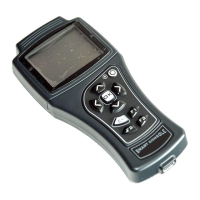
The controller incorporates an internal main contactor (relay). It also features a console menu for programming and visualizing parameters, allowing for real-time modification of truck performance. The console has six push-buttons for navigation and value adjustment.

Safety features are integral to the controller's design:

  • Inverted battery polarity protection: Prevents damage from incorrect battery connection.
  • Connection error protection: All inputs are protected against wrong connections.
  • Thermal protection: Automatically reduces maximum current if the temperature exceeds 75°C, reaching zero at 90°C. Speed is reduced to 60% at 90°C. If the temperature drops below -10°C, maximum armature current is reduced by 20%.
  • Battery low protection: Reduces maximum current by 50% when battery charge falls below 10%.
  • Protection against accidental starting: Requires a precise sequence of operations (key-on, activating seat microswitch, then tiller) to start the machine.
  • Protection against uncontrolled movement: Ensures the electromagnetic switch is closed, power unit is functional, output voltage is above a minimum value, potentiometer is connected, and microswitches are in order.
  • Snubber circuit requirement: Advisable to install on horns, relays, solenoid valves, and electromagnetic switches not connected to the chopper.
  • Shielded fuses: Recommended to prevent molten particles from scattering during a blowout.

Operating functions include:

  • Speed control: Excellent sensitivity at low speeds.
  • Maximum speed reduction: Adjustable in both directions using the programming console.
  • Regenerative braking: Based on deceleration ramps, release braking, and inversion braking.
  • Speed control in descent: Motor speed is controlled by the accelerator pedal, and regenerative braking is activated automatically if motor speed exceeds the required speed.
  • Electric brake control (optional).
  • Diagnosis with optional LED: Indicates type of fault.
  • Parameter adjustment: Using the console.
  • Internal hour-counter: Displayed on the console.
  • Last 5 alarms: Recorded with relative hour-counter reading and chopper temperature.
  • Tester function: Checks real-time inputs, motor voltage, battery, etc.
  • Good motor and battery efficiency: Thanks to high frequency switching.
  • Watchdog circuit: Checks µC operations.
  • MDI indicator: Displays software version, hour counter, alarms, speed reduction, and battery charge.

Important Technical Specifications

  • Motor Type: Smallest permanent magnet motor controller.
  • Voltage: 24V or 36V.
  • Maximum Armed Current: 70A or 90A.
  • Continuous Current: 30A.
  • Power: 500W (800W).
  • Microswitch Requirements: Contact resistance < 0.1Ω, current leakage < 100µA. Key contact must handle all load current with voltage drop < 0.1V.
  • Potentiometer Resistance: Minimum 500Ω, Maximum 10KΩ.
  • Cable Cross-section: 0.5mm² for auxiliary circuits, 6mm² for power connections (motor and battery).
  • Fuses: 6A for auxiliary circuits, 50A for power unit (maximum permitted values).

Usage Features

The 4Q controller is highly configurable via the ZAPI console.

  • Model Selection: Can be configured as a "Pallet truck" or "Floor washer," which affects available parameters, tester options, and settings.
  • Parameter Change Menu: Allows adjustment of acceleration/deceleration delays, braking parameters, speed limits (forward/backward), traction current, creep speed, backing time/speed, seat micro delay, and hydro time.
  • Set Options Menu: Configures hour counter activation (running only or always), battery check (alarm disengaged or engaged with current limiting), auxiliary output functions (electric brake control, hydro output, fan activation for thermal alarm), quick inversion mode (belly button pressed or timed), backing function (enabled/disabled, RV2 input for backing or speed reduction), handle switch behavior (tiller present or seat present with specific start sequences), set input #2 functionality, inversion mode (normally open/closed), and auxiliary function #2 (potentiometer range and direction control).
  • Adjustment Menu: Fine-tunes throttle dead zones (0 zone, X zone, Y zone) and battery voltage.
  • Hardware Setting Menu: Adjusts current reading scale, maximum/minimum values of the low battery curve, and auxiliary function #1 (hour counter loading).
  • Special Adjust Menu: Allows fine adjustment of chopper temperature (factory calibrated) and maximum chopper current (password protected).
  • Clear EEPROM Menu: Resets most settings to default values, effectively resetting the plant. Does not affect Model Type, Maximum Current, Set temperature, or Adjust Battery.

Maintenance Features

The manual outlines regular maintenance intervals and diagnostic capabilities.

  • Regular Maintenance (Every 3 Months):
    • Check pedal microswitch for resistance absence and clear clicking.
    • Check power cables to battery and motor for good condition.
    • Check efficiency of pedal springs.
  • Check-up Type Options: Configures programmed maintenance functions.
    • None: Maintenance disengaged, no alarm, reduction, or shut down.
    • Option #1: Alarm message after 300 hours.
    • Option #2: Alarm after 300 hours, speed reduction after 340 hours.
    • Option #3: Alarm after 300 hours, speed reduction after 340 hours, traction blocked after 380 hours.
  • Check up done (Hardware Setting Menu): Resets the maintenance hour counter and "Check up needed" alarm.
  • Alarms (Diagnosis): The controller provides detailed alarm codes (MDI and LED flashes) for various faults, including:
    • Power failure (#1)
    • Capacitor charge issues
    • Driver shorted
    • VMN not OK (motor connection, leak to earth, power unit faults)
    • STBY I High (current sensor, feedback circuit faults)
    • Low battery (battery value reading, "battery check" option)
    • Contactor closed (main electromagnetic switch issues)
    • Contactor driver faults
    • I=0 Ever (current value below threshold)
    • EB Driver KO (electric brake driver faults)
    • Watchdog (internal self-diagnosis)
    • Check-up needed (programmed maintenance reminder)
    • FORW + BACK (simultaneous running requests)
    • VACC not OK (potentiometer wiring, programming faults)
    • Incorrect start (running request before tiller/seat)
    • Thermal protection (overheating)
    • EEPROM OK (configuration parameter memory fault)
    • Pedal wire KO (potentiometer negative wire disconnected)
    • CURR. Protection (current exceeds calibrated values)
    • AL 98 on MDI (MDI and chopper counter mismatch)

General Warnings and Precautions:

  • Do not connect to a battery with a different rated voltage.
  • Disconnect the 4Q module when charging the battery.
  • Power the module only with traction batteries.
  • Keep wheels raised during initial startup to prevent hazards.
  • Filter capacitors can remain charged; disconnect battery and short circuit power lines with a resistor (10Ω to 100Ω).
  • Proper installation, electrical connections, and shielding are crucial for electromagnetic compatibility.

The manual emphasizes that all work must be carried out by qualified staff using original spare parts, and any modifications must be approved by the supplier. The user is prohibited from using the vehicle if any electrical equipment faults pose a hazard.

Zapi 4Q Specifications

General IconGeneral
BrandZapi
Model4Q
CategoryController
LanguageEnglish

Related product manuals