Need help?
Do you have a question about the AGFA XD 14 and is the answer not in the manual?
Details the manual's content for safe and effective operation of DR detectors and peripherals.
Explains the meaning of danger, warning, caution, prohibition, and note symbols used in the document.
Agfa disclaims liability for unauthorized changes and warranties for accuracy and fitness of information.
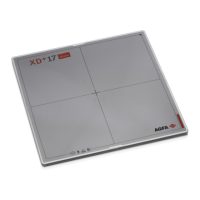
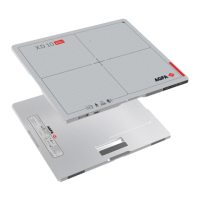
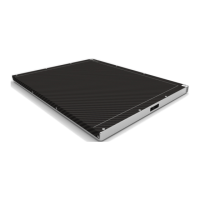
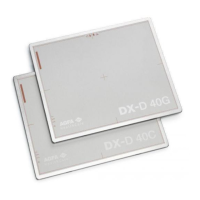
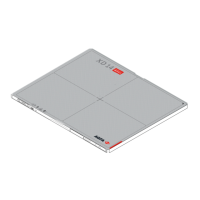
Describes the DR detectors as digital X-ray imaging solutions for general-purpose diagnostic procedures.
Specifies use in general projection radiographic applications for diagnostic quality images of human anatomy.
Manual is for trained users; users must read and understand warnings and safety markings.
Explains how DR detectors integrate with X-ray systems and communicate with workstations.
Details the classification of the DR Detector per EN/IEC60601-1 and lists non-medical equipment.
Lists available options like cradle, battery, power adapter, and accessories like anti-scatter grids.
Lists the components related to operation, such as detector, cradle, chargers, and control units.
Lists related documents like MUSICA Acquisition Workstation manuals and DR detector calibration manuals.
Details design compliance with MEDDEV Guidelines and ISO standards.
Lists safety standards like IEC 60601-1, AAMI ES 60601-1, and CSA C 22.2 No.60601-1.
References IEC 60601-1-2 for EMC and declares conformity with FCC/ETSI standards for RF.
Explains wireless communication between DR detector and MUSICA Acquisition Workstation via access point.
Discusses using accessories and cables and compliance with IEC 60601-1 system requirements.
Specifies ideal environments for use and lists locations to avoid for safe operation.
Provides instructions for cleaning the exterior of the equipment safely, including warnings about liquids.
Recommends using a protective plastic bag when the detector may contact liquids or contaminants.
Instructs to use only Agfa-approved disinfectants and methods for device disinfection.
Outlines safety precautions to be followed during cleaning and disinfection procedures.
Details daily checks and indicates when half-yearly calibration is due via a system message.
Recommends annual inspection, cleaning, adjustments, or consumables replacement.
States parts will be stocked for seven years after discontinuance for repair purposes.
Specifies that the product can only be repaired in the factory.
Details ISP requirements for security and privacy, including firewalls, network intrusion systems, and access controls.
Covers installation by certified engineers, avoiding modifications, and warnings about fire/electric shock.
Advises on handling, avoiding damage, patient monitoring, temperature, and environmental conditions.
Provides warnings regarding power supply usage, connections, and handling of cords.
Warns against blocking ventilation, ensuring continuous power, and proper grounding.
Details safe charging, replacement, and handling of the DR detector battery pack, including disposal.
Step-by-step guide to turn on the DR detector and check its status.
Outlines the steps for acquiring images using the DR detector, from patient info to quality control.
Describes how to acquire images without a network connection and transfer them later.
Provides recommendations for reducing dose and ensuring image quality in pediatric imaging.
Instructions on how to properly turn off the DR detector and prepare it for storage.
Explains how the DR detector automatically performs image acquisition upon X-ray exposure.
Step-by-step instructions for safely attaching the handle unit with a grid to the DR detector.
Step-by-step instructions for safely attaching the handle unit without a grid to the DR detector.
Explains how to view the DR detector's status via the power button and status display.
Details the meaning of battery status icons, indicating presence, charging, or charge level.
Illustrates connection status indicators for access point mode, client mode, and wired connections.
Outlines four methods for charging the DR detector battery using available accessories.
Provides step-by-step instructions for replacing the DR detector battery using a screwdriver.
Explains how to manage network connections when the DR detector is configured for client mode.
Details managing network connections when the DR detector is configured for access point mode.
Addresses artifacts in images, their cause (calibration changes), and solution (re-calibration).
Troubleshoots why the DR detector status icon is not green, covering connection and mode issues.
Solves issues where the DR detector is connected but not active, often due to another workstation connection.
Diagnoses why images are not sent, typically due to the workstation not being connected to the hospital network.
Provides a table of common symptoms, their causes, and remedies for detector and control unit issues.
Provides specifications for the DR detectors, including electrical, network, and environmental conditions.
Details the technical specifications of the rechargeable lithium-ion polymer battery pack.
Provides technical specifications for the lithium-ion battery pack charger (cradle).
Details the technical specifications of the DR detector dual battery charger.
Lists technical specifications for the System Control Unit, including power, wireless, and dimensions.
Provides technical specifications for the Mini System Control Unit, including power and wireless connection.
Details technical specifications for the System Control Unit Lite, including power input.
States device compliance with EMI/EMC but warns of potential interference in noisy environments.
Details the device's RF emissions compliance with CISPR 11 and IEC standards for hospital environments.
Outlines the device's immunity to electromagnetic disturbances based on IEC 60601 test levels and environmental considerations.
Details FCC compliance for the device, including conditions for operation and potential interference.
 General
| Brand | AGFA |
|---|---|
| Model | XD 14 |
| Category | Security Sensors |
| Language | English |

 To Next Page