– 36 –
MAINTAINING YOUR SYSTEM
Taking Care of
Your System
The components of your security system are designed to be as maintenance-free as
possible. However, to make sure that your system is in reliable working condition.
1. Test your system weekly.
2. Test your system after any alarm occurs (see
TESTING THE SYSTEM).
Replacing
Batteries in
Wireless
Sensors
Wireless sensors
may not have
been used in your
security system
Each wireless sensor in your system has a 9-volt or 3-volt battery. The system
detects a low battery in any wireless sensor, including smoke detectors, the
optional personal emergency transmitter, and the optional portable wireless
keypad. (A low battery in a portable wireless keypad is detected as soon as one of
its keys is pressed, and the wired keypad will display “00 ”.)
Alkaline batteries provide a minimum of 1 year of operation, and in most units
and applications, provide 2–4 years of service. 3-volt lithium batteries provide up
to 4 or more years of operation. Actual battery life will depend on the environment
in which the sensor is used, the number of signals that the transmitter in the
sensor has had to send, and the specific type of sensor. Factors such as humidity,
high or low temperatures or large swings in temperature, may all lead to the
reduction of actual battery life in an installation.
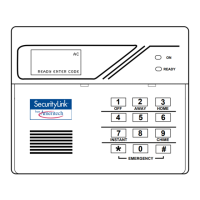
If you have a low battery in a wireless sensor, a low battery message is
displayed on the keypad.
In addition, a battery operated smoke detector with a low battery also emits a
single "chirp" sound approximately once every 20–30 seconds, identifying itself as
the smoke detector with the weak battery.
Note: The low battery message comes on as a warning that battery replacement in
indicated sensor(s) is due within 30 days. In the meantime, a sensor causing a low
battery indication is still fully operational.
Important: Use only batteries recommended by your installer as replacement.


 To Next Page