ATI Q46H/85 PAA System Part 5 – Sensor Assembly
27
O&M Manual
Rev F (8/17)
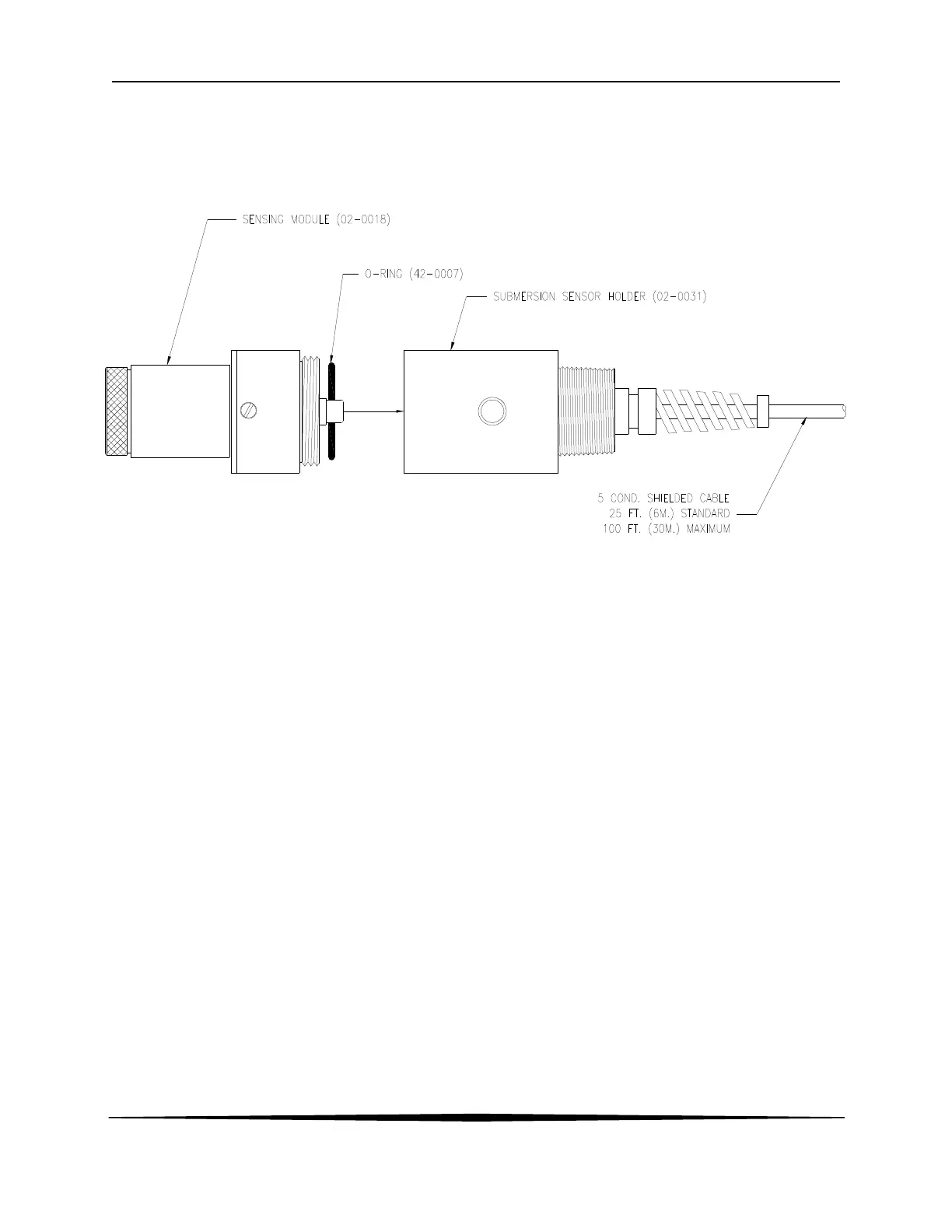
Submersible PAA sensors are made up of two separate parts, a submersion holder that also contains
the temperature compensating element and a sensing module. The sensing module screws into the
holder, with an o-ring providing a water tight connection.
Follow the procedure below to prepare the PAA sensor for operation:
1. Unscrew the electrolyte chamber from the assembled sensor and also remove the fill screw
from the side of the sensor body.
2. Remove the front nut from the bottom of the chamber and discard the protective membrane.
O-rings are contained in grooves on both the bottom and top of the chamber. Be sure that
these o-rings remain in place.
3. From the package of membranes supplied with the sensor, place a new membrane into the
front nut. The membrane is white in color and is separated from other membranes by a
light blue paper spacer.
4. Screw the front nut on to the chamber until you feel the o-ring compress. Hand tight
compression is all that is needed. Do not use tools to tighten. The membrane should be flat
across the bottom of the chamber without wrinkles.
5. Fill the chamber with electrolyte until the level reaches the bottom of the internal threads.
6. Slowly screw the chamber onto the sensor body. A small amount of electrolyte will run out of
the hole from which the fill screw was removed. Place a paper towel around the sensor to
absorb the electrolyte overflow. The electrolyte is harmless and will not irritate skin. Tighten
the chamber until the o-ring at the top of the chamber is compressed. Once again, do not
use tools to tighten.
7. Shake excess electrolyte from the fill hole on the side of the sensor and replace the fill screw.
Figure 21 - Submersible PAA Sensor Assembly


 To Next Page