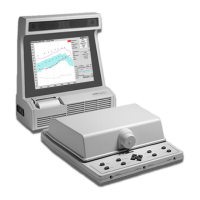
Verifit
®
User's Guide Version 3.12
November 2015
characteristics for young children. Journal of the Academy of Rehabilitative Audiology, 20, 25-38.
Seewald, R., Moodie, S. T., Scollie, S. & Bagatto, M. (2005). The DSL method for pediatric hearing instrument
fitting: Historical perspective and current issues. Trends in Amplification, 9-4, 145-157.
Seewald, R.C. & Moodie, K.S. (1992). Electroacoustic considerations. In M. Ross (ed), FM Auditory Training
Systems: Characteristics, Selection, & Use. Timonium, MD: York Press.
Sherbecoe, R.L & Studebaker, G.A. (2003) Audibility-Index predictions of normal-hearing and hearing-
impaired listeners’ performance on the Connected Speech Test. Ear and Hearing, 24-1, 71-88.
Sinclair, S.T., Moodie, K.S. & Seewald, R.C. (1997). Pediatric Hearing Instrument Fitting: Phonak Video
Focus #2 Booklet, Stofa, Switzerland: Phonak A/G.
Sinclair, S.T. Seewald, R.C. & Cole, W.A. (1996). A new real-ear fitting system: Because no two ears are alike.
Hearing Review 3(6):46-48.
Skinner, M. W. (1988). Hearing Aid Evaluation. Englewood Cliffs: Prentice-Hall Inc.
Smith, D. A. 1990. Technological report: Acoustometry. Hearing Instruments 41(11):40-44.
Valente, M., Potts, L.G., Valente, M., Vass, W & Goebel, J. (1994). Intersubject Variability of real-ear sound
pressure level: Conventional and insert earphones. Journal of the American Academy of Audiology, 5,
390-398.
Valente, M: Strategies for Selecting and Verifying Hearing Aid Fittings. New York:Thieme Medical Publishers,
Inc.,1994.
Zelisko, D.L.C., Seewald, R.C. & Whiteside, S. (1992). Comparing three procedures for predicting the ear
canal SPL at LDL. ASHA, 34(10).
142



 To Next Page