7
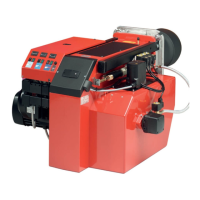
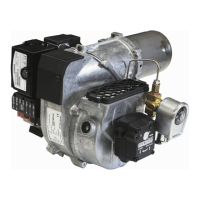
Bentone B55/B65
General
Electrical safety
• If any electrical connections are made other than those recommended
by Enertech, there is a risk of personal injury and equipment damage.
• The electrical installation must be carried out according to the high
voltage provisions and be performed in a professional manner, so that
the risk of oil leakage, fire or personal injury is avoided.
• The installation engineer must be especially careful to ensure that no
electrical wiring or oil lines are pinched or damaged during installation
or service
Assembly and Service
• If the boiler is equipped with an inspection hatch, the hatch should be
fitted with an interlock.
• Filters must be fitted to the oil supply line.
• Shut-off cocks must be fitted to the oil supply line.
• Oil lines must adhere to the current national standards of each respective
country.
Condensation in the flue
A modern burner works with lower surplus air and also often with smaller
nozzles than older types. This raises efficiency but also increases the risk of
condensation in the flue. The risk increases if the cross section of the flue
channel is too great. Flue gas temperatures should be above 60°C measured
0.5 m from the flue chimney.
If the burner is used together with a condensing boiler, working condensing,
the installation must have a chimney that manages this type of operating
conditions.
Measures to increase the temperature
• Insulate the flue in cold loft space.
• Install an insert flue.
• Install a Dragex draught stabilizer or equivalent (which dries and entilates
the flue during shutdown periods).
Adjusting the burner
In order to achieve correct adjustment flue gas analysis and temperature
measurements must be carried out. Otherwise there is a risk of soot build-
up, poor efficiency or condensate precipitation in the flue..



 To Next Page