8.3 Fuels and lubricants
8.3.1
Engine oil
8.3.1.1 Oil quality
The following engine oil specifications are permitted:
n API CF/CH-4 or higher quality
n ACEA B3/E4 or higher quality
Avoid mixing engine oils.
8.3.1.2
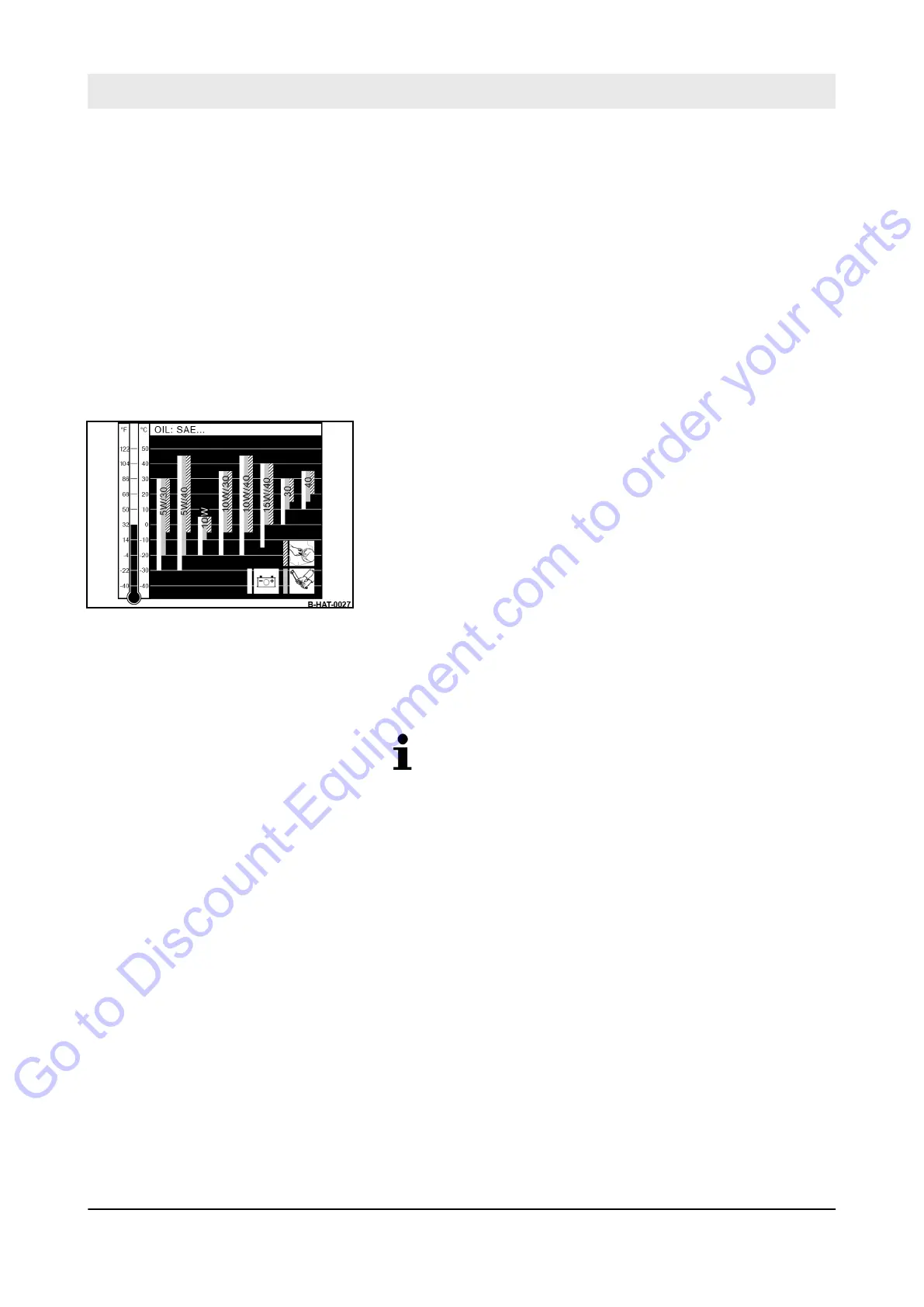
Oil viscosity
Since engine oil changes its viscosity with the temperature, the
ambient temperature at the operating location of the engine is of
utmost importance when choosing the viscosity class (SAE-class).
The temperature data of the SAE-class always refer to fresh oils.
The engine oil ages during travel operation because of soot and
fuel residues. This adversely affects the properties of the engine
oil, especially at low ambient temperatures.
Optimal operating conditions can be achieved by using the oil vis-
cosity chart as reference.
8.3.1.3 Oil change intervals
Annually or every 250 operating hours.
When changing to a higher alloyed oil quality after
a longer period of operation, it is recommended to
perform the first oil change of the higher quality oil
already after 25 operating hours.
8.3.2 Fuel
8.3.2.1
Fuel quality
The following fuel specifications are permitted:
n EN 590
n ASTM D975 Grade-No. 1-D and 2-D
n BS 2869 A1/A2
In order to fulfil national emission regulations one must strictly use
the legally required fuels (
e.g. sulphur content).
Fig. 64: Oil viscosity diagram
Maintenance – Fuels and lubricants
BPR 70/70 D
72
Go to Discount-Equipment.com to order your parts



 To Next Page