
 Need help?
Do you have a question about the BRP EVINRUDE E15R4 and is the answer not in the manual?
Specifies the horsepower rating of the outboard motor.
Identifies the specific model version of the outboard motor.
Guidelines for safe operation of the boat and outboard motor.
Instructions and warnings for the emergency stop switch and lanyard.
Requirement to wear a Personal Floatation Device (PFD) while on the boat.
Technical specifications of the outboard motor, including dimensions, output, and engine details.
Details on fuel type, capacity, engine oil, and gear oil requirements.
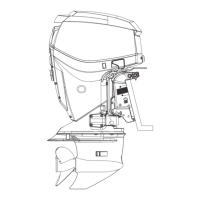
Diagrams illustrating and labeling various parts of the outboard motor.
Illustrations and labels for control box, tiller handle, and power tilt components.
Diagrams showing the placement of various warning labels on the outboard motor.
Procedures and safety warnings for securely mounting the outboard motor onto the boat.
Guidance on correctly positioning the outboard motor relative to the boat's transom.
Instructions and safety precautions for installing the outboard motor's battery.
Guidelines and warnings for safe handling of gasoline and fuel systems.
Procedures and safety warnings for filling the fuel tank.
Recommendations for engine oil type, viscosity, and quantity.
Procedures and precautions for the initial break-in period of the outboard motor.
Explanation of warning indicators, horns, and lamps for fault detection.
Essential checks and procedures before starting the engine, including fuel system checks.
Detailed steps for starting the engine, covering both manual and electric start types.
Procedure for warming up the engine to ensure proper lubrication and prevent damage.
Instructions for shifting gears and controlling acceleration for safe boat operation.
Steps for safely stopping the outboard motor.
How to operate the steering system for both tiller and remote control types.
Information on adjusting the trim angle for optimal boat performance and handling.
Procedures for tilting the outboard motor up and down.
Guidelines for operating the outboard motor in shallow water conditions.
Step-by-step instructions for safely removing the outboard motor from the boat.
Precautions and methods for safely carrying the outboard motor.
Guidelines for trailering a boat with the outboard motor attached.
How to adjust the steering friction lever on tiller handle models.
How to adjust the throttle grip friction on side mount control types.
How to adjust the trim tab to correct steering veering.
Importance of regular daily and periodic maintenance for optimal motor condition.
Checklist of checks to perform before and after each use of the outboard motor.
Schedule and procedures for periodic inspections and servicing of the outboard motor.
Procedure for checking the engine oil level to ensure proper lubrication.
Steps for draining and replacing the engine oil.
Procedure for replacing the engine oil filter.
Instructions for cleaning fuel filters and the fuel tank.
Procedures for draining and refilling the gear oil in the lower unit.
Steps and safety precautions for replacing the propeller.
Procedure for inspecting and replacing spark plugs.
Information on replacing the sacrificial anode for corrosion protection.
Detailed instructions for preparing the outboard motor for off-season storage.
Common causes and remedies for problems related to the fuel system.
Common causes and remedies for problems related to the electrical system.
Potential causes and solutions for issues related to engine compression and oil systems.
Solutions for other operational problems not covered in specific systems.
List of service tools provided with the outboard motor.
List of spare parts provided with the outboard motor.
Guide to selecting the correct propeller based on engine RPM and boat type.
Defines the scope and period of the limited warranty for the outboard engines.
Lists conditions and damages not covered under the product warranty.
Outlines limitations on liability for incidental, consequential, or indirect damages.
Specifies the duration of warranty coverage based on usage and type.
Details the conditions that must be met to ensure warranty coverage.
Steps an owner must take to obtain warranty service for their product.
A series of questions to assess the operator's readiness and understanding of the manual.
Answers to common questions about recommended fuel octane and engine oil.
Information on where to get service and how to order replacement parts.
Form for updating owner's address or transferring ownership of the outboard motor.
Form for the owner to confirm receipt of the outboard and understanding of its operation and warranty.
 General
| Model | E15R4 |
|---|---|
| Category | Outboard Motor |
| Engine Type | 2-Stroke |
| Horsepower | 15 HP |
| Fuel System | Carbureted |
| Starting System | Manual |
| Fuel Type | Gasoline |
| Oil Type | TC-W3 |
| Gear Ratio | 2.15:1 |
| Shaft Length | 381 mm (15 in) |


 To Next Page