
 Need help?
Do you have a question about the BWB XP and is the answer not in the manual?
Covers essential safety warnings for operating the BWB Flame Photometer, including electrical hazards, chemical handling, and burn prevention.
Guidelines for optimal instrument placement, drainage, diluent use, and proper sample handling to ensure accurate results.
Procedures for instrument warm-up, adjusting flame height, and monitoring flame stability for consistent performance.
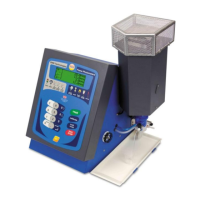
Details the BWB-XP's capabilities, including multi-channel measurement, built-in air compressor, and starter pack contents.
Specifies installation conditions, power supply needs, gas fuel requirements, and leak testing procedures.
Step-by-step instructions for correctly fitting the nebuliser assembly to the instrument.
Identifies and explains the function of the instrument's display, status LEDs, keypad, and warning indicators.
Outlines pre-start checks, the initial startup sequence, and gas adjustment for flame ignition.
Details how to optimize flame height and the necessary warm-up period for accurate measurements.
Explains access to setup menus, clock settings, calibration reset, serial number, and auto-read configurations.
Covers settings for LCD contrast, interfaces, printer, AFHS, and ion resolution/units.
Discusses spectral cross-sensitivity, chemical interferences for Ca/Ba, and testing Na & K linearity.
Detailed steps for performing a single point calibration for individual ions.
Step-by-step guide for conducting multi-point calibrations with increasing concentration levels.
Instructions for calibrating multiple ions simultaneously, including selecting ions and points.
How to access and interpret stored calibration details for each ion, including R2 values.
Methods for correcting baseline drift (Blank) and highest calibration standard in multipoint calibration.
Procedure to adjust individual calibration points without re-running the entire calibration.
Guidance on using Read mode for continuous flame monitoring and determining stable sample values.
Instructions for Auto-Read mode, which automatically calculates and logs stable sample concentrations.
Configuration steps for connecting and setting up the chart recorder or 4-20mA output.
Details on using the printer module, paper replacement, print functionality, and maintenance.
Overview of the maintenance menu, accessing info, and checks for compressor, flame detection, and fan settings.
Guidelines for daily, weekly, monthly, semi-annual, and annual maintenance tasks.
Detailed cleaning instructions for U-tube, drain cup, nebuliser, mixing chamber, burner, and chimney.
Addresses problems with no display, no flame ignition, and instrument failure to stabilise.
Troubleshooting for chart recorder output, computer communication, and printer issues.
General risk assessment notes, recommendations to reduce risk, and activity description.
Details significant hazards like flammability, chemical exposure, burns, and their control measures.
Steps for decommissioning the instrument prior to recycling and locating/removing the motherboard battery.
Explains initial startup screens, menu navigation, and ion selection during calibration.
Details the content and interpretation of calibration screens and viewing calibration data.
Lists common error messages like Pre-Flame, Flame Gone Out, U-Tube Fault, and their reset procedures.
 General
| Brand | BWB |
|---|---|
| Model | XP |
| Category | Measuring Instruments |
| Language | English |

 To Next Page
