PRELIMINARY
Document type: Title: Revision date: Revision:
User's Manual (MUT) Mod. V1729 4 Channel 12 Bit Sampling ADC 22/06/2005 3
NPO: Filename: Number of pages: Page:
00109/04:V1729.MUTx/03 V1729_REV3.DOC 38 13
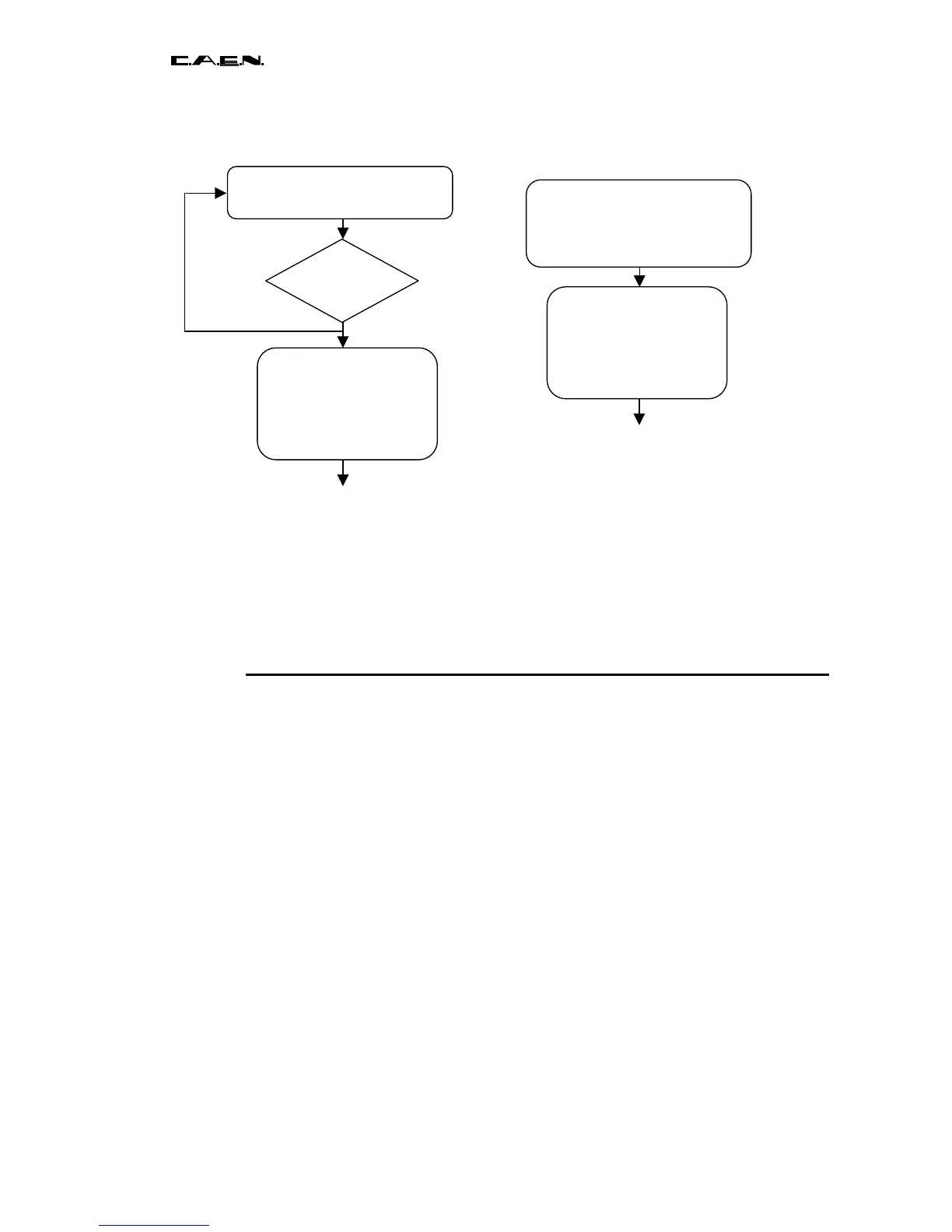
Fig. 2.6: two possibilities for detection and for treatment of the request
In order to obtain the nominal noise performances (signal to noise ratio of 73 to 74dB),
the pedestals, which are stable in time and with temperature, must be removed by the
acquisition software individually cell by cell. Since the pedestal of a cell is linked to its
physical location and not to its position in relation to the Trigger, it is necessary to
realize this removal BEFORE reordering the data.
A method of calibration of the pedestals is demonstrated in section 3.3.2.
2.5.2 Temporal corrections
The signal is sampled in a circular memory. The first operation necessary for the
treatment of the data is therefore to « unfold » the circular memory in order to obtain a
table of 2560 temporally ordered data (see Fig 2.6). This can be done, by example, by
realizing a rotation of :
ROT = (TRIG_REC - POSTTRIG ) * 20
cells towards the left of the data table issued from the RAM.
Or, equivalently through a calculation of a new index number for each data :
(2) NEWi = (2560 + OLDi – END_CELL) modulo 2560
where END_CELL is the index of the last written cell :
END_CELL = 20 * (POSTTRIG + TRIG_REC) modulo128
The trigger signal (asynchronous trigger) Ta is the absolute reference which serves to
temporally realign the data. In order to find its position, one uses the information provided
by a temporal interpolator (vernier) measuring ti, time interval separating the arrival of Ta
from the next rising edge of the Fp clock.
Interrupt request
acknowledge => clear
INTERRUPT
REGISTER
Bit 0 =1
?
yes
Read INTERRUPT REGISTER
no
Interrupt request
acknowledge => clear
INTERRUPT
REGISTER
continue
Asynchronous Interrupt detected
by hardware (IRQ3 or SRQ)



 To Next Page