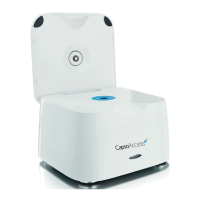
IFU-2800 Rev E 11/18
11
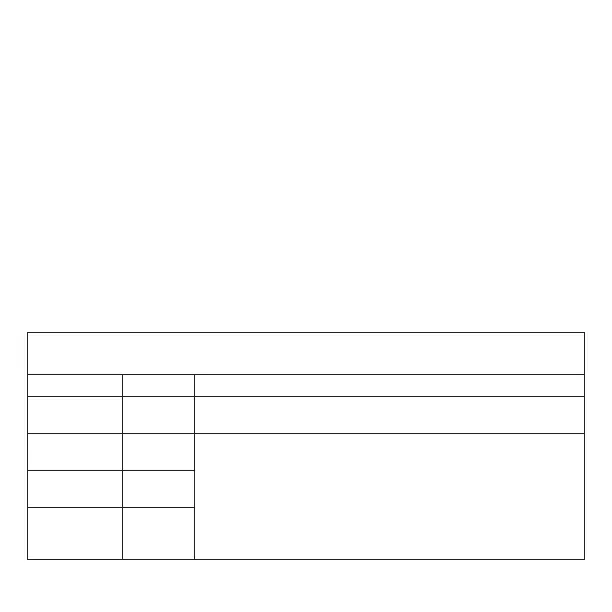
Table 1 — Guidance and manufacturer’s declaration – electromagnetic emissions
The CapsoAccess® system is intended for use in the electromagnetic environment specied below.
The customer or the user of the CapsoAccess® system should assure that it is used in such an environment.
Emissions Test Compliance Electromagnetic environment – guidance
RF emissions
CISPR 11
Group 1
The CapsoAccess® system uses RF energy only for its internal function. Therefore, its RF emissions are very low and
are not likely to cause any interference in nearby electronic equipment.
RF emissions
CISPR 11
Class B
The CapsoAccess® system is suitable for use in all establishments, including domestic establishments and those
directly connected to the public low voltage power supply network that supplies buildings used for domestic
purposes.
Harmonic emissions
IEC 61000-3-2
Class A
Voltage uctuations/
icker emissions
IEC 61000-3-3
Complies
may result in increased EMISSIONS or decreased
IMMUNITY of the CapsoAccess® system.
This CapsoAccess® system should not be used
adjacent to or stacked with other equipment
and that if adjacent or stacked use is necessary,
the CapsoAccess® system should be observed
to verify normal operation in the conguration
in which it will be used.
Essential Performance: Data integrity during video
download is considered to be the essential
performance of the CapsoAccess® system. If the
essential performance is lost or degraded due to EM
disturbances, the video data may be incomplete or
corrupted which will require redownload.
11. Federal Communication
Commission (FCC) Compliance
The CapsoAccess® system (CDAS3) complies with
Part 15 of the United States FCC rules and with
international standards for electromagnetic
compatibility regarding its use.


 To Next Page
 Loading...