Overview
2011-03-31 9G3886_en 1-3
How the laser imager works
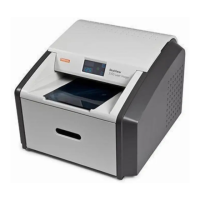
The laser imager receives, processes, manages, and prints the images on
film. The laser imager has limited storage to hold a small number of
digital images. As images are received for printing, they are stored in
memory, placed in a sequential print queue, and are printed in order. The
laser imager can continue to accept incoming print jobs even if
temporarily unable to print (if the film supply is empty, etc).
During normal operation, the laser imager requires very little attention. It
prints automatically in response to print requests from the configured
image sources. Information sent with the images by the image source,
such as film type and size and image quality settings, is applied unless
you set the laser imager to override information that comes from the
image source.
Print sequence
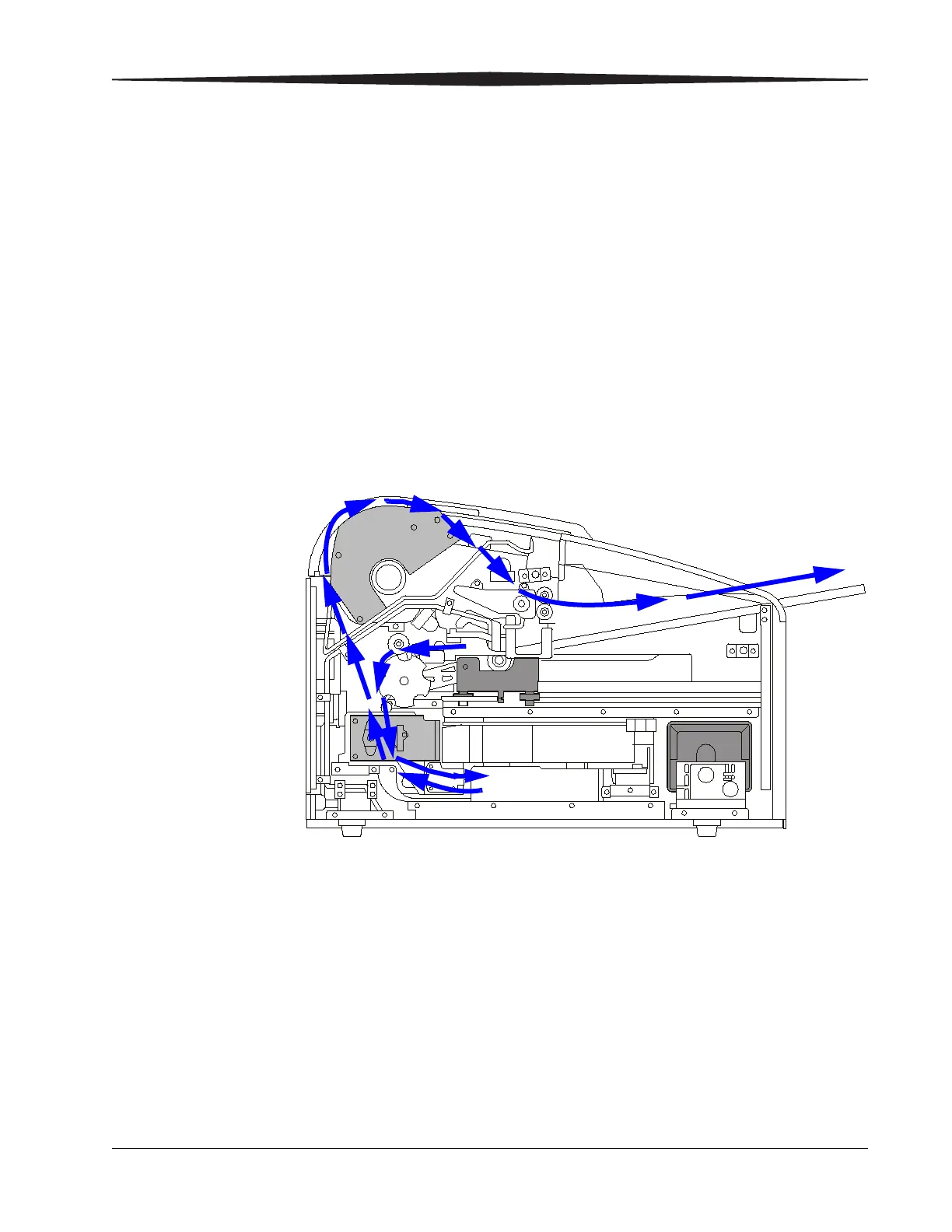
Each time the laser imager receives a print request, the following print
sequence occurs. The blue arrows show the film path.
1. Suction cups in the pickup area lift a single sheet of film out of the
supply cartridge and feed the film into the transport rollers.
2. The transport rollers move the film down into the exposure transport
area.
3. The film moves down during imaging (as the optics module writes
the image onto film), reverses direction at the conclusion of
imaging, and then the film moves up into the processor.
4. As the film passes over the processor drum, the heat generated by
the drum develops the film.
5. The exit rollers move the developed film to the exit tray.



 To Next Page