Chapter 4: Operation
98-141368-A 48
Dialling functions
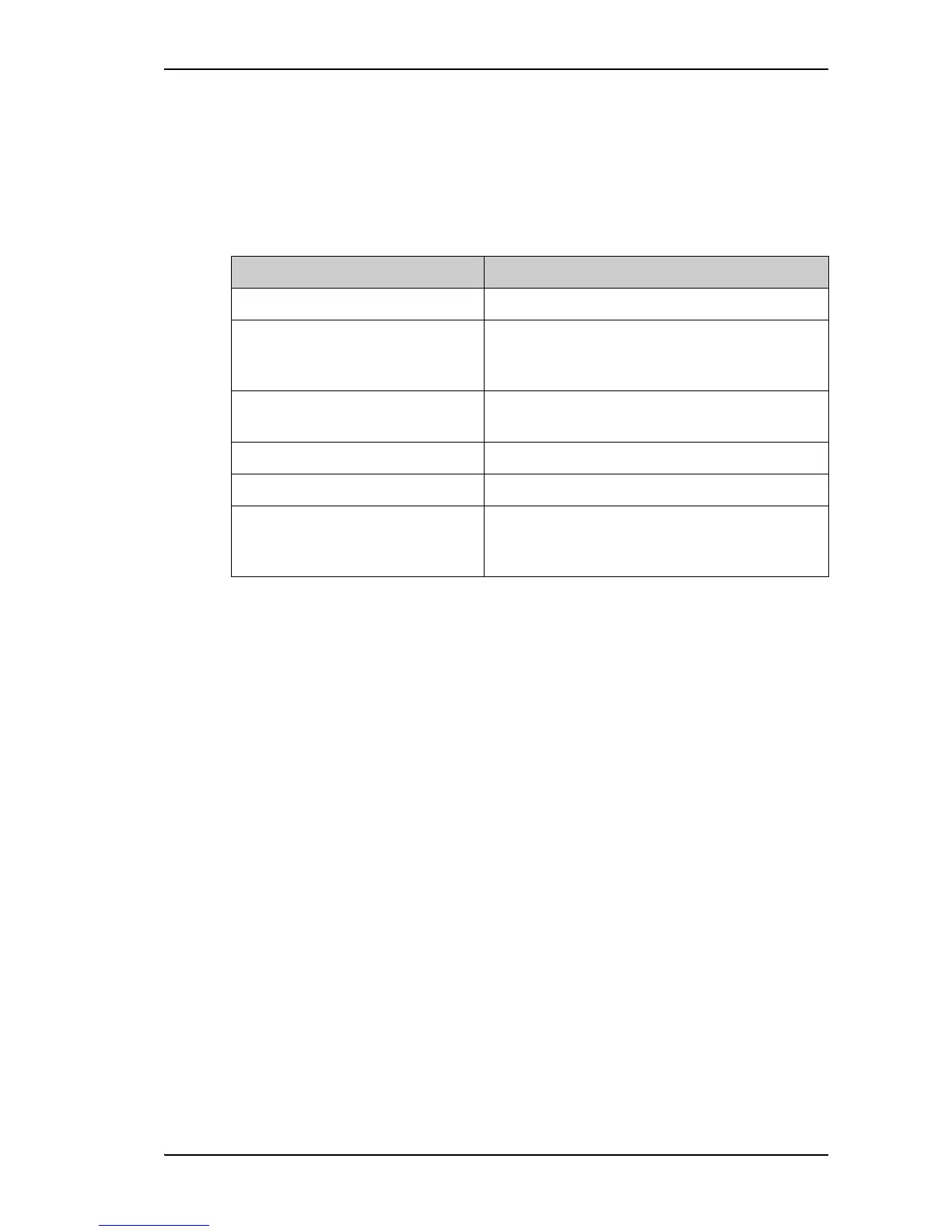
Local numbers and special-purpose numbers
There are a number of dialling functions available in the terminal. The following list shows the
allocated special-purpose numbers for the terminal.
Dialling prefixes
Apart from the numbers above, the terminal uses the following dialling prefixes:
• #31# before the phone number will hide the caller’s phone number to the recipient.
• *31# before the phone number will show the caller’s phone number to the recipient where
it would otherwise be hidden, e.g. because the number is an ex-directory number.
• For analogue 2-wire telephones, use the R key during a call to get access to a
supplementary services function (such as Call hold and Call transfer).
Number Function
0 * followed by # or off-hook key. Redial last called number on this interface.
00 * followed by # or off-hook key. Redial last answered call on this interface.
Note: If the last answered number is unlisted, you
are not allowed to dial back.
00 followed by one of the numbers 1-
199 and # or off-hook key.
Short dial phone numbers in phone book.
0301 followed by # or off-hook key. Local call to analogue phone.
0500 followed by # or off-hook key Local call broadcast to all IP handsets.
0 followed by one of the numbers
501-504 and # or off-hook key.
Local call to IP handset
(or smartphone connected through a WLAN access
point)


 To Next Page