2726
4.9 Technique Factors Settings and Adjustments
The factory settings in this chart are intended as a reference starting point only and are
based upon average preferences and use with the cone perpendicular to the image
receptor. Individual results may vary based upon a number of factors including image
density preferences, the various imaging sensors or available film speeds and brands,
patient size, practitioner techniques, and preferences.
Pediatric Considerations
Use of equipment and exposure settings designed for an average-sized adult can result
in excessive radiation exposure for a smaller patient, especially paediatric. Paediatric
patients may be more radio-sensitive than adults (i.e., the cancer risk per unit dose
of ionising radiation is higher), and so unnecessary radiation exposure is of particular
concern for paediatric patients. Please use caution when configuring the NOMAD Pro 2
by considering the patient’s age, size, body habitus, and clinical indication when verifying
exposure time settings.
The following links to US FDA and Image Gently websites are useful resources for pediatric
imaging guidelines and information:
https://www.fda.gov/Radiation-EmittingProducts/RadiationEmittingProductsandProcedures/
MedicalImaging/default.htm
http://www.imagegently.org/Procedures/Dental#35771809-guidelines-and-resources
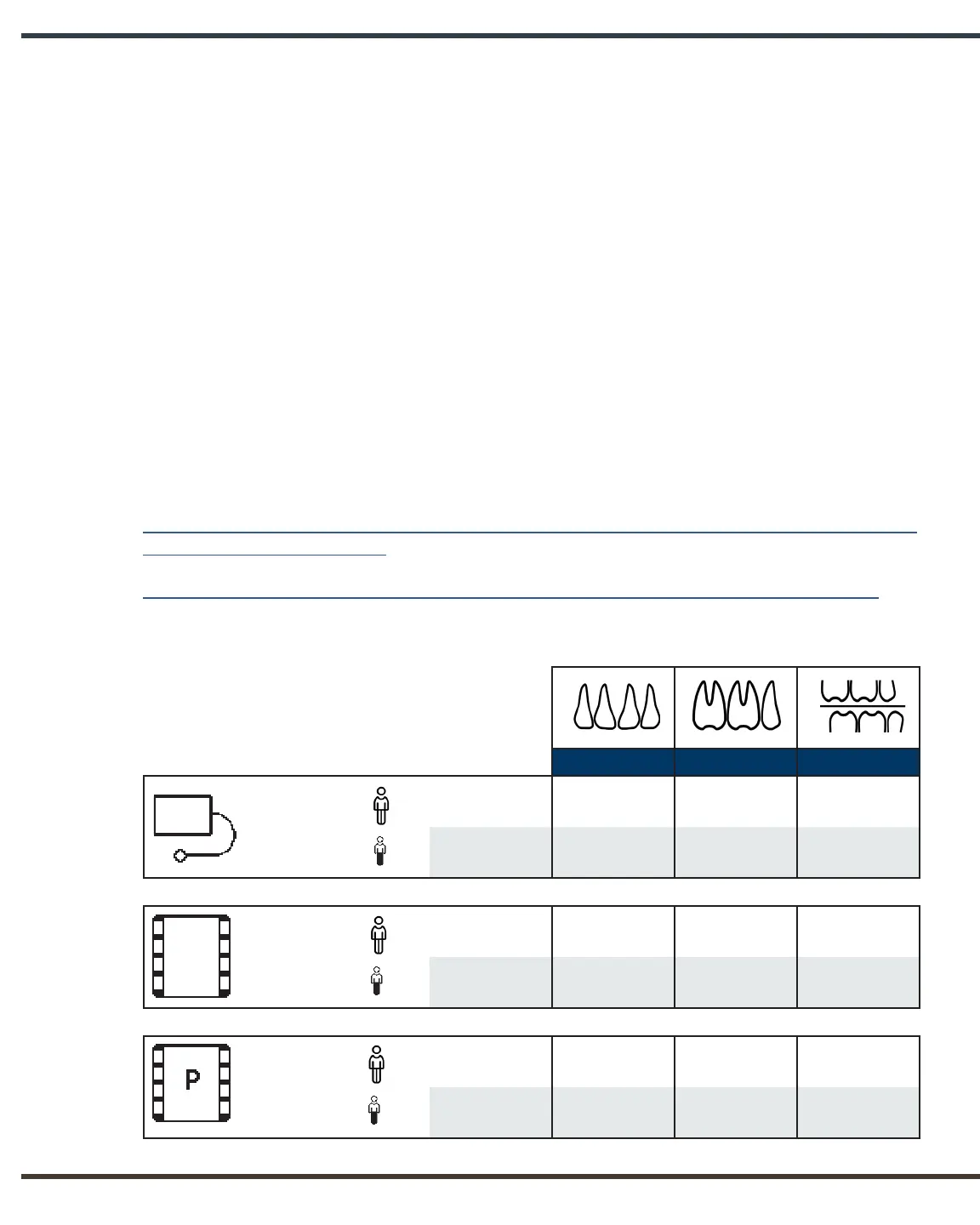
Pre-set Technique Factors Chart
2.5 mA 60 kV
Anterior Posterior Bitewings
Digital
Sensor
Adult 0.12 0.16 0.17
Child 0.09 0.13 0.14
Film
Adult 0.30 0.38 0.40
Child 0.18 0.30 0.32
Phosphor
Plate
Adult 0.16 0.19 0.20
Child 0.09 0.15 0.16


 To Next Page