9
10
12
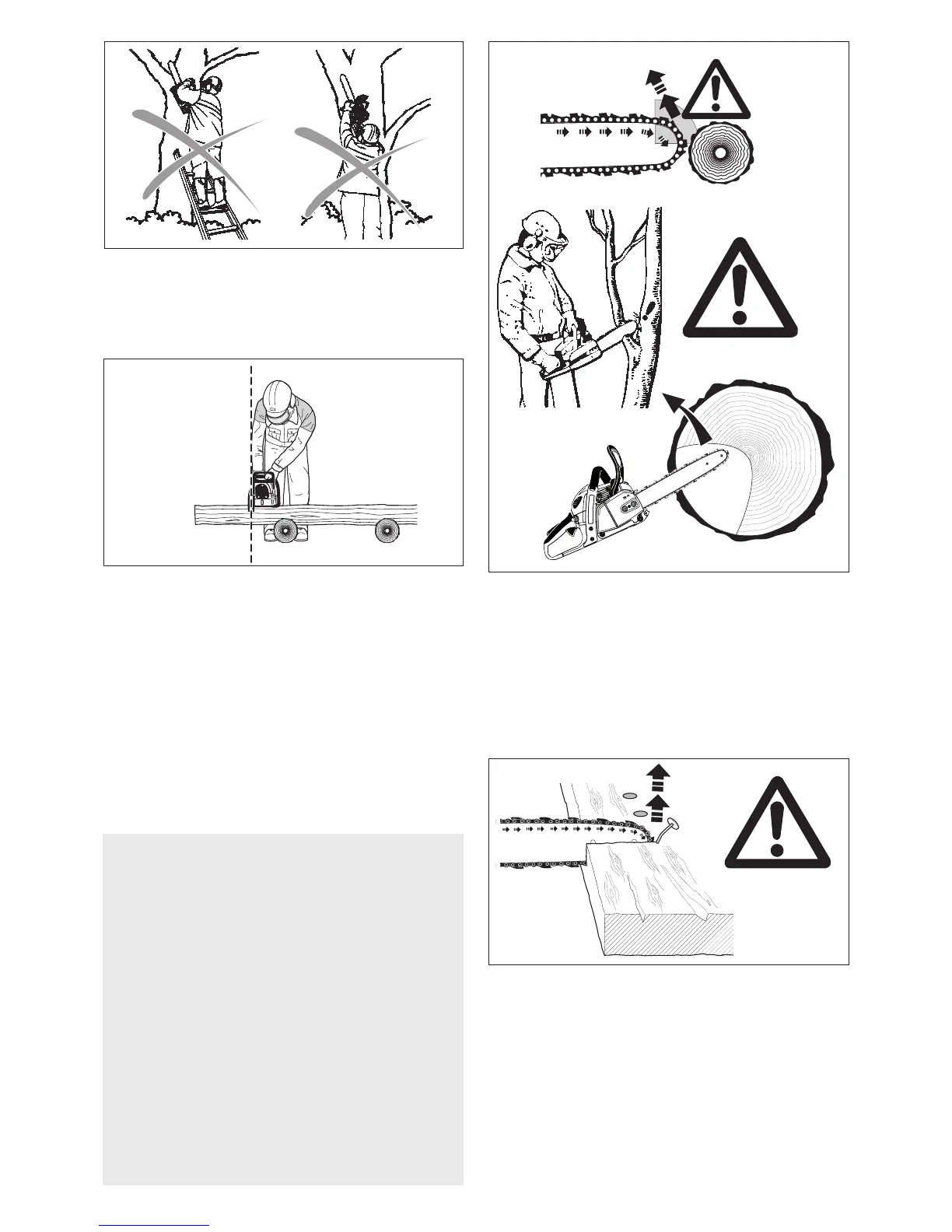
Position the chain saw in such a way that your body is
clear of the cutting attachment whenever the engine is
Don’t put pressure on the saw when reaching the end
of a cut. The pressure may cause the bar and rotating
chain to pop out of the cut or kerf, go out of control and
strike the operator or some other object. If the rotating
chain strikes some other object a reactive force (see
pages 11 to 13) may cause the chain to strike the op-
erator.
Reactive forces during the cut, including kickback
WARNING!
Reactive forces, that may occur during any cut are
kickback, pushback and pull-in. Reactive forces
can be dangerous! In any chain saw, the powerful
force used to cut wood can be reversed (and work
against the operator).
If the rotating chain is suddenly stopped by contact
with any solid object like a log or branch or is pinched,
the reactive forces instantly occur. These reactive
forces may result in loss of control which may, in
turn, cause serious or fatal injury. An understanding
of the causes of these reactive forces may help you
avoid loss of control.
The most common reactive forces are
- kickback,
- pushback,
- pull-in.
In order to keep control of your saw, always maintain
any other insecure support. Never use the saw above
This reaction can occur in a fraction of a second and
under some circumstances, cause the guide bar and
chain to strike the operator with enough force to cause
severe or fatal injury. It may also occur during limbing. It
also occurs when the nose of the guide bar is pinched
unexpectedly, unintentionally contacts solid material
plunge or boring cut.
The greater the force of the kickback reaction, the more
Kickback:
Kickback occurs when the upper quadrant of the bar
nose contacts a solid object in the wood or is pinched
causes a rotational force of the chain saw in the direc
tion opposite to the chain movement, mainly in the plane
towards the operator.
11


 To Next Page