24
25
26
27
28
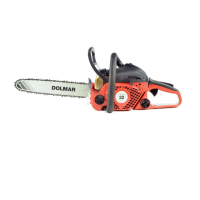
Begin the felling cut slighty higher than the felling notch
the chain saw with its spikes directly behind the uncut
Leave approximately 1/10 of the tree diameter uncut!
because you could lose control of the direction of the
fall. Drive wedges into the felling cut where necessary
to control the direction of the fall. Wedges should be of
wood, light alloy or plastic - never of steel, which can
cause kickback and damage to the chain.
Always keep to the side of the falling tree. When the
bar and walk away on the pre-planned escape path.
Watch out for falling limbs.
WARNING!
Be extremely careful with partially fallen trees which
are poorly supported.
When the tree hangs or for some other reason does
not fall completely, set the saw aside and pull the
tree down with a cable winch, block and tackle or
tractor. If you try to cut it down with your saw, you
may be injured.
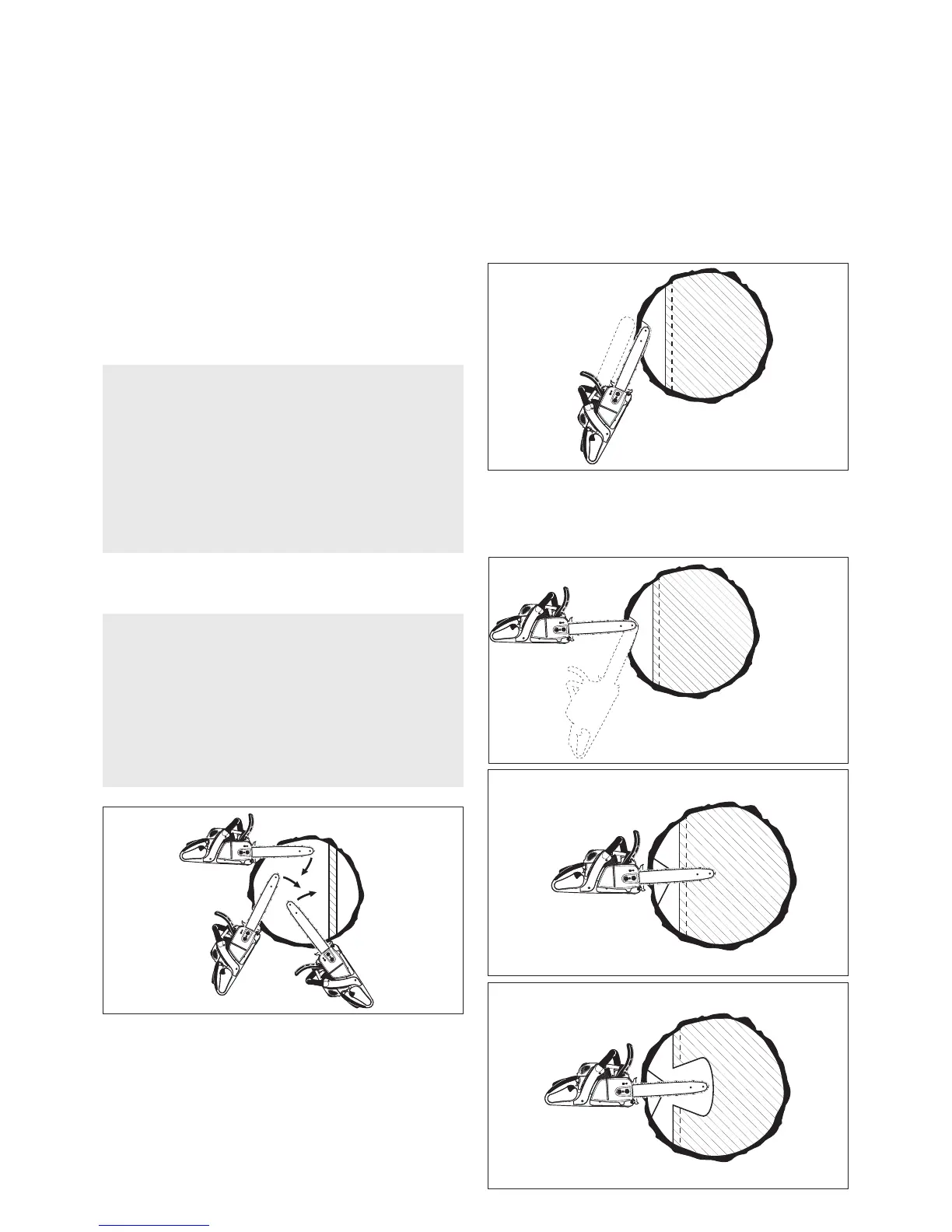
Sectioning Method
WARNING!
Felling a tree that has a diameter greater than the
length of the guide bar requires use of either the
sectioning or plunge-cut method. These methods
are extremely dangerous because they involve
the use of the nose of the guide bar and can result
in kickback. Only properly trained professionals
should attempt these techniques.
with the guide bar fanning in toward the hinge. Then,
using the bumper spike as a pivot, reposition the saw
for the next cut. Avoid repositioning the saw more than
necessary. When repositioning for the next cut, keep
the guide bar fully engaged in the kerf to keep the
felling cut straight. If the saw begins to pinch, insert
a wedge to open the cut. On the last cut, do not cut
the hinge.
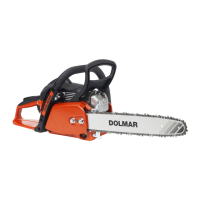
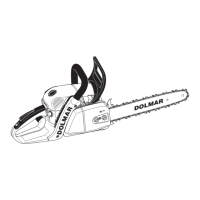
Plunge-Cut Method
Timber having a diameter more than twice the length of
the guide bar reauires the use of the plunge-cut method
before making the felling cut.
First, cut a large, wide notch. Make a plunge cut in the
center of the notch.
The plunge cut is made with the guide bar nose. Begin
the plunge cut by applying the lower portion of the guide
of the kerf is about the same as the width of the guide
the recess is to be cut. With the saw at full throttle, insert


 To Next Page