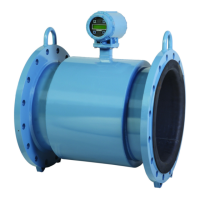
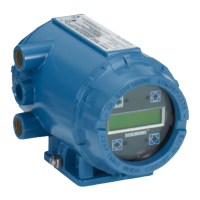
10.4 Optimizing flow reading in noisy applications
If the flow reading is unstable, first check the wiring, grounding, and process reference
associated with the flow meter. Ensure that the following conditions are met:
• Ground straps are attached to the adjacent flange or ground ring
• Grounding rings, lining protectors, or a process reference electrode are being used in
lined or non-conductive piping
The causes of unstable output can usually be traced to extraneous voltages on the
measuring electrodes. This “process noise” can arise from several causes including
electrochemical reactions between the fluid and the electrode, chemical reactions in the
process itself, free ion activity in the fluid, or some other disturbance of the fluid/electrode
capacitive layer. In such noisy applications, an analysis of the frequency spectrum reveals
process noise that typically becomes significant below 15 Hz.
In some cases, the effects of process noise may be sharply reduced by increasing the coil
drive frequency above the 15 Hz region. The coil drive frequency is optimized by sensor
size at the factory to run at the highest frequency with a minimal zero offset. Coil drive
mode is selectable between standard Low frequency and noise-reducing High frequency.
10.4.1
Coil drive frequency
LOI menu path Detailed Setup → Additional Params → Coil Drive Freq
This parameter changes the drive frequency of the magnetic coils.
Low
The standard coil drive frequency is Low. This is the recommended coil drive frequency
setting for most applications.
High
If the process fluid causes a noisy or unstable flow reading, increase the coil drive
frequency to High. If the coil drive frequency is set to High, the auto zero trim is highly
recommended for optimal performance. Not performing the auto zero trim can lead to
degraded accuracy, especially at low flow rates.
Digital Signal Processing Reference Manual
November 2019 00809-0100-8782
108 Rosemount
®
8782 Slurry Magnetic Flow Meter Transmitter with HART Protocol


 To Next Page
 Loading...