Replacing the
needle
B
Attention:
Turn power switch to OFF ("O")
A
when carrying out any of the above operations!
Change the needle regularly, especially if it is
showing signs of wear and tear causing problems.
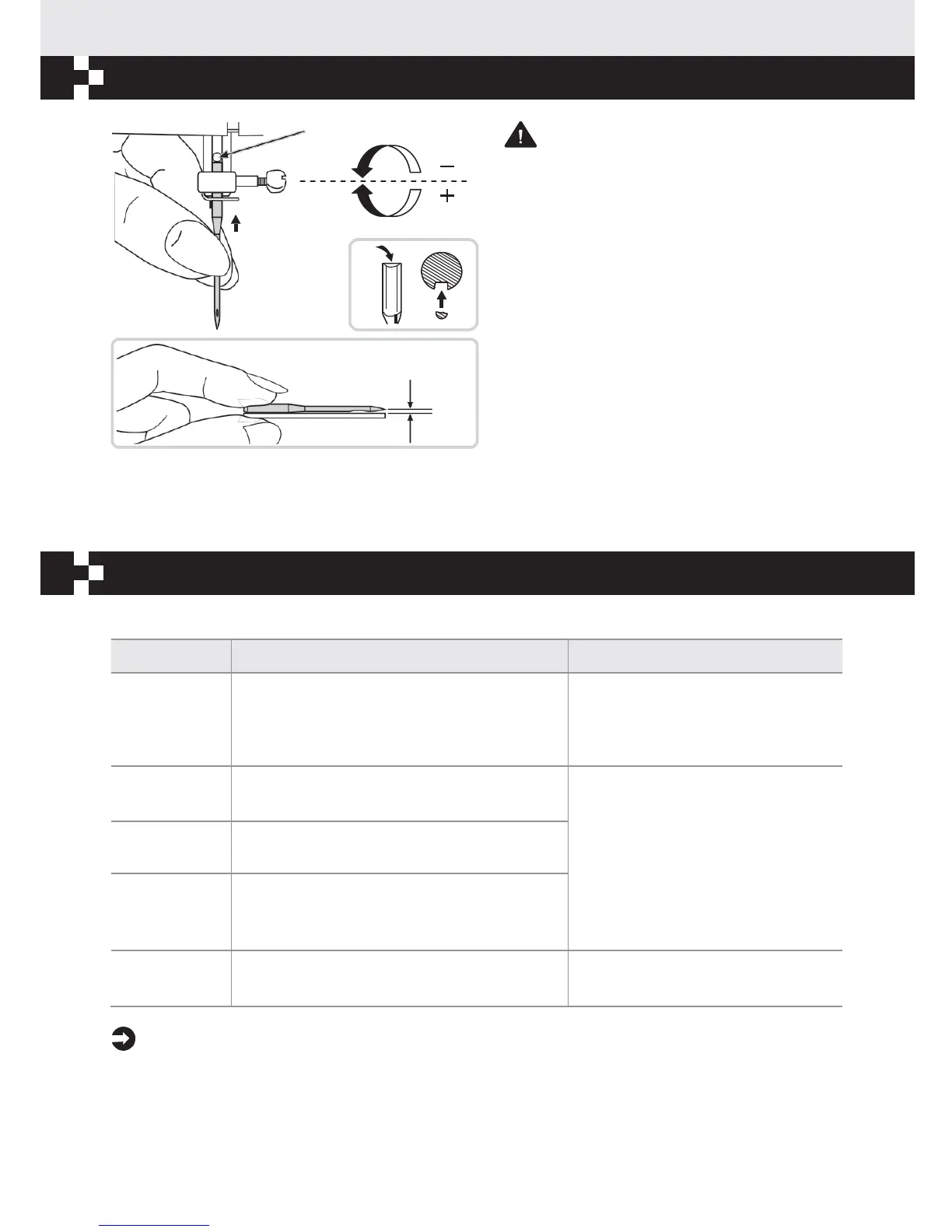
Insert the needle following the illustrated
instructions.
A. Loosen the needle clamp screw and tighten
again after inserting the new needle. T h e f l a t
side of the shaft should be towards the back.
B. Insert the needle as far up as it will go.
Needles must be in perfect condition.
Problems may occur with:
- Bent needles
- Blunt needles
- Damaged points
Matching needle/ fabric/
thr
ead
NEEDLE, FABRIC, THREAD
SELECTION GUIDE
Lightweight fabrics-thin cottons, voile, serge,
silk, muslin, interlocks, cotton knits, tricot,
jerseys, crepes, woven polyester, shirt & blouse
fabrics.
Light-duty thread cotton, nylon,
polyester or cotton wrapped polyester.
M e d i u m w e i g h t f a b r i c s - c o t t o n , satin,
sailcloth, double knits, lightweight woolens.
Most threads sold are medium size
and suitable for these fabrics and
needle sizes.
Use polyester threads on synthetic
materials and cotton on natural woven
fabrics for best results.
Always use the same thread on top
and bottom.
Medium weight fabrics-cotton duck, woolen,
heavier knits, terrycloth, denims.
Heavyweight fabrics-canvas, woolens, outdoor
tent and quilted fabrics, denims, upholstery
material (light to medium).
Heavy woolens, overcoat fabrics, upholstery
fabrics, some leathers and vinyl’s.
Heavy duty thread, carpet thread.
Please Note:
- In general, fine threads and needles are used for sewing fine fabrics, and thicker threads are used
for sewing heavy fabrics.
-
Always
test thread and needle size on a small piece of fabric which will be used for actual sewing.
- Use the same thread for needle and bobbin.


 To Next Page