12
3. bloccare la barra in posizione verticale tramite il
tirante di aggancio (C - fig.3) precedentemente
rimosso dal suo supporto. Bloccare il tirante
mediante l’apposito dispositivo a maniglia e la
coppiglia a R (C - fig. 3);
4. coprire le lame taglienti con l’apposita protezio-
ne (D - fig.3) e sollevare tutta l’attrezzatura di 60
÷ 70 cm (4 - fig.3).
Per gli spostamenti su strada è
importante che siano osservati i
seguenti obblighi:
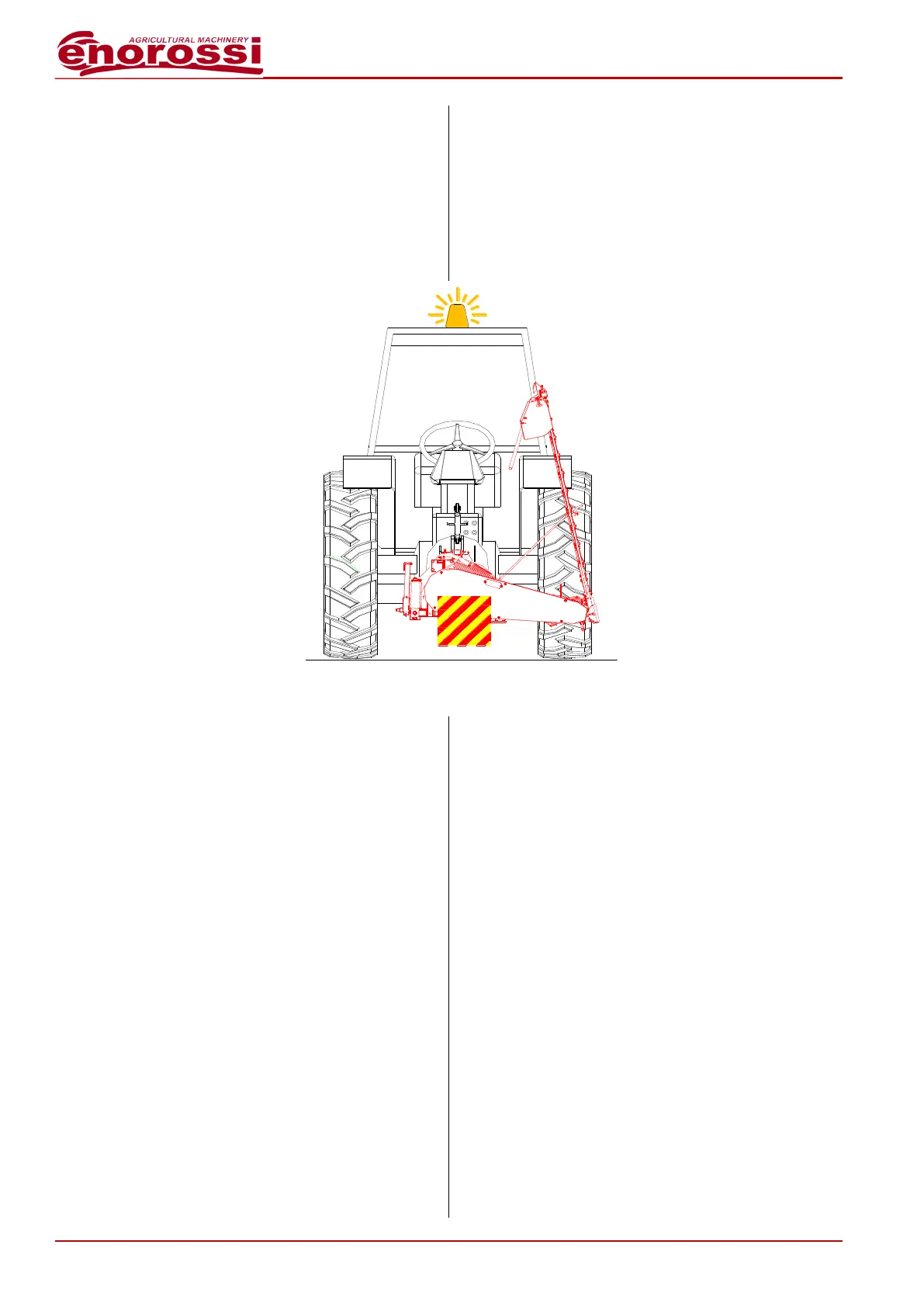
- ingombro posteriore:
l’operatore dovrà applicare
alla barra falciante gli
appositi pannelli come
previsto dal codice della
strada per evidenziare
l’ingombro dell’attrezzatura.
A tal proposito è bene ricor-
dare che i pannelli devono
essere retroriflettenti e
fluorescenti a strisce gialle e
rosse e del tipo omologato.
L’attrezzatura deve risultare
in configurazione da tra-
sporto, come in fig.4.
- segnalatori: il trattore deve
obbligatoriamente avere il
dispositivo a luce lampeg-
giante (giallo o arancio)
sempre in funzione. Inoltre, i
dispositivi di segnalazione visiva e di
illuminazione del trattore devono essere ripetuti,
applicando una apposita barra nella parte
posteriore dell’attrezzatura, qualora l’ingombro
della barra falciante ne occultasse la visibilità;
- peso: la massa totale della macchina operatrice
(trattore con barra falciante) non deve essere
superiore del 30% di quella normale del trattore
riportata sulla sua carta di circolazione. Il trattore
deve sempre muoversi a velocità moderata,
soprattutto sulle strade sconnesse, in quanto il
peso posteriore potrebbe causare difficoltà alla
guida;
- norme: è necessario, comunque, conoscere ed
attenersi alle norme per la circolazione su strada
in vigore in ogni singolo Paese.
Durante gli spostamenti (su strada o nei campi) della
macchina operatrice (trattore con barra falciante) e
successivamente nel suo impiego, l’operatore in
cabina deve osservare le seguenti precauzioni:
- non deve portare passeggeri sul trattore;
- non deve trasportare persone, animali o cose
sull’attrezzatura;
3. to lock the bar in vertical position by the hooking
tie rod (C - fig.3) previously removed from its
support. To lock the tie rod by using the special
handle device and the R cotter pin (C - fig.3);
4. cover the cutting blades by the special guard (D -
fig.3) and lift the equipment about 60 ÷ 70 cm (4
- fig.3)
For movements on public
roads is important that the
following obligations are
respected:
- rear dimensions: the
operator should apply the
relevant signs on the
mower to indicate the rear
dimensions of the tractor,
as requested by Highway
Code. It should be noted
that the signs must be
applied on the three
visible sides. The signs
should be of an approved
type, reflective and
fluorescent, with red and
yellow stripes. The
equipment must result in
transport configuration, as
in fig.4.
- signal dimensions: the
tractor should always have
its flashing light device on (yellow or orange).
Furthermore, the lighting and visual devices of
the tractor must be repeated, affixing an
appropriate bar in the rear part of the equipment,
if the dimensions of the mower cover their
visibility;
- weight: the total weight of the machinery (tractor
and mower) must not be greater than 30% of the
tractor normal one which is indicated in its log
book. The tractor must always proceed at a
moderate speed, especially on uneven roads, as
the rear weight may make driving difficult;
- regulations: you should be familiar with and
observe the road traffic regulations that are
currently in force in your Country.
When driving (on the road or in field) and operating
the machinery (tractor and mower), the operator in
the tractor cabin should observe the following
precautions:
- no passengers should be carried on the tractor;
- no persons, animals or things should be carried
on the equipment;
CONFIGURAZIONE DA TRASPORTO
TRANSPORT CONFIGURATION


 To Next Page