Division:
31 I 77
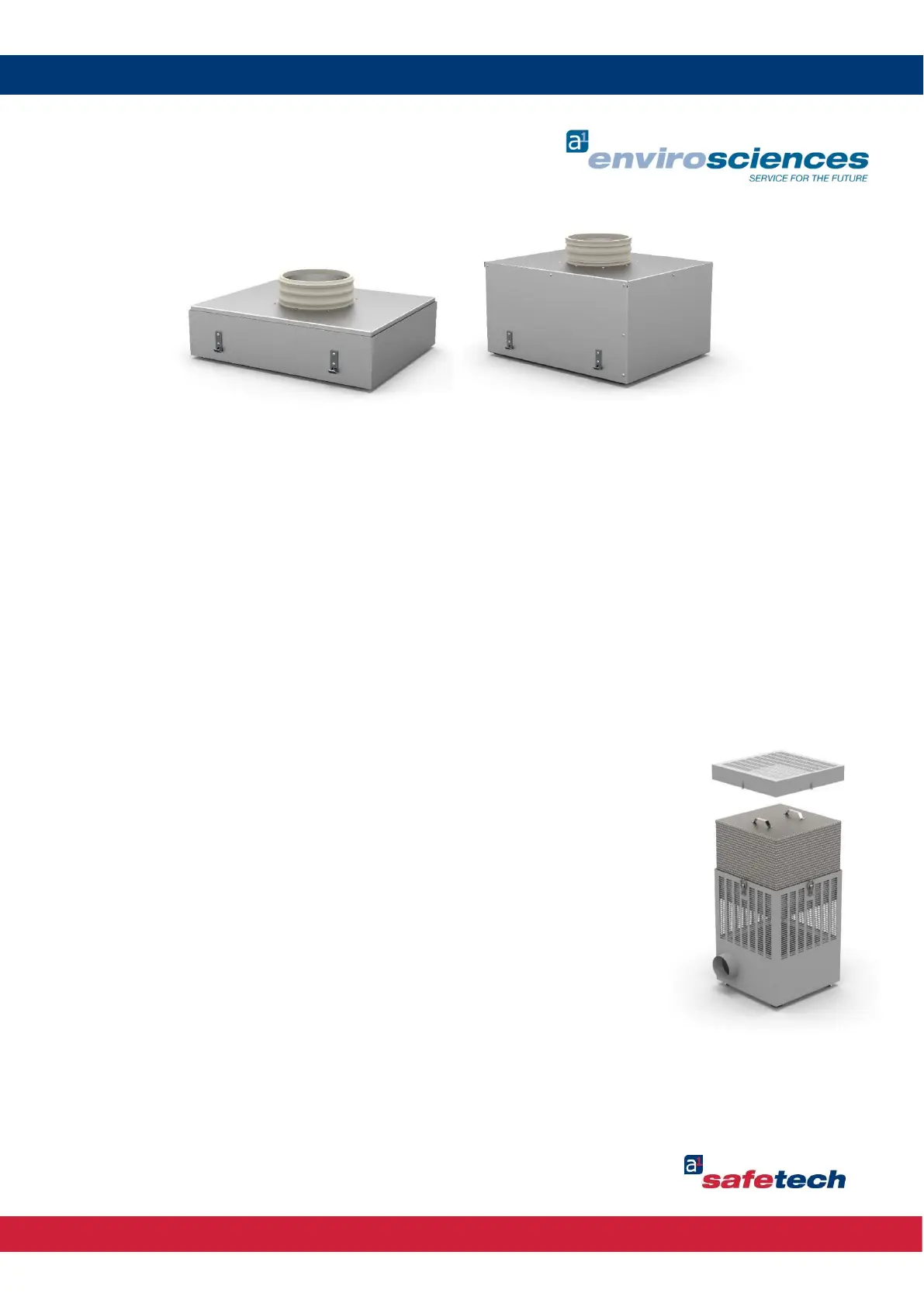
HEPA filter
Figure 12 - HEPA filter (one layer)
Figure 13 - HEPA filter (two layers)
The HEPA filter (high-efficiency particulate air filter) is used to retain solid exposures and
aerosols. The H14 HEPA filters used have a retention rate of 99.995%. They are factory
certified according to ISO ISO/EN 1822 and come with individual certificates.
Carbon filter
For adsorption of solvent vapours, an additional filter housing with carbon filter can be used.
The carbon filters used by a1-envirosciences have a retention capacity of 0.5 kg of solvent
vapours. Carbon filters are mainly used to remove solvent vapours and to reduce odours. The
activated carbon used, e.g. made from the shells of coconuts, has a filter surface area of up
to 1050 m²/g. Filtration takes place through the physical adsorption of molecules in the
pores of the activated carbon.
Fields of application:
Separation of gaseous air contaminants
Odour reduction
Adsorption of harmful gases
The carbon filters are only suitable to a limited extent for the adsorption
of carcinogenic or toxic solvent vapours. Exhaust air polluted to such an
extent should be discharged into the building's system via a draught
diverter. Our service department will be happy to advise you. Due to the
limited adsorption capacity, it is recommended to change the carbon
filter at least once a year!
There is no capacity display! A table of the effectiveness of carbon
filters can be found in appendix C.
Carbon filter incl. housing



 To Next Page