COOLANT
WARNING: Never remove filler caps
when the system is hot, as the
reservoir will be pressurized. Coolant and
steam can escape rapidly when the cap is
removed, causing injury.
WARNING: Antifreeze is highly
inflammable. Do not allow antifreeze
to come into contact with naked flames or
other sources of ignition (e.g. a hot engine)
- a fire may result.
WARNING: Unscrew the filler cap
slowly, allowing the pressure to
escape before removing completely.
Your vehicle is unique in that unlike a
traditional vehicle, it has three separate
cooling systems to cool the engine, electric
drive components and the high voltage
battery.
The coolant levels for each reservoir should
be checked monthly. The levels should be
checked more frequently in high mileage
conditions. Always check the level when the
system is cold.
Battery coolant level
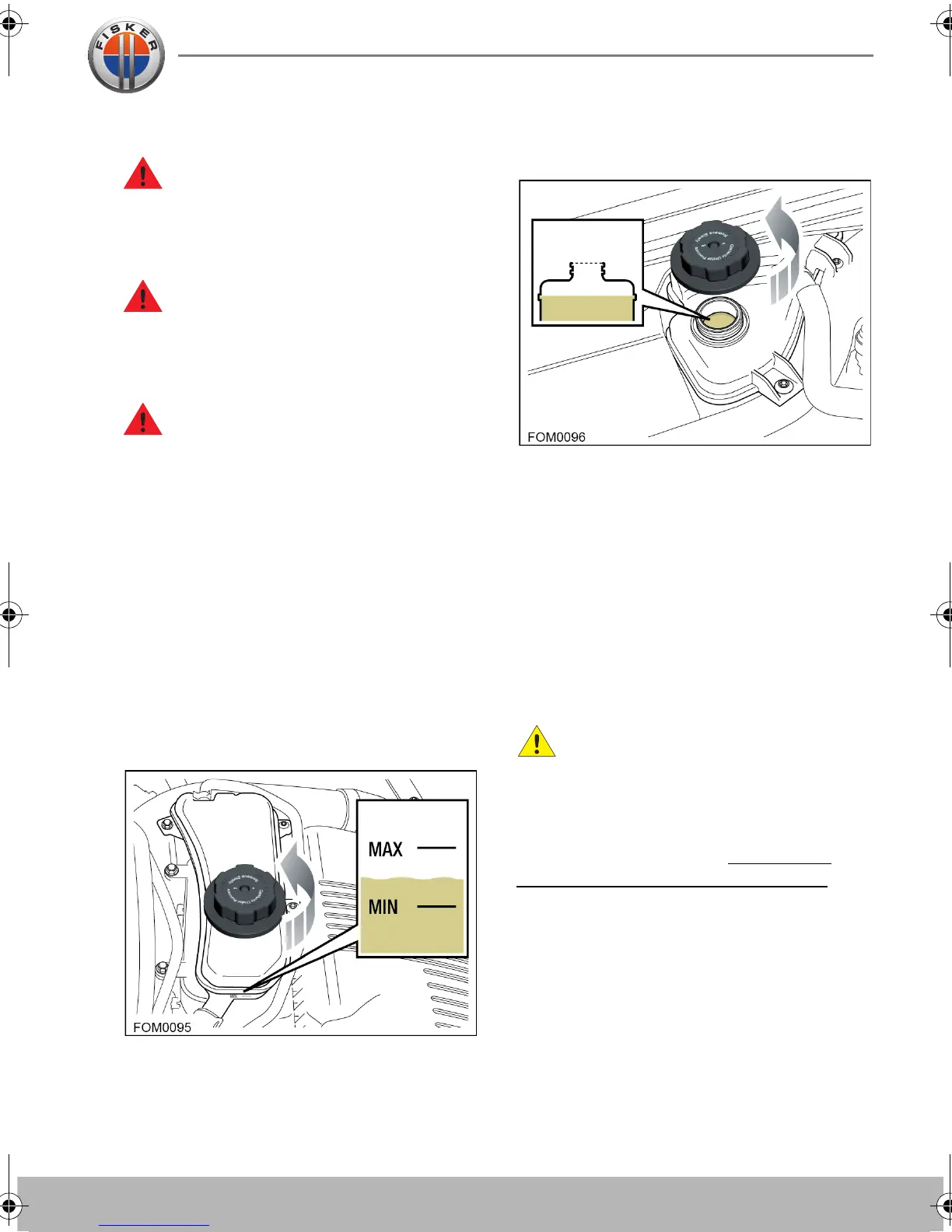
The level of fluid can be seen through the
translucent body of the reservoir. The fluid
level should be between the MIN and the
MAX marks.
Electric drive components and the
engine coolant levels
To check the coolant level, the filler cap
must be removed.
The level of the fluid, visible in the filler neck,
should be level with the seam molded into
the body of the reservoir.
Ensure the cap is tightened fully after
checking the reservoir by turning the cap
until the ratchet cap clicks. Do not over
tighten.
Filling up the coolant reservoirs
CAUTION: If persistent coolant loss is
noticed, seek qualified assistance
immediately
Fill the reservoir to the upper level indicator
mark using only a 50% mix of water and
approved antifreeze. See APPROVED
FLUIDS AND CAPACITIES, page 7.11.
Note: In an emergency, and only if the
approved antifreeze is unavailable, fill the
cooling system with clean water, but be
aware of the resultant reduction in freeze
protection.
Ensure the cap is tightened fully after
top-up is completed by turning the cap until
the ratchet cap clicks.
Owner's Handbook - US English.book Page 9 Friday, June 22, 2012 11:28 AM


 To Next Page