53
52
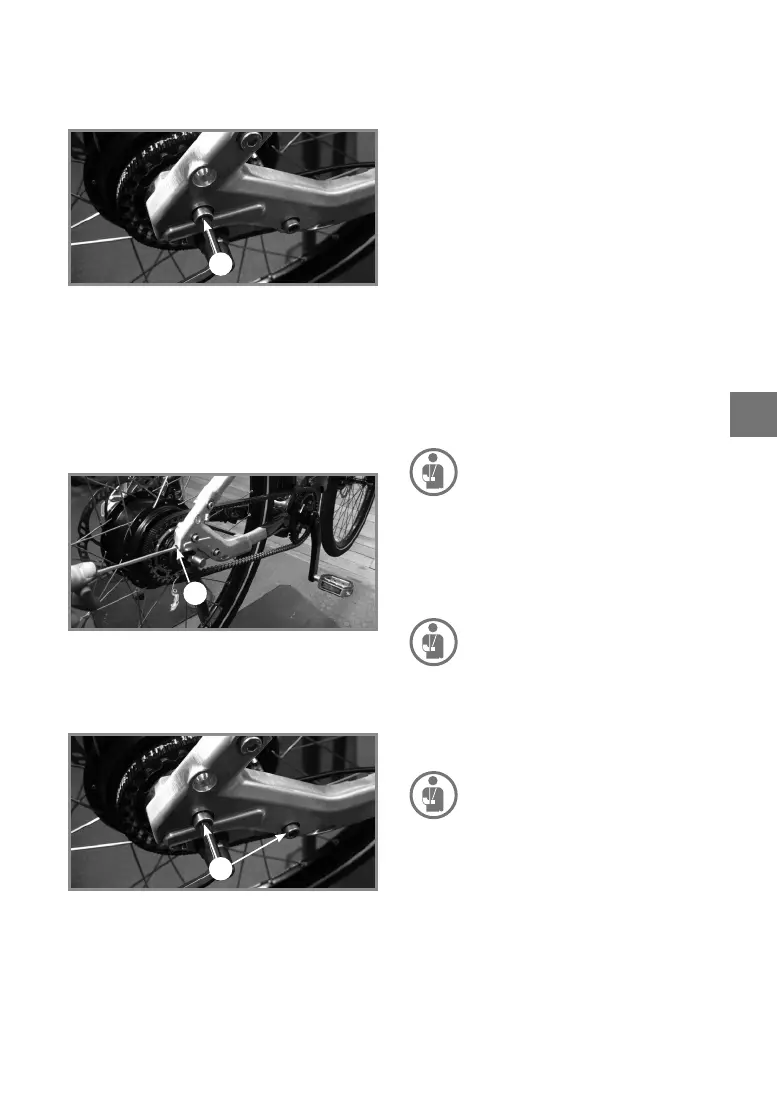
Tighteningthetoothedbelt
LoosenthescrewsA1onbothsidesofthedro-
pout.
Youonlyneedtoloosenthe
screwsuntilthedropoutcanmovefreely.
A1
Tightenthechain/toothedbeltusingtheadjusting
screw A2. You have reached the correct chain
tension when the chain is still able to move up
anddownslightlyinthecentre(10-15mm).Use
a belt tension measuring device to check that
thebelt tension is correct. Consult the belt ma
-
nufacturer’s
instructionstodeterminethecorrect
tension.
www.gatescarbondrive.com/Tech/Resources
A2
Oncethetensionhasbeensetcorrectly,tighten
the screwsA1 using the prescribed torque of 8
Nm.Checkthatthedropoutandrearwheelare
rmlyattached.
A1
15. Brake
15.1 Hydraulicbrakes
It is possible that brake uid may escape from
thesystem due to leaky cables and connections.
This can negatively impact the effectiveness of the
brakes.Checkthepipesandconnectionsfortight
-
ness
beforeeachride.
DonotridewithyourFLYERifuidisleakingfrom
thebrakingsystem.AllowaFLYERspecialistre-
tailer to undertake repair work on this part imme-
diately.
Thedangerofyourbrakesfailinginthis
conditionisveryhigh.
Ask your FLYER specialist retailer for detailed
instructions regarding the operation and special
featuresofthee-bikebrakingsystem,evenifyou
areanexperiencedcyclist.Practiseinaquiet,safe
areawithnotrafc.
Ifyouhaveanyquestionsaboutassembling,set
-
ting up, servicing or operating this part of your
bike,
pleasecontactaFLYERspecialistretailer.
Atriggerpointshouldbeclearlynoticea-
ble after approximately a third of the way
when
pullingthebrakelever.
Do not start to ride if the brake lever
can be pulled up to the handlebars. In
thiscase,theFLYERisnotsafeforop
-
eration.
Itisthenessentialtovisit your
FLYER specialist retailer and have the
brakeadjustedorrepaired.
Brakes are safety-related components.
Have the setting and maintenance work
performedbyyourFLYERspecialistre-
tailer.
Onlyoriginalsparepartsmay be
used. Otherwise it is possible that the
functionalityof your FLYERe-bikemay
beimpactedordamaged.Nomodica
-
tions
ofthebrakesystemarepermitted.
Do not brake continuously or too hard on
long downhill section, as your brakes
might overheat leading to reduced brak-
ing
power. Alternate between applying
the front and back brake on long and
steep downhill sections to allow the oth-
er
braketocool.Itispreferabletobrake
sharply for a shorter time when taking
bendsorifyouareridingtoofast.This
allows the brakes to cool down in the
meantime.


 To Next Page