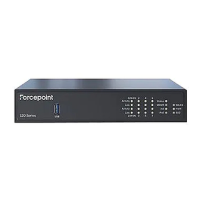
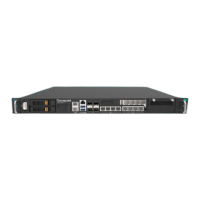
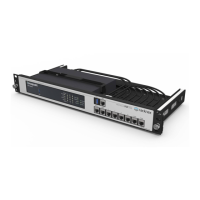
Forcepoint Next Generation Firewall Hardware Guide | Models 330, 331, 335, 335W
16
Connect cables and antennas
Connect the network cables, antennas, and power cable.
Copper cable types
Use at least CAT5e-rated cables for gigabit networks.
Always use standard cabling methods. Use crossover cables to connect the appliance to hosts and straight
cables to connect the appliance to switches or hubs. For more information, see the Forcepoint Next Generation
Firewall Installation Guide.
Speed and duplex settings
Network interfaces at both ends of each cable must have identical speed and duplex settings.
These settings include the automatic negotiation setting. If one end of the cable uses autonegotiation, the other
end must also use autonegotiation. Gigabit standards require interfaces to use autonegotiation. Fixed settings are
not allowed at gigabit speeds.
The settings for inline interfaces must be identical for all four interfaces. The pair on the appliance and the
interfaces on the two devices connecting to the appliance must have the same speed and duplex settings
configured.
Ethernet port mapping
For appliances that have removable interface modules, Ethernet port names are based on the slot and port
numbers.
The first number in the name represents the slot on the appliance, and the second number represents the port on
the slot. Example: eth2_0 is located on port 0 of slot 2.
• Slot 0 contains the fixed Ethernet ports.
• Slots 1 and higher contain the ports on the interface modules. The port numbers start at 0 and increase from
left to right.
During the initial configuration of the appliance, you map the Ethernet ports to the interface IDs that you defined
in the Management Client.
The NGFW Initial Configuration Wizard shows the mapping between the interface IDs and port names. In the
command line version of the NGFW Initial Configuration Wizard, Interface IDs appear in the Id column and port
names appear in the Name column.
This mapping can change if you replace an interface module. If the new module has more Ethernet ports, the
interface IDs for the new ports start from the next free interface ID number. Example: You have thirteen interfaces
numbered 0–12, which includes a four-port module installed in slot 1.


 To Next Page