Pacbrake® Exhaust Brake
The Pacbrake exhaust brake is intended as a
supplement to the service brakes and will not bring
the vehicle to a complete stop. The Pacbrake will
assist in the control or reduction of road speed in
conjunction with, or independent of, the service
brakes. The amount of retarding or braking force is
controlled by the driver.
Pacbrake Operation (Caterpillar)
The Pacbrake is controlled by the exhaust brake
switch and the throttle pedal. All applications are
additionally affected, controlled, or governed by
engine speed through transmission gear selection.
The Allison MD3060 transmission has automatic
downshifting when the exhaust brake is requested.
See the information on the "Allison World
Transmission" later in this chapter.
On some applications, when the Pacbrake is in use,
it may be necessary to check that the cruise control
is not set and that the throttle is in the idle position.
On some applications, the engine, transmission,
cruise control, and the Pacbrake exhaust brake may
electronically interact with each other, which
automatically operates their functions. Following are
some examples of the programmed options that may
be available with the cruise control in the on position:
•
The coast mode engages the Pacbrake when
the service brake is applied and disengages
when the service brake is released.
•
The latch mode engages the Pacbrake when
the service brake is applied and the Pacbrake
remains on after the service brake is released.
The Pacbrake is disengaged when another
input (depressing the throttle or clutch, engine
speed drops below 800 rpm, or the exhaust
brake switch is turned off) is supplied.
•
The manual mode does not require the cruise
control switch to be on, and operates the
Pacbrake manually at the driver’s discretion.
The amount of braking power the engine will develop
is related to the speed (rpm) of the engine. The
higher the engine rpm, the greater the retarding
power.
Certain conditions may require that the transmission
be downshifted in order to generate adequate rpm
for the amount of retarding power required. Pacbrake
exhaust brakes are designed and approved for safe
use at 300 rpm above the engine’s maximum
governed rpm. Refer to individual engine
manufacturer’s specifications.
The Pacbrake will function best if it is used all of the
time. However, if the vehicle is used inconsistently or
seasonally, it may be necessary to perform a
preventive maintenance procedure.
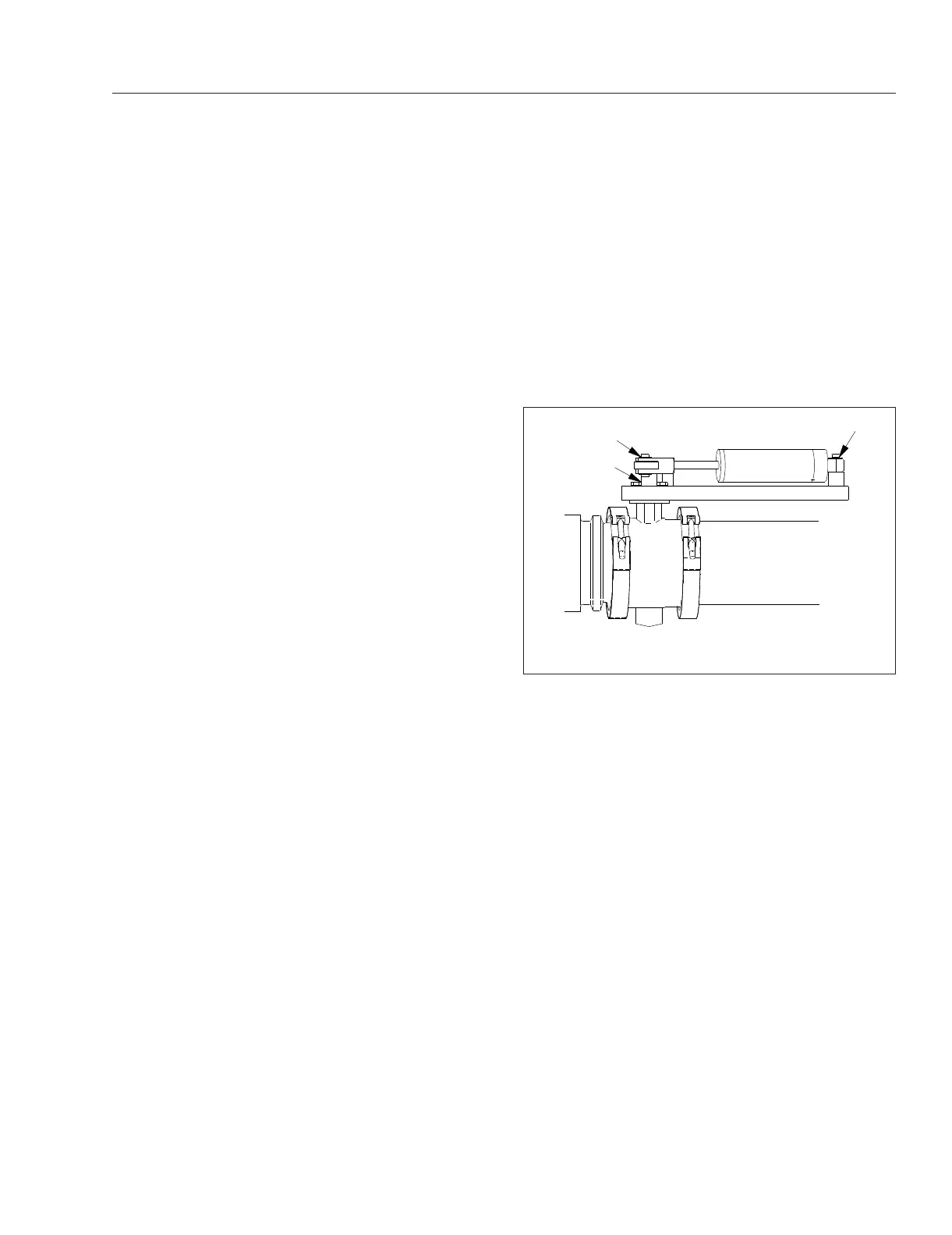
1.
With the engine shut down, use any oil-free or
nonpetroleum-based high-heat lubricant, and
spray or coat a sufficient amount on the restricter
valve shaft and the attaching locations at each
end of the actuation cylinder. See
Fig. 11.5.
2.
With your hands or a pair of pliers, motion the
valve several times to distribute the lubricant
down the shaft and the attaching locations.
NOTE: Starting the engine and idling for short
periods of time is not recommended. During a
cold engine start-up, enough moisture is
developed within the engine and the exhaust
system to create a corrosion hazard that could
affect the future operation of the Pacbrake. The
brake housing may trap water in the valve shaft
bore causing corrosion in an improperly
functioning or nonfunctioning brake. If it is
necessary to periodically start the engine, it is
recommended that normal operating
temperatures be attained before shutting down
the engine.
Allison World Transmission
Pacbrake exhaust brakes used with the Allison World
Transmission MD series, are interfaced with the
transmission electronic control module (ECM). An
03/06/2000
f490228
A
A
A
A. Lubrication Point
Fig. 11.5, Pacbrake Exhaust Brake and Air Cylinder
Brake Systems
11.6



 To Next Page