3.
Using compressed air, remove any dirt, debris, or
water that may have collected in the fuel fill
fitting and the station dispensing nozzle.
Contaminants in the fuel system can cause
drivability problems.
WARNING
Natural gas fuel tanks, lines, and valves are
always pressurized. Always observe safety
precautions. Failure to do so could lead to loss
of control over a filling hose or to ignition of the
natural gas, which could cause serious bodily
injury, death, or severe property damage.
4.
Connect the station fueling nozzle to the tank
fuel fill fitting.
5.
Connect an electrical ground clamp and cable to
the fuel tank.
IMPORTANT: An LNG tank which is first
installed, or is on a vehicle that has not been
operated in approximately ten days, is
considered to be a hot tank. When fueling a hot
tank, LNG entering the tank will immediately
vaporize, causing tank pressure to spike above
250 psi (1724 kPa) and automatically shutting
down the station fuel pump. To prevent the
pump from shutting down, connect a vent line to
the fill vent fitting on the LNG tank to capture
escaping vapor, then open the shroud cover and
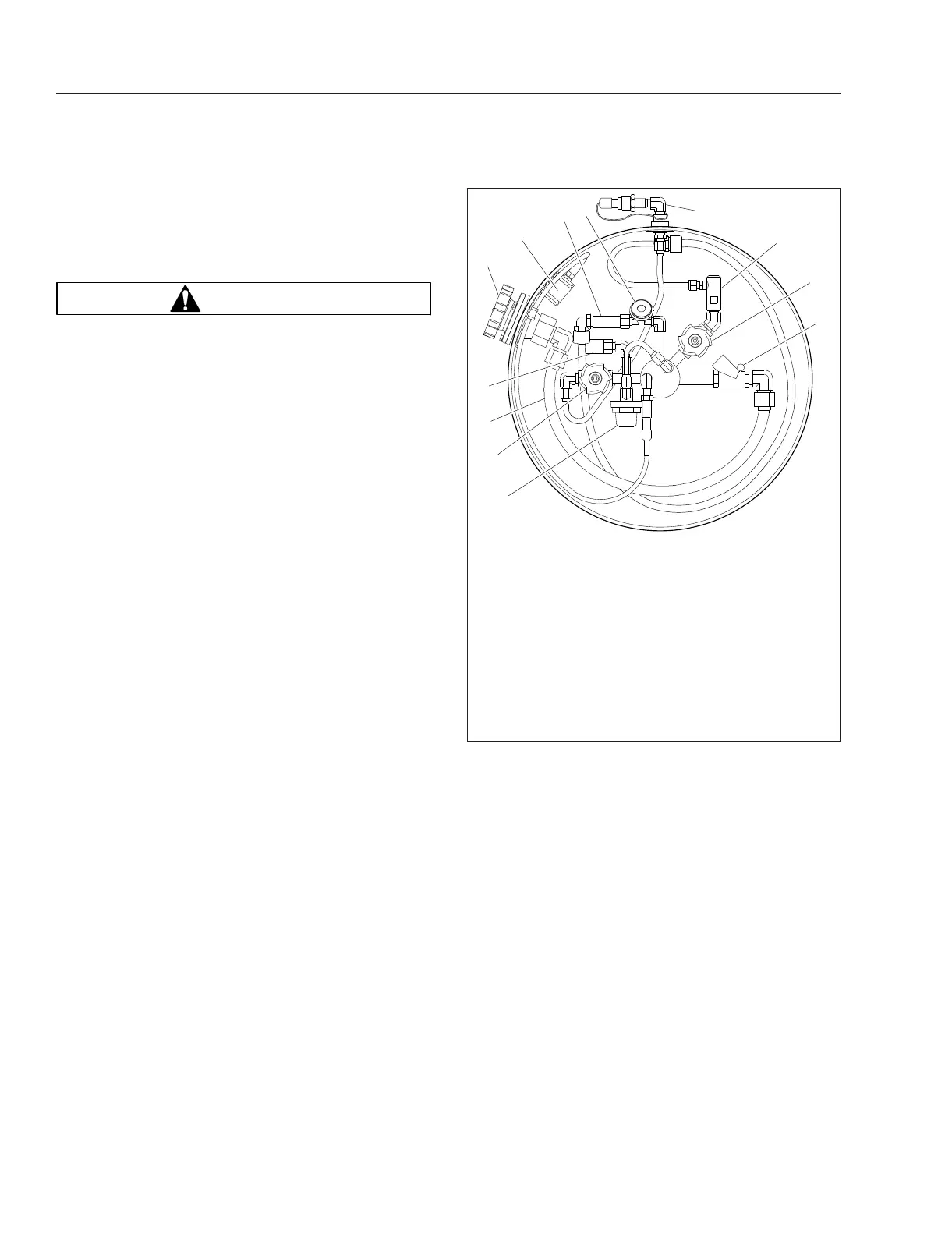
open the vapor shutoff valve. See
Fig. 19.4,
item 2.
6.
Open the station’s fill valve, if equipped, and
start fueling. Monitor the flow or line pressure as
filling progresses. When filling begins, line
pressure will spike quickly until the vehicle tank
cools down. The flow and pressure will then
remain stable during the remainder of the filling
procedure.
IMPORTANT: When fueling a hot tank, initially
put 5 to 10 gallons (19 to 37 liters) of LNG in
the tank and manually stop the fueling process.
Drive the vehicle for 15 to 20 minutes to cool
the tank and reduce tank pressure, then
continue fueling the tank to full.
7.
When the tank is full, the line pressure will
rapidly spike and the flow rate will fall. When a
pressure rise or flow rate drop is observed, close
the station’s fill valve, if equipped.
NOTE: Do not over-fill an LNG tank. If the
ullage tank is completely filled during fueling,
tank standby time will be reduced to zero and
the primary relief valve will open almost
immediately after fueling.
8.
Disconnect the station hose from the tank fuel fill
fitting.
9.
Disconnect the electrical ground clamp and cable
from the fuel tank.
10.
Install the dust cap on the tank fuel fill fitting.
Natural Gas Detection System
A gas detection system is standard equipment in all
Daimler Truck natural-gas-fueled vehicles. This
system has a sensor in the engine compartment and
one in the cab, both situated in high areas to detect
natural gas buildup as a result of leaks. This device
05/05/2010 f470533
1
2
3
4
5
6
7
8
10
11
12
9
1. Pressure Control Regulator
2. Vapor Shutoff Valve
3. Fuel Fill Hose
4. Secondary Relief Valve (red cap)
5. Fuel Fill Fitting
6. Fuel Level Sender Box
7. Primary Relief Valve
8. Tank Pressure Gauge
9. Fill Vent Fitting
10. Excess Flow Valve
11. Fuel Shutoff Valve (liquid)
12. Fill Check Valve
Fig. 19.4, LNG Fuel Tank Plumbing Components
Natural Gas Vehicle Information
19.5



 To Next Page