CHAPTER 6: SETPOINTS S5 INPUTS/OUTPUTS
345 TRANSFORMER PROTECTION SYSTEM – INSTRUCTION MANUAL 6–97
The debounce time is used to discriminate between oscillating inputs. The state will be
recognized if the input is maintained for a period consisting of the protection pass plus the
debounce setting.
Contact Input 1 and Contact Input 2 are named by the factory as 52a and 52b respectively
and are used for monitoring the Winding1 breaker open/close state when wired to the
Winding 1 breaker auxiliary contacts 52a and 52b.
Contact Input 3 and Contact Input 4 are named by the factory as 52a and 52b respectively
and are used for monitoring the Winding2 breaker open/close state when wired to the
Winding 2 breaker auxiliary contacts 52a and 52b.
Output relays
The 345 relay is equipped with seven electromechanical relays: two special relays
designed for Winding 1 Breaker trip and Winding 2 Breaker trip, four general purpose
relays (Auxiliary Relays 3 to 6), and a Critical Failure relay. The special purpose relays have
fixed operating characteristics and the general purpose relays can be configured by the
user.
Operation of the two Trip output relays is designed to be controlled by the state of the
circuit breaker as monitored by a 52a or 52b contact.
• The Trip relays reset after the breaker is detected in a state corresponding to the
command. When a relay feature sends a command to one of these special relays, it
will remain operational until the requested change of breaker state is confirmed by a
breaker auxiliary contact and the initiating condition has reset.
• If the initiating feature resets, but the breaker does not change state, the output relay
will be reset after a default interval of 2 seconds.
• If neither of the breaker auxiliary contacts, 52a nor 52b, is programmed to a contact
input, the Trip Relay is de-energized after either the delay programmed in the Breaker
Failure feature, or a default interval of 100 ms after the initiating input resets.
• If a delay is programmed for the Trip contact seal-in time, then this delay is added to
the reset time. Note that the default setting for the seal-in time is 40 ms.
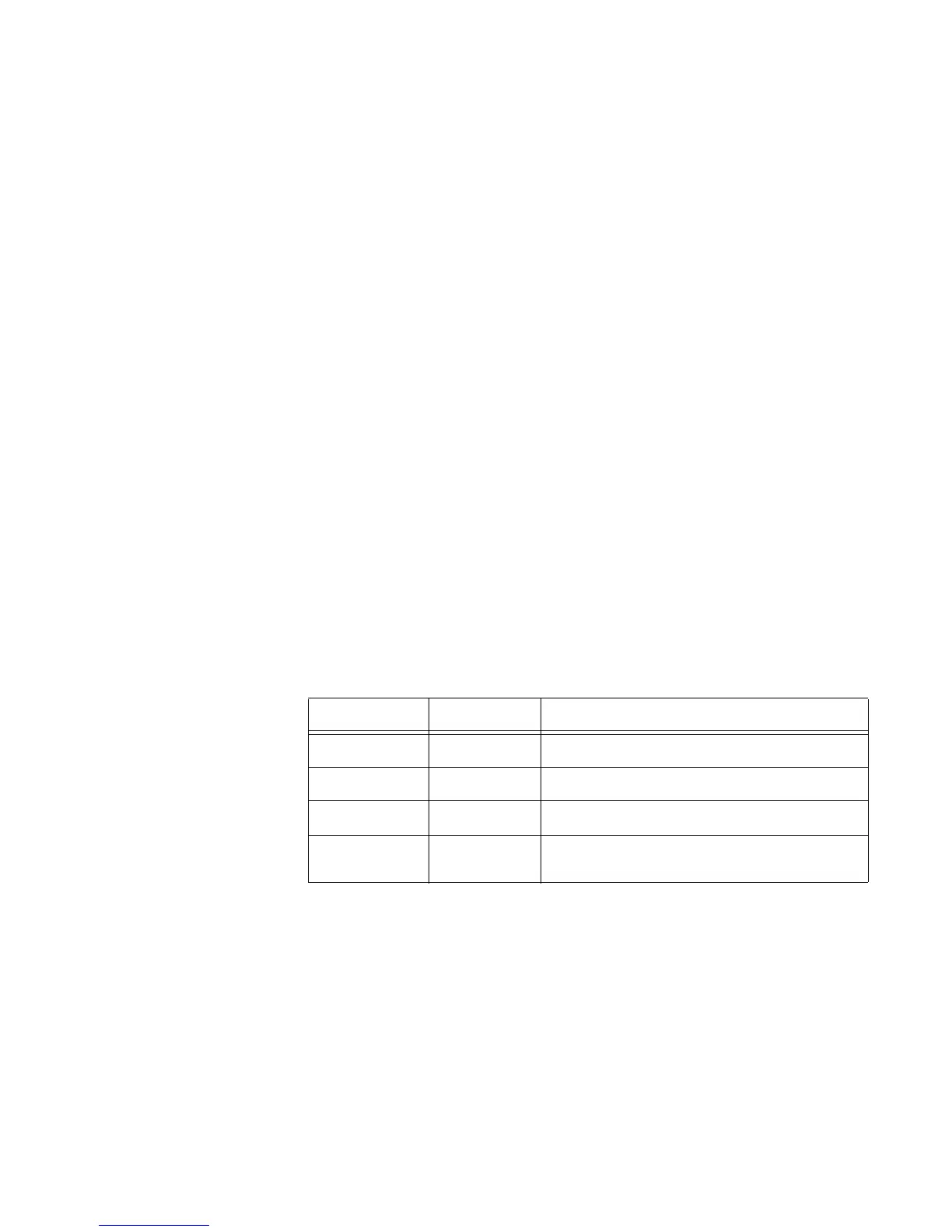
52a Contact
Configured
52b Contact
Configured
Relay Operation
Yes Yes Trip Relay remains operational until 52b indicates an
open breaker.
Yes No Trip Relay remains operational until 52a indicates an
open breaker.
No Yes Trip Relay remains operational until 52b indicates an
open breaker.
No No Trip Relay operates until either the Breaker Failure delay
expires (if the Breaker Failure element is enabled), or 100
ms after the feature causing the trip resets.


 To Next Page