50 10-1562 Issue 3-7 March 2014
Condensation
Solvent condensation within the evaporator is most likely to occur with high boiling point
solvents such as NMP, DMI, DMSO and possibly DMF. It occurs when the chamber walls
are cooler than the solvent vapour.
To prevent this happening, the evaporator chamber should be pre-heated. To do this, enter
the Run Data screen, set the Minimum Chamber Temperature field to 40°C and start the
run. From room temperature, the chamber may take up to 40 minutes to reach this
temperature. Note the CoolHeat lamps do not operate during this pre-heating cycle.
Do not pre-heat the chamber when evaporating volatile solvents such as TFA, acetonitrile or
methanol.Check the sample swings are able to move freely.
Clean the quartz glass using a suitable solvent (such as methanol or acetone) and a lint free
cloth or paper towel. Clean the swings and rotor in the same way. Take care to avoid
solvent contact with the outside paintwork and accessories of the chamber.
TFA creep
TFA creep is the movement of TFA up the inside of the tubes, vials or microtitre plates.
Cross contamination problems can arise and sample material may be thrown onto the IR
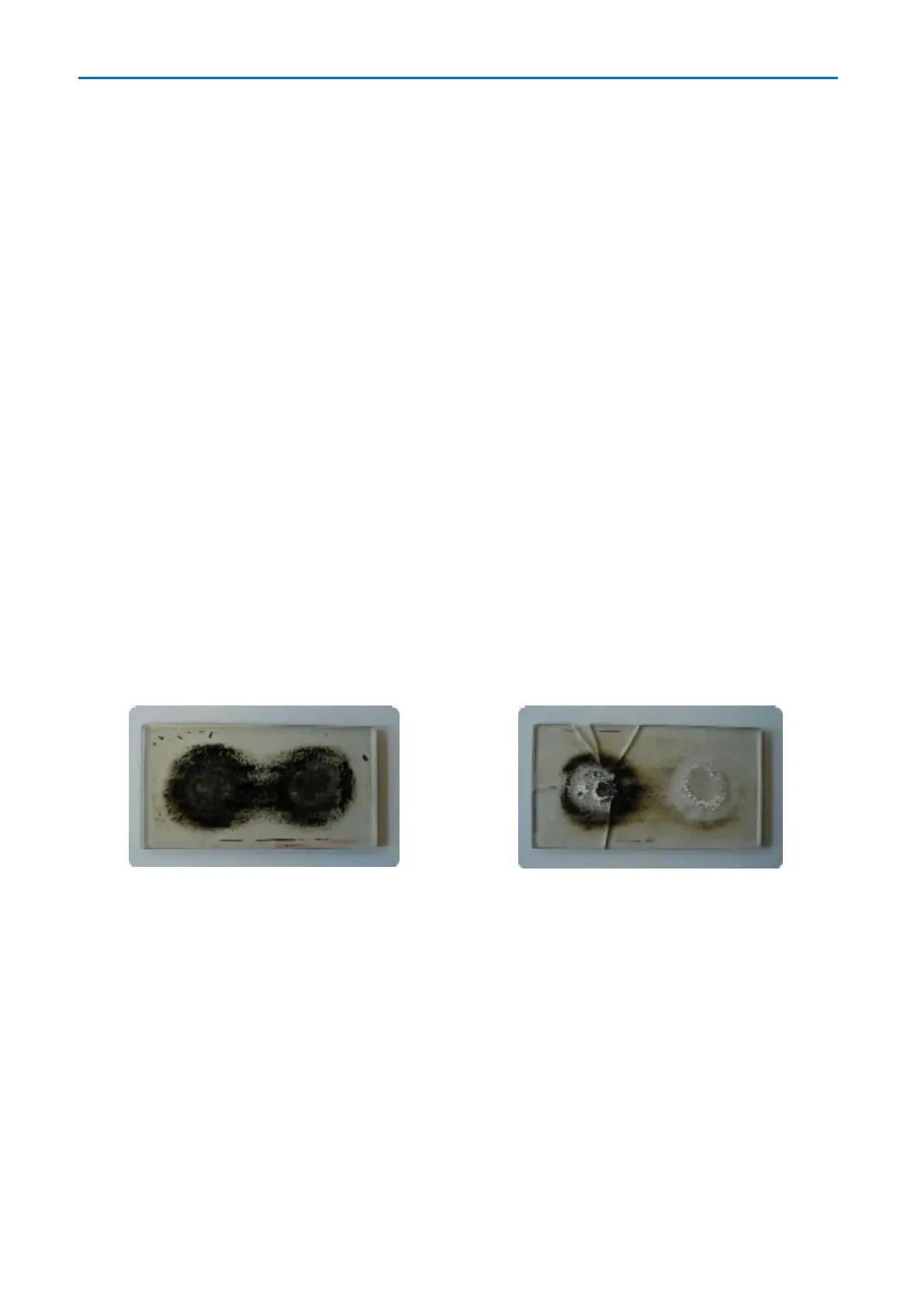
lamp windows as the rotor spins. Deposits on the lamp lenses can be carbonised by the
heat from the lamps, causing crack propagation sites to form on the quartz glass. Inspect
the lamp glass at regular intervals and clean with a lint free cloth and acetone.
Carbonised deposit from samples
A range of specialised sample holders is available to protect the quartz lenses. Contact
Genevac Sales for details.


 To Next Page