EasyManua.ls Logo

Genevac HT-24 - User Manual

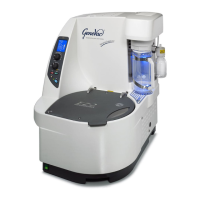
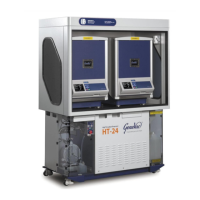
Genevac HT-24
60 pages
Print Icon
To Next Page IconTo Next Page
Loading...
Genevac HT-24
Evaporation System
User Manual
Original instructions
Part number 10-1562 Issue 3-7 March 2014

Table of Contents

Questions and Answers

Summary

Introduction to the Genevac HT-24 Evaporation System

System Overview

General introduction to the Genevac HT-24 Evaporation System, its features and capabilities.

Component Views

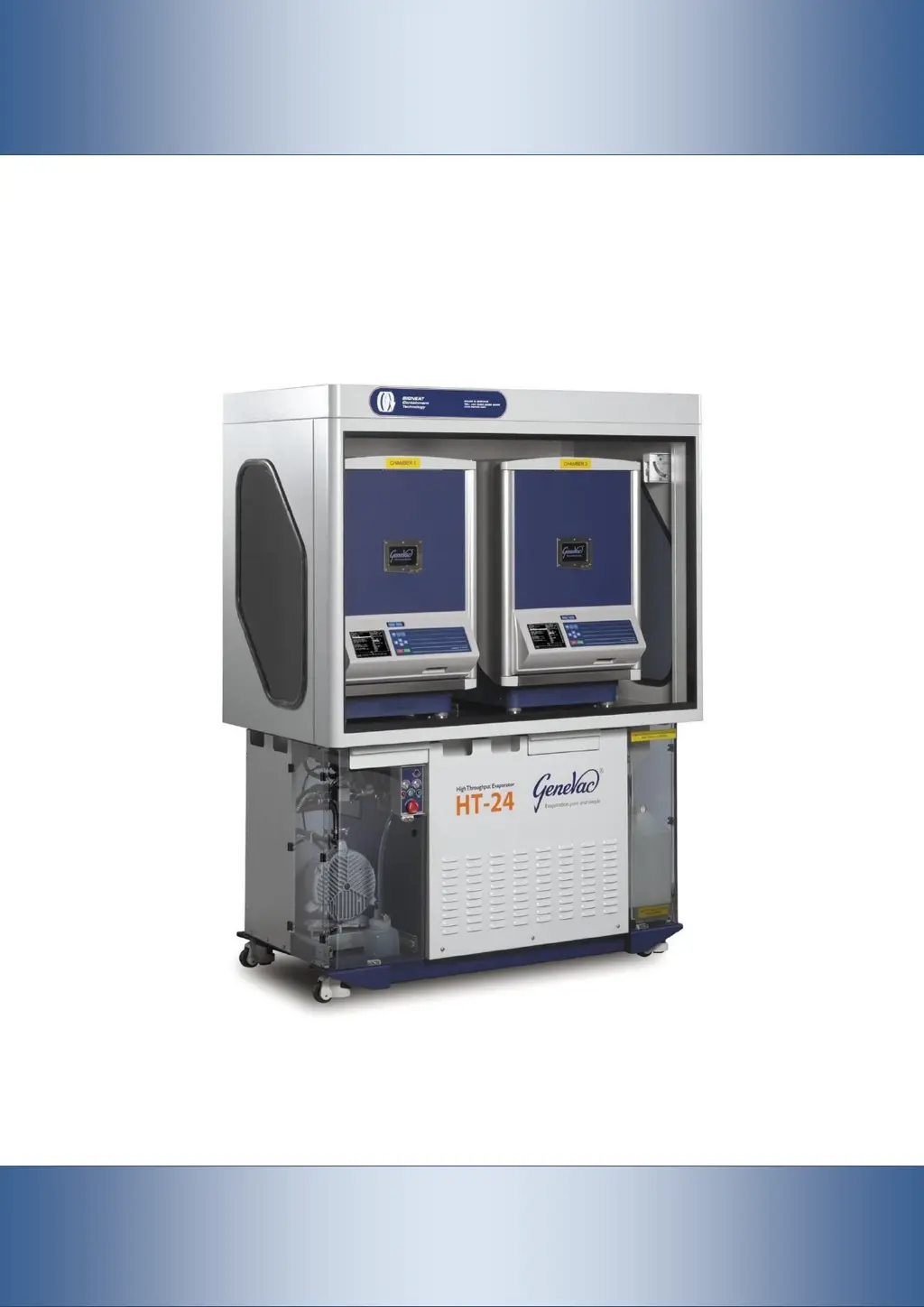
Visual overview of the workstation, including pump, waste container, fume hood, and data connections.

User Interface Elements

Highlights physical interface components like sample shelves, flow meter, screen, and keypad.

Safety Guidelines and Precautions

Warnings and Cautions

Explains warning symbols and their meaning to highlight potential risks of injury or damage.

Risk Assessment

Advises performing solvent-specific risk assessments, considering chemical hazards like oxygen-rich atmospheres.

General Safety Precautions

Lists essential operational safety measures, including ventilation, proper accessory use, and handling spills.

Specific Hazard Warnings

Details safety warnings for combustible solvents, electrical earthing, strong acids, and low auto-ignition point solvents.

System Options and Configurations

Standard Equipment Features

Lists the standard components and technologies included in the HT-24 evaporators.

Optional System Configurations

Describes additional specifications that can be ordered, such as auto defrost and high-power lamps.

Sample Holder Variety

Presents the range of interchangeable sample holders designed for various vessel types.

Basic Operation of the Evaporation System

System Power Management

Instructions for powering the system on and off, including use of the emergency stop button.

Stand-by Mode Operation

How to enter and exit the evaporator's stand-by mode for reduced power consumption.

Workstation Control Panel

Identifies and explains the function of each button and indicator on the main workstation control panel.

Evaporator Control Interface

Details the operation of the evaporator's keypad, screen, and function keys for running the system.

LCD Screen Information Display

Explains the data presented on the LCD screen during operation, including numerical and graphical readouts.

SampleGuard Temperature Monitoring

Describes the SampleGuard system and how to connect probes for accurate sample temperature control.

Selecting and Starting Evaporation Runs

Guides users on choosing a pre-programmed or custom run and initiating the evaporation process.

Run Monitoring and Interruption

How to observe run progress on the Run Log screen and manually stop an active evaporation.

Post-Run Options

Outlines choices available after a run completes, such as skipping, draining, or defrosting the condenser.

Advanced Operation and Method Configuration

Creating and Editing Evaporation Methods

Step-by-step guide to setting up new or modifying existing evaporation methods and parameters.

Key Run Parameter Configuration

Explains essential parameters like run protection, naming, and linking subsequent runs.

Solvent and Sample Holder Configuration

Details selecting compatible solvents and appropriate sample holders for method setup.

Sample Volume and Auto-Program Settings

Guides on specifying sample volume and utilizing the auto-program feature for efficient method creation.

Temperature and Pressure Control Parameters

Covers configuring sample temperature, channel selection, and CoolHeat pressure settings.

Chamber Temperature Control Modes

Explains the different strategies for controlling the evaporation chamber temperature.

Rotor Speed Selection and Impact

Details the available rotor speed settings and their effects on sample containment and SampleGuard function.

Heat-Off and End-of-Run Control

Configures automatic shut-off and end-of-run actions based on time or sample detection.

Pressure Control Regime Options

Describes various pressure control methods including Full Vacuum, Controlled Pressure, and Dri-Pure variations.

Condenser Functions and Maintenance

Condenser Monitoring and Control Menu

Accessing the Run Log for progress and navigating the Options menu for system functions.

Control Interface Navigation

Explains the Controls Menu for adjustments and the main Menu Bar for system navigation.

Data Management via USB

Procedures for transferring methods and log files using a USB data key for backup or analysis.

Automatic Condenser Defrost and Drain

Details the automatic defrost and drain functions, their benefits, and limitations for specific applications.

Manual Condenser Operations

Guides on manually initiating defrost and drain cycles and managing the waste solvent container.

Waste Solvent Container Handling

Instructions for connecting/disconnecting the waste container, with details for quick-release and quarter-turn valves.

Loading Samples into the Rotor

Sample Holder and Swing Selection

Overview of available sample holders and swings for different sample types and formats.

Correct Accessory Usage

Guidelines for using approved sample holders, tubes, and accessories to ensure proper fit and function.

Load Capacity and Balancing

Information on maximum load per swing, total mass limits, and balancing opposing loads.

Rotor Loading and Balancing Best Practices

Procedures for loading samples onto the rotor, including distribution and balancing for partial loads.

Rotor Balancing Importance

Explains the necessity of balancing swings and sample holders to prevent imbalance and wear.

Method Guide for Evaporation

Selecting Pre-programmed Evaporation Methods

A guide to choosing suitable pre-programmed runs based on solvent properties and application needs.

Creating and Optimizing Custom Methods

Steps for creating new methods or refining existing ones through experimentation and data analysis.

Lyophilisation Method Considerations

Advice on setting up robust lyophilisation methods and potential challenges.

Compatible Solvents List

A list of solvents deemed safe for use with the system, indicating potential chemical compatibility.

Evaporating Solvent Mixtures

Techniques for creating methods to effectively evaporate mixtures of solvents with different boiling points.

Application-Specific Method Examples

Illustrative examples of method settings for common applications like HPLC fractions and solvent mixtures.

System Maintenance Procedures

Routine Maintenance Checks

Essential checks and cleaning procedures to perform before and after each evaporation run.

Periodic System Inspections

Outlines checks for exhaust hoses, drain tubes, and general system performance indicators.

General System Cleaning Procedures

Instructions for cleaning exterior surfaces, rotor, door seals, and the evaporation chamber.

Cleaning IR Lamps and Sample Holders

Specific cleaning methods for IR lamp lenses and sample holders, including precautions.

Planned Maintenance and Servicing Schedule

Recommendations for scheduled maintenance to ensure long-term performance and prevent downtime.

Delivery and Installation Guide

Delivery Verification and Site Requirements

Guidance on checking delivered items and preparing a suitable installation environment.

Commissioning and User Training

Importance of professional installation, commissioning, and initial user training for safe operation.

Troubleshooting System Issues

Alert Notifications and Meanings

Identifies audible and visual alerts and their corresponding system status or error messages.

Fault and Error Diagnostics

Explains critical and non-critical errors, their potential causes, and general resolution approaches.

Error Clearing Procedure

Steps to resolve errors, typically involving power cycling the system after addressing the root cause.

Common Operational Issues and Solutions

Addresses common problems like condensation, bumping, door access, and circuit breaker trips.

Comprehensive Fault Rectification Guide

A detailed table providing symptoms, causes, and step-by-step solutions for various system malfunctions.

Technical Data and Compliance

System Performance Specifications

Detailed technical specifications for the evaporator, vacuum pump, condenser, and electrical requirements.

Compliance and Certification Information

Presents the EC Declaration of Conformity and compliance with relevant safety and EMC standards.

Warranty, Patents, and Legal Information

Outlines the product warranty, lists protected patents, and provides other relevant legal details.

Manual Amendment History

Tracks revisions to the user manual, including reasons for changes and issue dates.

Useful Information and System Disposal

General Operating and Safety Advice

Important notes on reading instructions, system updates, reproduction rights, and disposal.

Genevac HT-24 Specifications

General IconGeneral
BrandGenevac
ModelHT-24
CategoryLaboratory Equipment
LanguageEnglish

Related product manuals