
 Need help?
Do you have a question about the GeoMax Zoom95 Series and is the answer not in the manual?
Congratulates user on purchase and directs to safety directions.
Details where to find product model and serial number.
Lists registered trademarks like Microsoft and Bluetooth.
States the manual applies to Zoom70/90 instruments.
Lists additional product documentation like Quick Guide.
Explains directions to anticipate and avoid operational hazards.
Lists the specific applications and purposes of the instrument.
Details improper uses of the product that should be avoided.
Defines the operating environment and suitability for use.
Outlines duties of the person responsible for the product.
Highlights potential risks and precautions during product operation.
Provides instructions on laser safety according to IEC standards.
Details laser classification for measurements using reflectors.
Describes the Navigation Light function and its safety classification.
Details the laser classification for the laser plummet feature.
Explains the product's ability to function without causing disturbances.
Details FCC compliance for radio products.
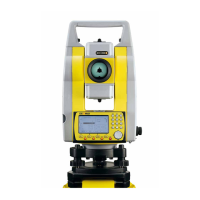
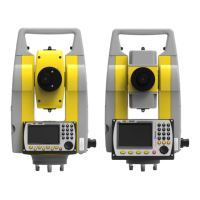
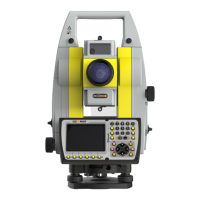
Identifies the main components of the Zoom70/90 instrument and field controller.
Lists and describes the primary components of the system.
Defines key terms and abbreviations used in the manual.
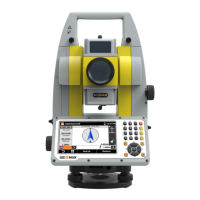
Compares features and availability across Zoom70 and Zoom90 series.
Explains the common software concept and firmware for the instruments.
Step-by-step guide for uploading firmware and languages.
Details the power supply options for the instrument.
Explains how data is stored and transferred.
Lists the items included in the instrument's carrying case.
Identifies and describes the various parts of the instrument.
Explains the keyboard layout, keys, and their functions.
Describes the functionality of common softkeys used in the system.
Explains how to operate the user interface via keyboard or touch screen.
Describes the starting point for accessing instrument functionality.
Displays instrument, system, and firmware information.
Provides step-by-step instructions for setting up the instrument.
Instructions for setting up remote control using the RadioHandle.
Guide for installing drivers and connecting the instrument to a PC.
Information on charging, operating, and discharging batteries.
Guidelines for handling memory cards and USB sticks.
Step-by-step instructions for inserting and removing an SD card.
Step-by-step instructions for inserting and removing a USB stick.
Instructions for establishing a Bluetooth connection with external devices.
Explains the status indicators on the RadioHandle.
Details AiM and TRack modes for prism aiming and tracking.
Configures units for angle, distance, temperature, and pressure.
Sets the instrument's date, time, and format.
Procedure for updating firmware, languages, and license keys.
Overview of instrument calibration procedures.
Lists instrument errors adjustable electronically.
Lists instrument parts adjustable mechanically.
Tips for achieving precise measurements during checks.
Table summarizing instrument errors and their adjustment.
Instructions for adjusting the circular level on the prism pole.
Describes how to inspect and adjust the laser plummet.
Step-by-step guide for servicing the tripod.
Explains the formatting process and its consequences.
Guidelines for safely transporting the instrument in various scenarios.
Recommendations for proper storage of the instrument and batteries.
Instructions for cleaning and drying the instrument and its accessories.
Instructions for keeping cables and plugs clean and dry.
Recommendations for periodic inspection and maintenance of the instrument.
Specifies accuracy and characteristics for angle measurements.
Details range, atmospheric conditions, and accuracy for reflector measurements.
Details FCC and EU conformity for the Zoom70/90 instrument.
Details FCC and EU conformity for the RadioHandle.
Information regarding the safe transport of Lithium batteries.
Technical specifications for the telescope and compensator.
Details circular and electronic level sensitivity and resolution.
Describes the display, keyboard, and touch screen features.
Lists and describes the instrument's communication ports.
Provides physical dimensions of the instrument.
Specifies the weight of the instrument, tribrach, and battery.
Describes data recording options onto SD card or internal memory.
Details type, location, accuracy, and dot size of the laser plummet.
Describes the instrument's drives, motorisation, and power specifications.
Provides operating and storage temperature ranges, and protection ratings.
Specifies humidity protection and condensation counteraction.
Lists additive constants, AiM, and Scout compatibility for reflectors.
Details working range and position accuracy for the NavLight.
Lists automatic corrections applied by the instrument.
Details atmospheric correction parameters and formula.
Explains air humidity influence and correction factors.
Provides formulas for atmospheric and laser corrections.
Presents formulas for slope, horizontal, and height difference calculations.
Outlines the terms and conditions for using the product software.
Details copyright-protected software and open source licenses.
Defines key instrument axes like Line of Sight, Standing Axis, Tilting Axis.
Explains the plumb line and the function of the compensator.
Defines standing axis tilt and its effect on measurements.
Defines Zenith and the instrument's crosshairs.
Explains horizontal collimation error and its elimination.
Defines vertical index error and its relation to vertical circle reading.
Illustrates the hierarchical structure of the GeoMax Toolkit menus.
Shows the default directory structure for files on a USB memory stick.
Explains the pin assignments and sockets for instrument ports.
Details the pin assignments for the RS232 port, including signal names and functions.
 General
| Brand | GeoMax |
|---|---|
| Model | Zoom95 Series |
| Category | Measuring Instruments |
| Language | English |




 To Next Page