66
Heat-insulation should be done well to prevent condensation.
Indoor units with different drainage type can’t share one convergent drainpipe.
13. Insulation work
Insulation material and thickness
1) Insulation material
Insulation material should adopt the material which is able to endure the pipe’s temperature: no less
than 70°C in the high-pressure side, no less than 120°C in the low-pressure side (For the cooling type
machine, no requirements at the low-pressure side.)
Example: Heat pump type----Heat-resistant Polyethylene foam (withstand above 120°C) Cooling only
type---- Polyethylene foam (withstand above 100°C)
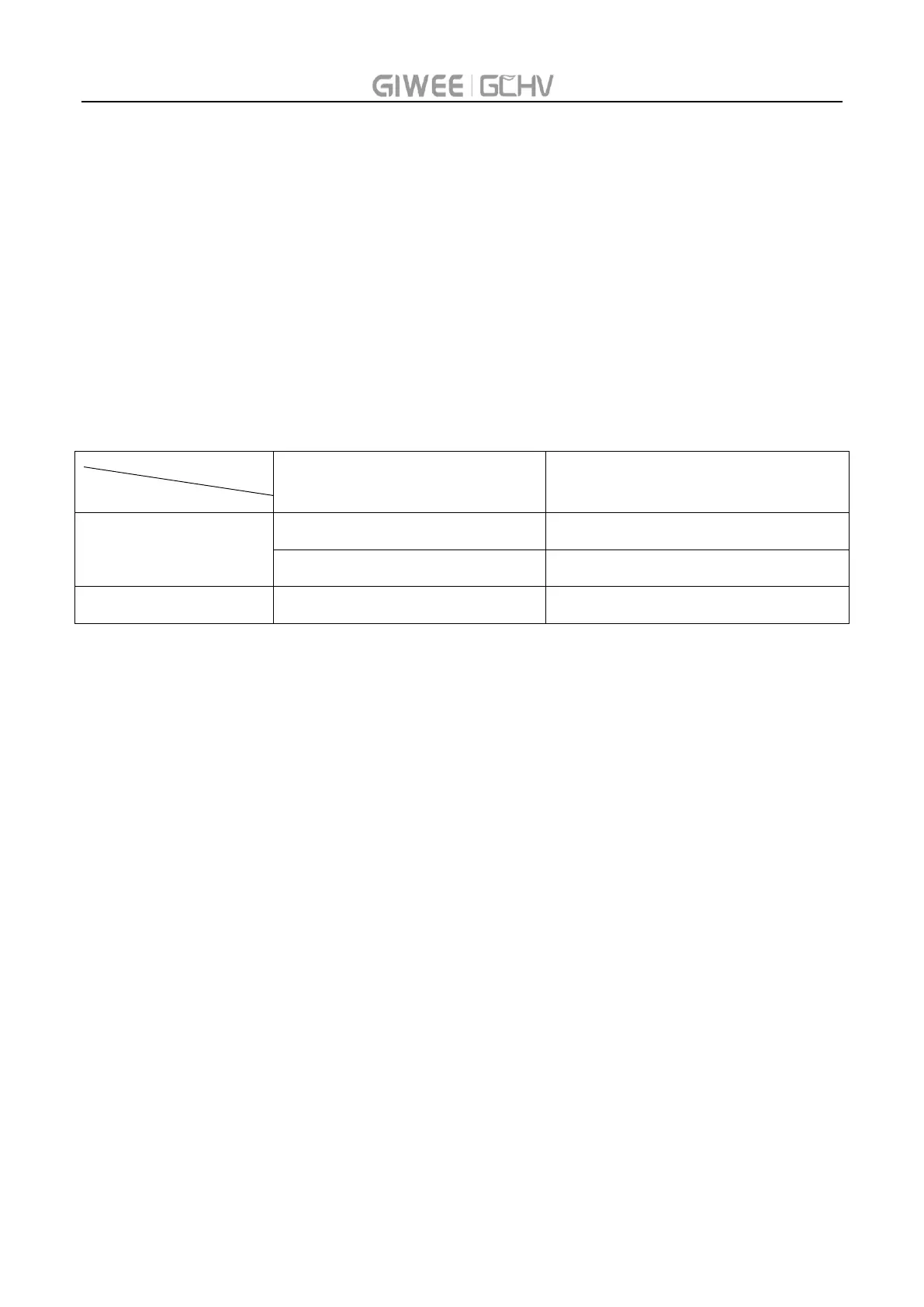
2) Thickness choice for insulation material Insulation material thickness is as follows:
Refrigerant pipe insulation
1) Work Procedure
Before laying the pipes, the non-jointing parts and non-connection parts should be heat insulated.
When the gas proof test is eligible, the jointing area, expanding area and the flange area should be
heat insulated.
2) Insulation for non-jointing parts and non-connection parts.
For construction convenience, before laying pipes, use insulation material to insulate the pipes to be
deal with, at the same time, at two ends of the pipe, remain some length not to be insulated, in order to
be welded and check the leakage after laying the pipes.
3) Insulate for the jointing area, expanding area and the flange area
Insulate for the jointing area, expanding area and the flange area should be done after checking
leakage of the pipes.
Make sure there’s no clearance in the joining part of the accessorial insulation material and local
preparative insulation material.



 To Next Page